
WhatsApp-Integrated CRM for Egyptian Sales Teams: How It Works and What to Check
Most Egyptian sales happen in WhatsApp chats that live on personal phones. This guide explains how a WhatsApp-integrated CRM works, the difference between the Business app and the Business Platform, Meta pricing and opt-in rules, and Egypt data protection points.
A WhatsApp-integrated CRM connects your company's WhatsApp number to your customer database, so every chat is attached to a customer record, assigned to a salesperson, and visible to the manager. For Egyptian sales teams this solves a daily problem: the real sales conversations happen on WhatsApp, but they sit on personal phones where nobody else can see them, measure them or continue them.
whatsapp.com was one of the ten most visited websites in Egypt in August 2026 (Similarweb), and for many businesses it is the de facto sales channel. Yet the typical setup is one or two phones running the free WhatsApp Business app, shared by several people, with no link to quotations or invoices.
This guide explains how a WhatsApp CRM works, which WhatsApp product you need, how Meta charges for messages, what opt-in rules apply, and what Egypt's data protection regulations mean for WhatsApp marketing.
Key takeaways
- A WhatsApp CRM links each conversation to a customer record, an owner and a deal stage, instead of leaving it on one phone.
- Team-scale integration uses the WhatsApp Business Platform (the API), not only the free WhatsApp Business app.
- Since 1 July 2025 Meta charges the Business Platform per message, by category and by the recipient's country code; service replies inside the 24-hour window are free.
- Meta requires opt-in before you message people, and Egypt's data protection regulations require prior consent and an easy opt-out for direct marketing.
- The value comes from process: assignment rules, reply-time targets, quick-reply templates and reports, not from the connection alone.
The problem with WhatsApp on personal phones
Picture a furniture showroom in Nasr City running ads on Facebook with a "Send WhatsApp message" button. Messages arrive on the showroom manager's phone. He forwards some to salespeople, answers others himself, and forgets a few during busy Fridays. A week later nobody knows how many leads the ad produced, how many got a price, or why most never bought.
The same pattern appears in real estate brokerages in New Cairo, clinics booking patients, training centres and B2B distributors. The symptoms:
- No owner for a new chat, so replies are slow or never happen.
- Customer history lost when an employee leaves or changes phone.
- Different salespeople giving different prices to the same customer.
- No numbers: response time, conversion rate and lost reasons are unknown.
- Customer data spread across personal devices, which is a data protection risk.
If you are new to CRM, start with our guide what a CRM is and why companies lose customers without one.
WhatsApp Business app vs WhatsApp Business Platform
Meta offers two different products, and choosing the wrong one is the most common mistake.
| Aspect | WhatsApp Business app | WhatsApp Business Platform (API) |
|---|---|---|
| Who it suits | A single owner or a very small team | Sales and support teams, several agents |
| How it is used | Phone app, with linked devices | Through software (a CRM, helpdesk or chatbot) connected via API |
| Link to customer records | Manual (labels, notes on the phone) | Automatic: each chat creates or updates a CRM record |
| Assignment and reporting | Limited | Built by the connected software: routing, reply times, conversion |
| Automation and chatbots | Basic greeting and away messages | Chatbots, templates, integrations with booking, orders and payments |
| Cost model | Free app | Charged per message by Meta for some message categories, plus the software you use |
A useful rule: if more than two or three people need to answer customers, or you want reports and automation, you need the Business Platform connected to a CRM.
How Meta charges for WhatsApp Business Platform messages
According to Meta's WhatsApp pricing documentation, from 1 July 2025 Meta charges on a per-message basis. The key points for budgeting:
- Four categories: marketing, utility (for example order or booking updates), authentication (one-time codes) and service.
- Service messages are free. When a customer messages you, a 24-hour customer service window opens, and your free-form replies within it are not charged.
- Utility templates inside the open window are free; utility templates sent outside it are charged.
- Rates depend on the category and on the recipient's country calling code, so messaging customers in Egypt and in Saudi Arabia is priced differently.
- Outside the 24-hour window you can only start conversations with pre-approved templates.
Meta updates its rates and rules, so check the current rate card for Egypt before you estimate a monthly budget. The practical lesson: design your process so that most conversations are customer-initiated (ads with a WhatsApp button, website buttons, QR codes in the shop), and use paid marketing templates deliberately.
Core features of a good WhatsApp CRM
Shared team inbox
One company number, many agents. Each chat shows the customer's record beside it: previous orders, open quotations, notes, and who owns the relationship.
Assignment and routing rules
New chats are assigned by rotation, by product line, by region (Cairo, Alexandria, the Delta) or by language. If an agent does not reply within your target time, the chat escalates.
Automatic lead capture and source tracking
A new number creates a lead with its source, for example a specific Facebook campaign or a QR code at an exhibition. This is what finally tells you which marketing spend produces sales.
Quick replies and approved templates
Price lists, location, working hours and payment options as quick replies inside the window; approved templates for booking reminders, order updates and follow-ups outside it.
Link to the pipeline and to invoices
Agents move the deal to "quotation sent" or "won" from the chat. A won deal can create an order or invoice in your ERP, so sales and accounts see the same truth.
A chatbot for the first line
An AI assistant can answer frequent questions in Egyptian Arabic, collect the customer's need and area, and hand a qualified lead to a human. It should always offer a way to reach a person.
Reports
- First-reply time by agent and by hour
- Chats per source and conversion to sale
- Unanswered and overdue chats
- Lost reasons (price, delivery time, stock, no reply)
Opt-in, marketing messages and Egypt's data protection law
Meta's opt-in rules
Meta's opt-in policy requires that people clearly understand they are opting in to receive WhatsApp messages from your business, that your business name is stated, and that you comply with applicable law. Buying phone lists and blasting them is against these rules and risks your number's quality rating.
Egypt's rules on electronic direct marketing
Egypt's Personal Data Protection Law 151/2020 and its executive regulations, issued in November 2025 with a compliance period ending on 1 November 2026, treat electronic direct marketing carefully. Law firm analyses (CMS, 2026; Al Tamimi, 2025) describe the requirements as:
- Prior consent from the person before marketing messages are sent.
- Messages that identify the sender and include a free, simple way to opt out.
- A specific licence or permit for electronic direct marketing from the Personal Data Protection Center.
For a WhatsApp CRM this translates into concrete system features: a consent field with date and source on every contact, an opt-out keyword that updates the record automatically, a block on marketing templates for contacts without consent, and role-based access so agents cannot export the customer list. Confirm the details for your company with a legal specialist.
Implementation steps and common mistakes
- Choose the number. Decide which company number moves to the Business Platform. Plan the migration so customers are not confused.
- Verify the business in Meta Business Manager and prepare your display name and profile.
- Map your process: stages, assignment rules, reply-time targets and escalation.
- Write templates in Arabic and English for the messages you send outside the 24-hour window, and submit them for approval.
- Connect the CRM and, where useful, your ERP, booking system or store.
- Train the team and stop using personal numbers for company sales.
- Review weekly: response times, unanswered chats, conversion by source.
Mistakes to avoid
- Connecting WhatsApp without assignment rules, which recreates the chaos in a new screen.
- Sending bulk marketing templates to contacts who never opted in.
- Letting agents keep using personal WhatsApp in parallel.
- Over-automating: a chatbot with no human handover frustrates buyers.
How Nilex helps
Nilex builds CRM systems and AI business chatbots that can be connected to the WhatsApp Business Platform, so conversations, customer records, deals and invoices sit in one system. We design the assignment rules, consent fields and audit logs with you, and connect the CRM to your ERP system or online store where needed. The chatbot answers in Arabic and English and hands qualified leads to your team.
Frequently asked questions
What is a WhatsApp CRM?
It is a CRM connected to your company's WhatsApp number, so each chat is attached to a customer record, assigned to an agent, and counted in reports. Several team members can work from one number while the manager sees everything.
Is the free WhatsApp Business app enough for my sales team?
For one owner or a very small team it can be. Once several people answer customers, or you need assignment, reports and integration with invoices, the WhatsApp Business Platform connected to a CRM is the right tool.
How much does the WhatsApp Business Platform cost in Egypt?
Meta charges per message for marketing, utility and authentication templates, with rates based on the recipient's country code; service replies within the 24-hour window are free. Check Meta's current rate card, and add the cost of the CRM software you connect.
Can I send bulk WhatsApp offers to all my customers?
Only to people who opted in. Meta requires opt-in, and Egypt's data protection regulations require prior consent, sender identification and an easy opt-out for electronic direct marketing.
Can I keep my current WhatsApp number?
Usually yes, but the number has to be moved to the Business Platform, which changes how it is used. Plan the migration and back up anything you need first.
If your sales already happen on WhatsApp, the next step is making them visible and measurable. Talk to Nilex for a free consultation about connecting WhatsApp to a CRM built around your sales process.
This article is general information, not legal or tax advice. Confirm the details that apply to your company with a specialist.
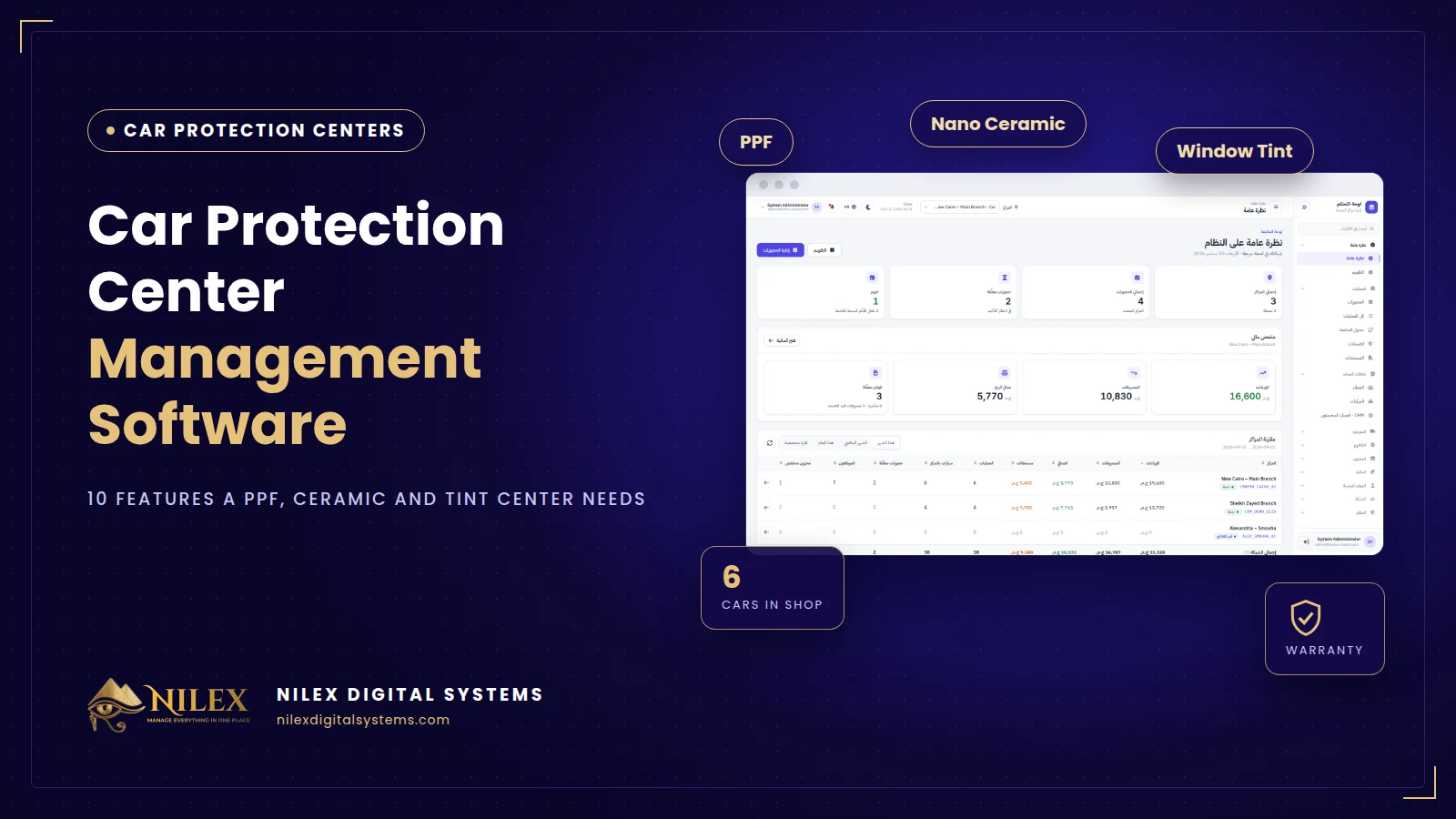 Car Protection Center Management Software: 10 Features a PPF, Ceramic and Tint Center Needs30 September 2026 · 7 min
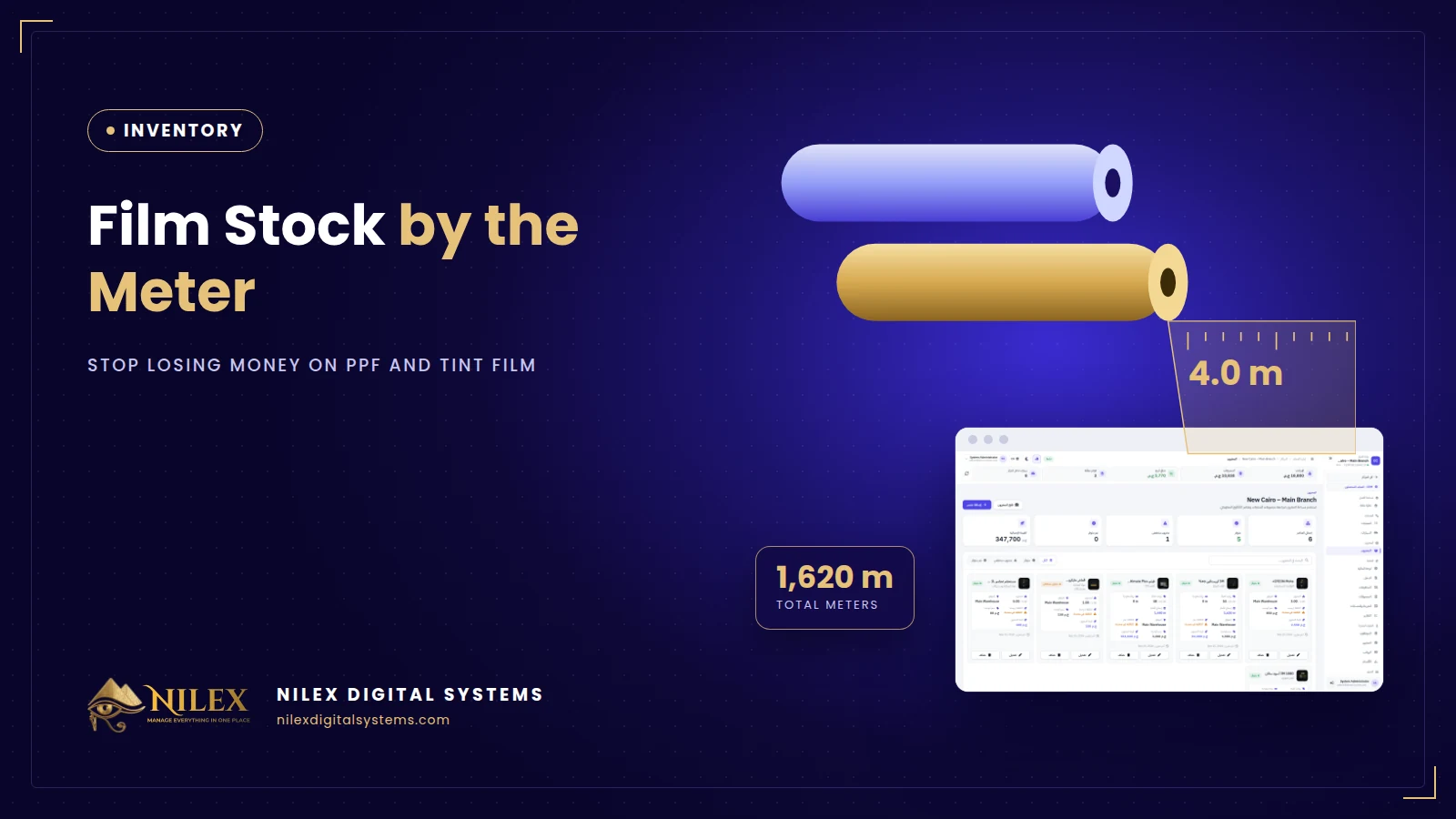 Film Stock by the Meter: How PPF and Tint Centers Stop Losing Money on Film30 September 2026 · 6 min
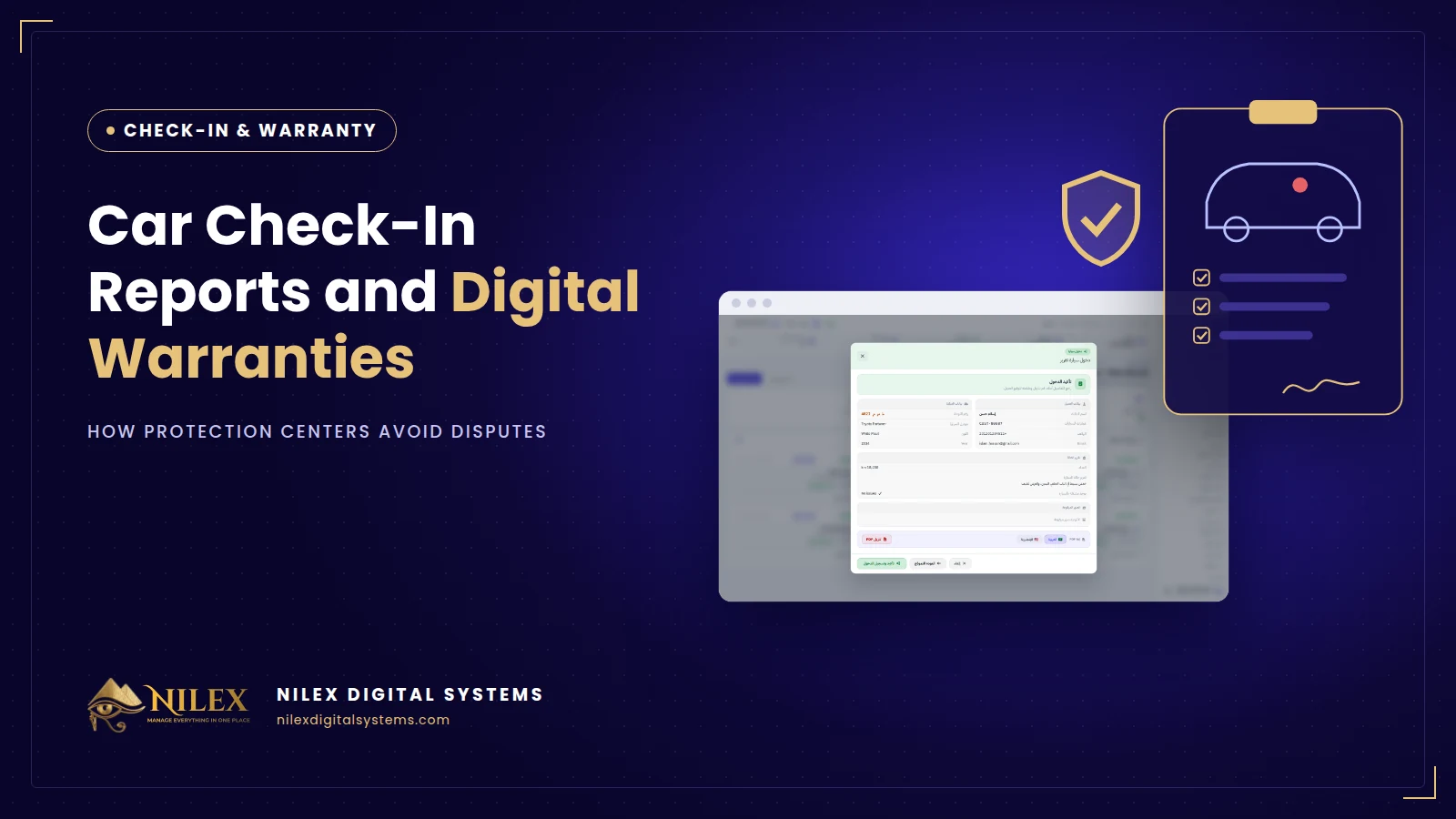 Car Check-In Reports and Digital Warranties: How Protection Centers Avoid Disputes30 September 2026 · 5 min