
ERP for Egyptian Manufacturers: BOM, Costing and Production Planning
How an ERP helps Egyptian factories manage bills of materials, calculate true product cost including imported materials, plan production with MRP and capture shop-floor data without stopping the line.
An ERP for an Egyptian manufacturer has three jobs that general accounting software cannot do: keep an accurate bill of materials (BOM) for every product, calculate what each product really costs to make, and plan production so that materials, machines and people are ready when orders arrive. When these three work together, a factory in 10th of Ramadan, Sadat City or Borg El Arab can quote prices with confidence, stop running out of raw materials at the worst moment and see where margin is lost.
Many Egyptian factories still manage this with a mix of Excel costing sheets, a warehouse ledger and the production manager's experience. That works until prices of imported inputs move, a large order arrives at short notice, or the owner asks why a product that "should" be profitable is not. This guide explains the manufacturing modules of an ERP in plain language, the choices you must make on costing and planning, and how to implement them without stopping the production line.
Key takeaways
- The BOM is the foundation. If quantities, scrap rates and units of measure are wrong, every cost and plan built on them is wrong.
- Choose a costing method deliberately: standard cost for control and pricing, actual cost for true margins. Most factories need both views.
- Landed cost (freight, customs, clearance and currency) for imported raw materials must flow into product cost, or margins will be overstated.
- Production planning (MRP) turns sales orders and forecasts into purchase and work orders, based on stock, lead times and capacity.
- Shop-floor data such as actual consumption, output, scrap and time is what makes costing real. Plan how it will be captured before you choose software.
Bills of materials: the foundation
A bill of materials lists everything needed to make one unit, or one batch, of a product: raw materials, components, packaging and sub-assemblies, with quantities and units of measure.
Types of BOM you will meet
- Single-level BOM: a product made directly from raw materials, such as a food product made from ingredients and packaging.
- Multi-level BOM: a product made from sub-assemblies that have their own BOMs, common in furniture, electrical equipment and engineering industries.
- Batch or formula BOM: quantities defined per batch (for example per 1,000 kg), typical in chemicals, paints, detergents, plastics and food.
- BOM with variants: one base product in several sizes or colours, so you do not maintain dozens of nearly identical BOMs.
Details that decide accuracy
- Scrap and yield: the expected loss at each step. Ignoring it makes every product look cheaper than it is.
- Units of measure: materials bought in tonnes, stored in bags and consumed in kilograms need clear conversions.
- Versions and effective dates: when a recipe or design changes, the old version must remain for historical costing.
- Substitutes: approved alternative materials when the usual one is unavailable, with their cost impact.
Product costing: knowing what each unit really costs
A product's cost has three parts: materials, direct labour and manufacturing overhead (power, maintenance, depreciation, supervision). The ERP's role is to collect these reliably and allocate them in a way your management and your accountant accept.
| Method | How it works | Best for | Watch out for |
|---|---|---|---|
| Standard cost | A planned cost per unit from the BOM and routing; differences are recorded as variances | Pricing, budgeting, spotting inefficiency | Standards must be updated when prices change |
| Actual cost per work order | Real materials and time consumed for each order or batch | Job shops, made-to-order, true margins | Requires disciplined shop-floor recording |
| Weighted average inventory cost | Materials valued at the moving average of purchases | Frequent purchases at changing prices | Hides the effect of a single expensive purchase |
Landed cost of imported materials
Many Egyptian factories import raw materials or components. The real cost of an imported input includes the supplier price, freight, insurance, customs duties, clearance fees and the exchange rate on the payment date. If the ERP does not add these to the material cost, product margins will look better than they are. Set up landed-cost allocation per shipment, by value, weight or quantity.
Overhead allocation
Overhead is usually allocated by machine hours, labour hours or units produced. Pick a basis that reflects what drives cost in your factory: machine hours for an automated plastics line, labour hours for an assembly workshop. Review it at least yearly.
Labour cost
Labour cost depends on wages, social insurance and legal entitlements. Egypt's new Labour Law 14/2025, in force since 1 September 2025, introduced rules such as an annual increment of at least 3% of the insured salary, according to EY (2025). If payroll and costing sit in the same ERP, rate changes flow into product cost automatically.
Production planning and MRP
Material requirements planning (MRP) answers one question: what do we need to buy or make, and when, to deliver what customers ordered? The ERP calculates it from:
- Demand: confirmed sales orders plus forecasts.
- BOMs: what each product consumes.
- Stock: on hand, reserved and already on order.
- Lead times: how long suppliers take to deliver and how long each production step takes.
- Capacity: machines, lines and shifts available.
The output is a list of suggested purchase orders and work orders. The planner reviews and releases them. For factories with a few bottleneck machines, capacity planning, which checks that the plan fits the machine hours available, is as important as the materials list.
Practical Egyptian constraints to model
- Long and variable import lead times for raw materials, which call for safety stock on critical inputs.
- Minimum order quantities from local and foreign suppliers.
- Shift patterns and planned maintenance stops.
- Subcontracting: sending materials to another workshop for a process such as painting or printing, and tracking them while they are outside.
Shop floor: turning plans into real data
Costing and planning are only as good as the data coming back from production. Decide how you will record:
- Material issues to each work order, including extra issues beyond the BOM.
- Output: good units, rework and scrap.
- Time: machine and labour hours per order or step.
- Quality checks: results at receiving, in process and before dispatch.
- Batch and lot numbers: essential for food, chemicals and pharmaceuticals, so that a complaint can be traced back to the raw material batch.
Tablets at workstations, barcode scanning and simple screens in Arabic make recording realistic. Complicated forms at the end of a shift do not.
Reports a factory owner should see every week
- Margin by product and by customer, using actual cost, so you know which orders really pay.
- Material variance: materials consumed versus the BOM, by line and by shift.
- Scrap and rework by product and reason.
- Raw materials at risk: items that will run out before the next delivery, based on the plan.
- Open orders and on-time delivery: what is late, and why.
- Stock value of raw materials, work in progress and finished goods, with slow-moving items highlighted.
If the ERP can produce these reports on demand, without anyone preparing them by hand, the manufacturing modules are doing their job.
Sales, e-invoicing and imports
Manufacturers sell mostly to businesses, so every sales invoice must be issued as an ETA e-invoice with a digital signature and registered item codes, as described in the ETA's official e-invoicing SDK. Finished-product codes should be set up once on the item card and used by both the BOM and the invoice. For imported inputs, Deloitte reported in 2023 that since 1 July 2023 importers have needed GS1 codes on supplier e-invoices for customs clearance through the NAFEZA platform (Deloitte, 2023), which affects how purchasing records supplier item codes.
Implementing manufacturing ERP without stopping production
- Start with inventory and BOMs. Clean item codes, units and BOMs for your top-selling products first.
- Run costing in parallel. Compare ERP costs with your current costing sheets for a few months and explain the differences.
- Introduce work orders on one line. Pilot on one product family before rolling out to the whole factory.
- Add MRP once data is reliable. Planning on wrong stock or wrong BOMs creates wrong purchase orders.
- Measure. Track material variance, stock accuracy and on-time delivery before and after.
How Nilex helps
Nilex Digital Systems builds custom ERP systems around the way your factory actually works, rather than forcing your costing method into a generic template. The Enterprise package is designed for factories and groups of companies and includes factories and production, asset tracking and e-invoicing integration, on top of multi-branch stock, full accounting and role-based permissions. Every action is recorded in a full audit log.
Frequently asked questions
What is a BOM in manufacturing ERP?
A bill of materials is the list of materials, components and quantities needed to make a product. The ERP uses it to reserve and issue materials, calculate cost and plan purchases.
Should my factory use standard or actual costing?
Most factories benefit from both: standard cost for pricing and spotting inefficiency, and actual cost per batch or order to know true margins. The ERP should record the variances between them.
Do small factories need MRP?
If you make to order with few materials, a simple material check per order may be enough. As products, materials and lead times grow, MRP prevents both shortages and excess stock.
Can I keep my Excel costing sheet?
Use it as a reference during the transition, then retire it. A costing sheet that is not linked to real consumption and purchase prices drifts away from reality over time.
How does ERP help with batch traceability?
By recording raw material lot numbers at receiving and linking them to production batches and customer deliveries, the ERP lets you trace a complaint from the customer back to the supplier's lot in minutes.
If you run a factory and want costing and planning you can trust, book a free consultation. We will review your BOMs, costing method and planning process and propose a phased plan. For the wider picture, read our comparison of Odoo, SAP, Dynamics and custom ERP.
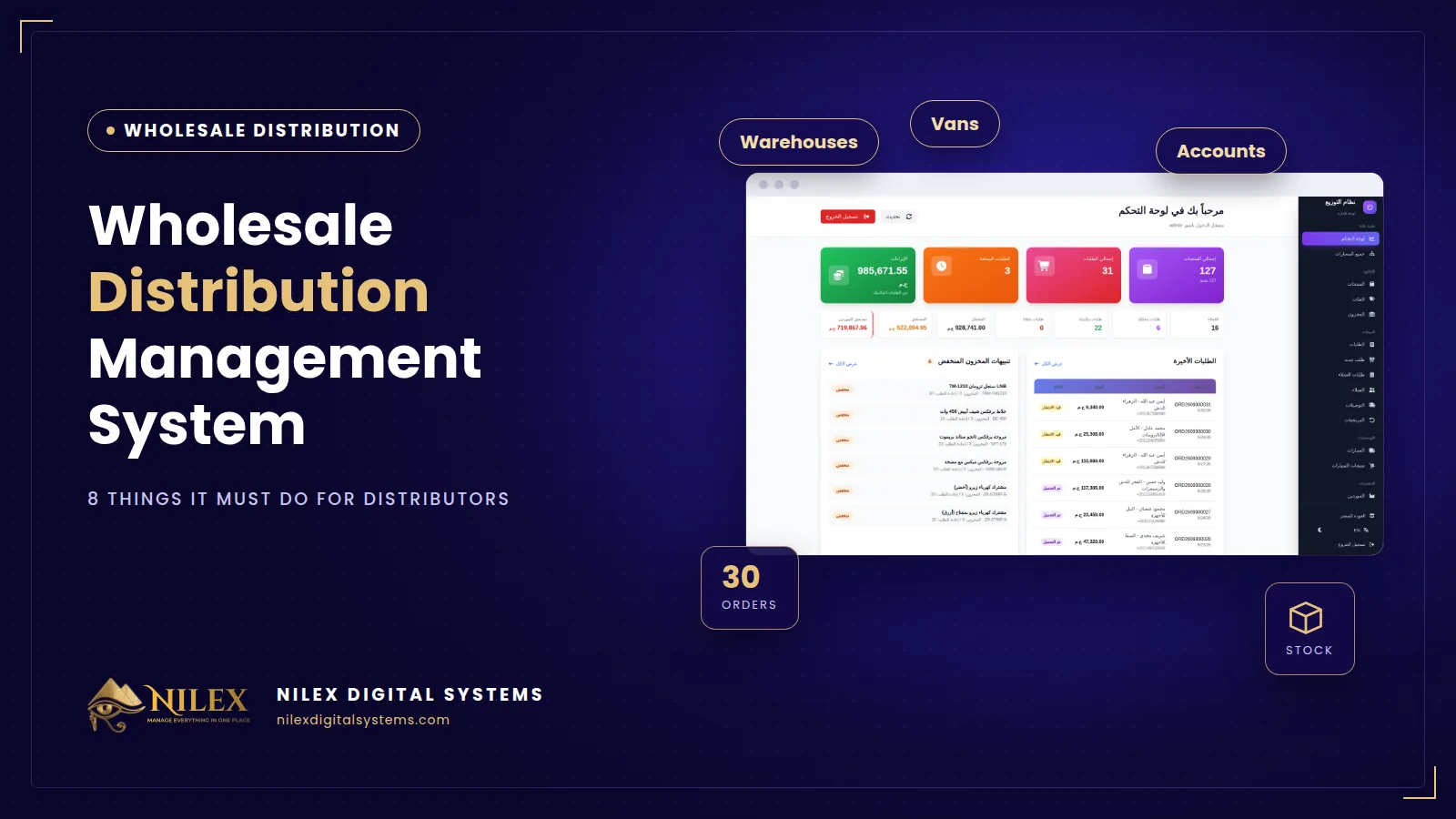 Wholesale Distribution Management System: 8 Things It Must Do for Egyptian Distributors30 September 2026 · 5 min
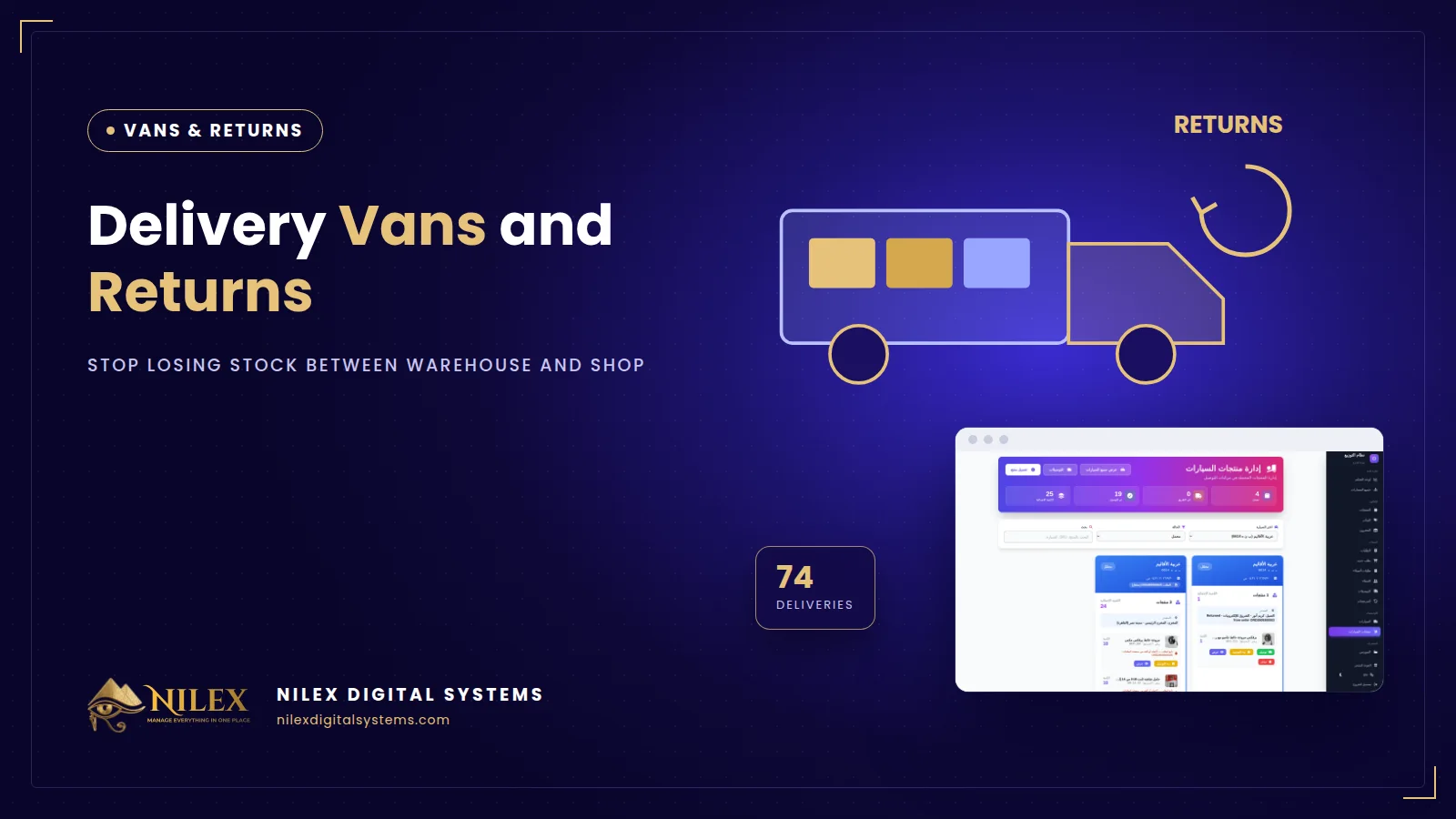 Delivery Vans and Returns: How Distributors Stop Losing Stock Between Warehouse and Shop30 September 2026 · 4 min
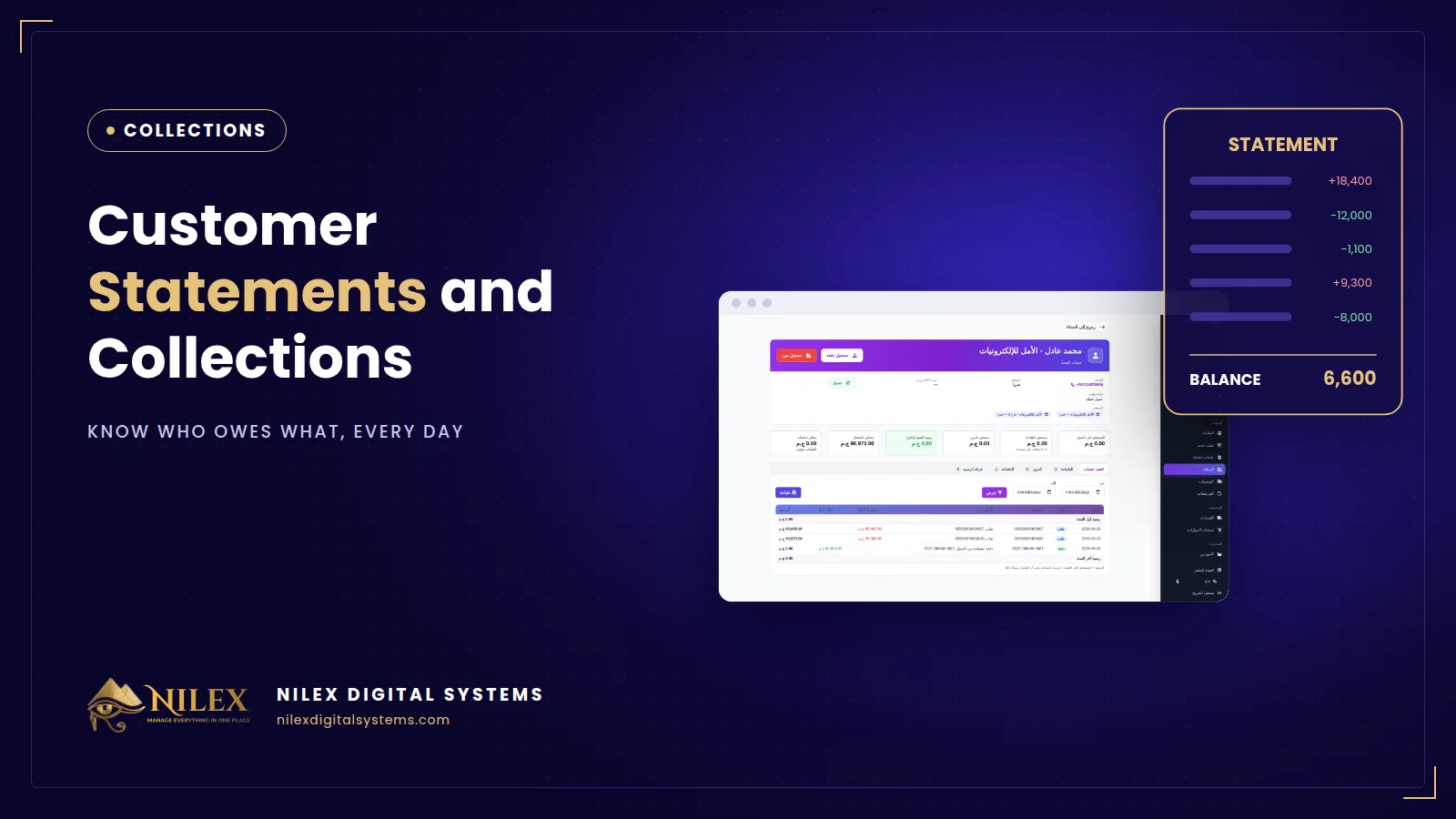 Customer Statements and Collections for Wholesalers: Know Who Owes What30 September 2026 · 4 min