
Delivery Vans and Returns: How Distributors Stop Losing Stock Between Warehouse and Shop
How wholesale distributors control van loading, deliveries and returns: goods loaded from orders, loaded/in transit/delivered tracking, returns recorded against orders, and a phone portal for drivers.
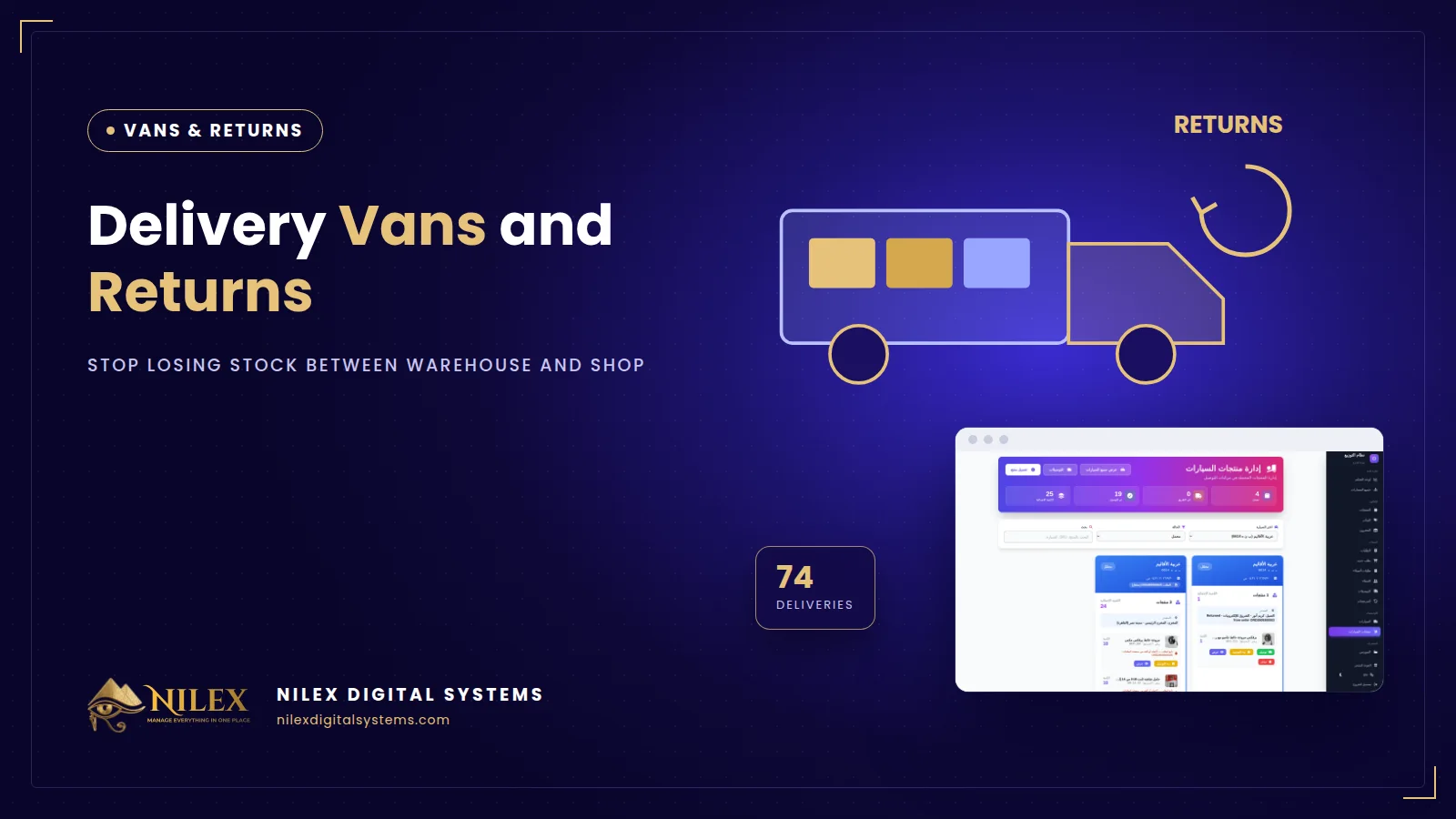
Controlling delivery vans and returns means knowing, at any moment, which goods left which warehouse, on which van, for which order, and what came back. For a wholesale distributor, the van is where stock becomes money, and also where it most often disappears: a carton delivered to the wrong shop, a return that never reaches the warehouse, a partial payment the driver forgot to mention.
This guide explains how distributors in Egypt organise van loading, delivery tracking and returns so that every piece of stock is accounted for between the warehouse door and the shop shelf.
Key takeaways
- Load vans from orders, not from memory: every item on a van should belong to an order and a source warehouse.
- Track three states per van: loaded, in transit, delivered.
- Record every return against its original order, product, van and customer, with the refund due calculated.
- Returned goods should go back into a warehouse's stock explicitly, not "later".
- Drivers and reps need a simple phone portal with their orders, addresses and phone numbers.
Why vans are where stock goes missing
In the warehouse, stock sits still and can be counted. On a van, it moves between people: the storekeeper who loads, the driver who carries, the shop owner who receives and sometimes the rep who collects. Each handover without a record is a place where a carton, a return or a payment can be lost, without anyone being dishonest.
Loading: from order to van
- Create the order with its source warehouse, van and sales rep.
- When the order is loaded, its status changes to "loaded" and the items appear on the van's load list.
- Stock is deducted from the source warehouse at loading or at completion, according to your rule, but always by the system, never by a separate spreadsheet.
- Goods loaded without an order (for example samples or stock moved between warehouses) should still be recorded on the van with a reason.
Tracking deliveries
Each van shows three lists: loaded, in transit and delivered. A delivery screen lists every delivery with date, van, customer, quantity and value, filterable and exportable. At the end of the day, the van's delivered list should match the orders marked complete, and anything still on the van is visible immediately.
| Question | Without a system | With van tracking |
|---|---|---|
| What is on van 2 right now? | Call the driver | The van's load list |
| Was order 1245 delivered? | Ask the rep | Order status and delivery date |
| How much did we deliver this week? | Add up notes | Delivery report with value |
| Which van delivers most to Giza? | Guess | Filter deliveries by van and area |
Returns without losses
Returns are normal in distribution: a damaged carton, a wrong model, a shop that ordered too much. What matters is that each return is recorded in one step:
- Choose the original order and the product returned.
- Enter the quantity and the van that brought it back.
- The system recalculates the order total and the refund due or the balance reduction for the customer.
- The returned goods go back into a named warehouse, or to a damaged-goods location, with a note.
A returns report by product, van and customer then shows patterns: a product with repeated defects, a driver with more returns than others, or a shop that returns too often.
Partial payments on delivery
When a shop pays part of the invoice to the driver, the payment must be recorded on the customer's account the same day, allocated to the order. Our article on customer statements and collections explains how.
The driver's and rep's side
Drivers and sales reps should not need the full system. A phone portal with their assigned orders, the shop's address and phone, their completion rate and a form to submit expenses such as fuel and tolls is enough, and it keeps the rest of the data protected.
How Nilex helps
The wholesale distribution and warehouse management system from Nilex records the van and source warehouse on every order, shows what each van carries, what is in transit and what was delivered, tracks all deliveries with export, and records returns with the refund calculated. Reps and drivers have their own portal. Watch the "vans, deliveries and returns" video on the system page, and read our overview of what a distribution system must do.
Frequently asked questions
Do I need GPS tracking?
GPS shows where the van is; van tracking in the system shows what it carries and what was delivered. Most distributors need the second first. GPS can be added later from a separate provider.
Where do damaged returns go?
Into a separate location or warehouse for damaged goods, so they do not appear as sellable stock.
How do we control cash collected by drivers?
Record every payment on the customer's account the same day and compare collections per van with the delivered orders.
Does it work with many vans?
Yes. Each van has its own load and delivery history, and reports compare vans side by side.
If you still track your vans by phone, talk to Nilex and see the system on your own orders.
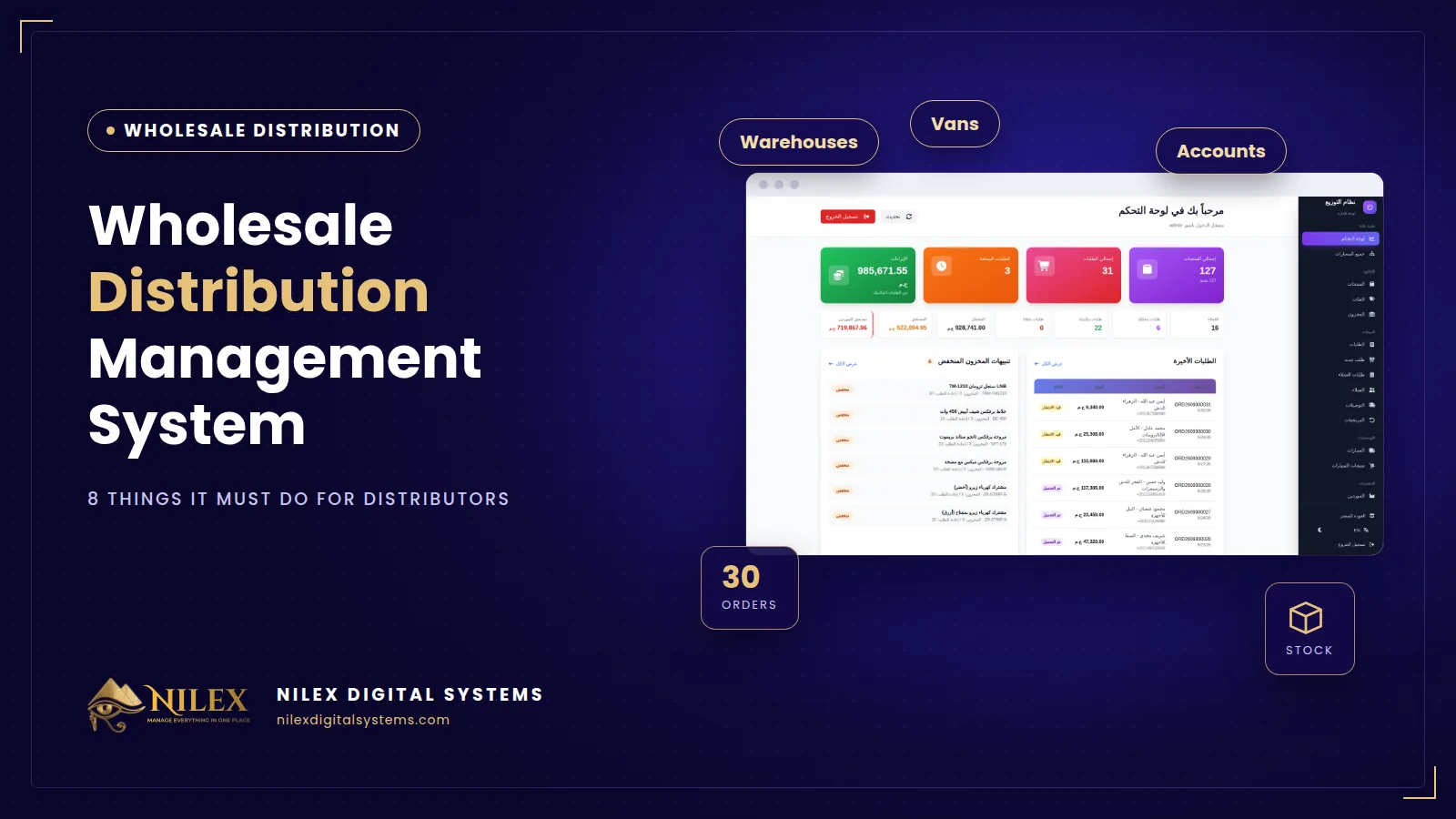 Wholesale Distribution Management System: 8 Things It Must Do for Egyptian Distributors30 September 2026 · 5 min
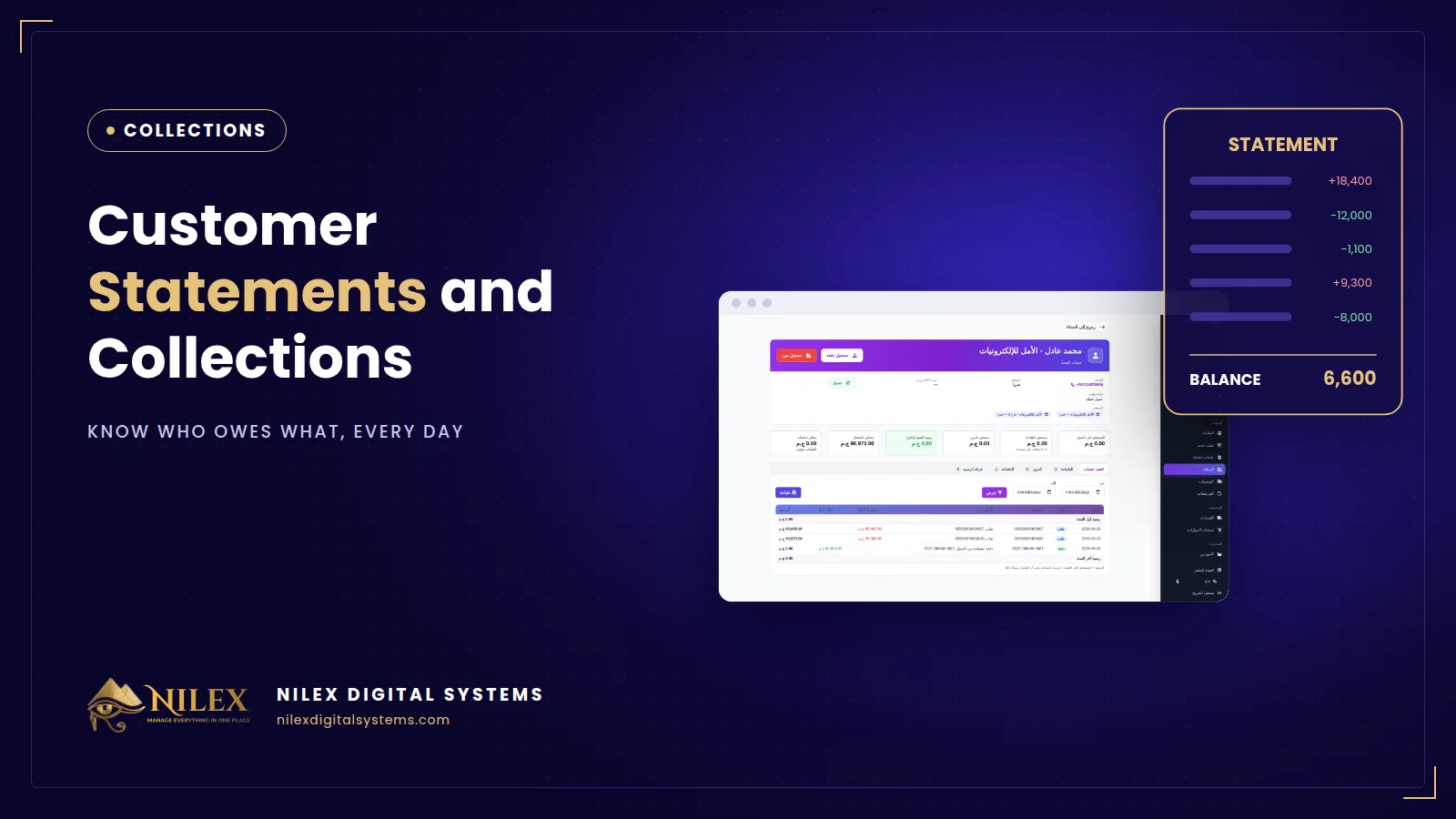 Customer Statements and Collections for Wholesalers: Know Who Owes What30 September 2026 · 4 min
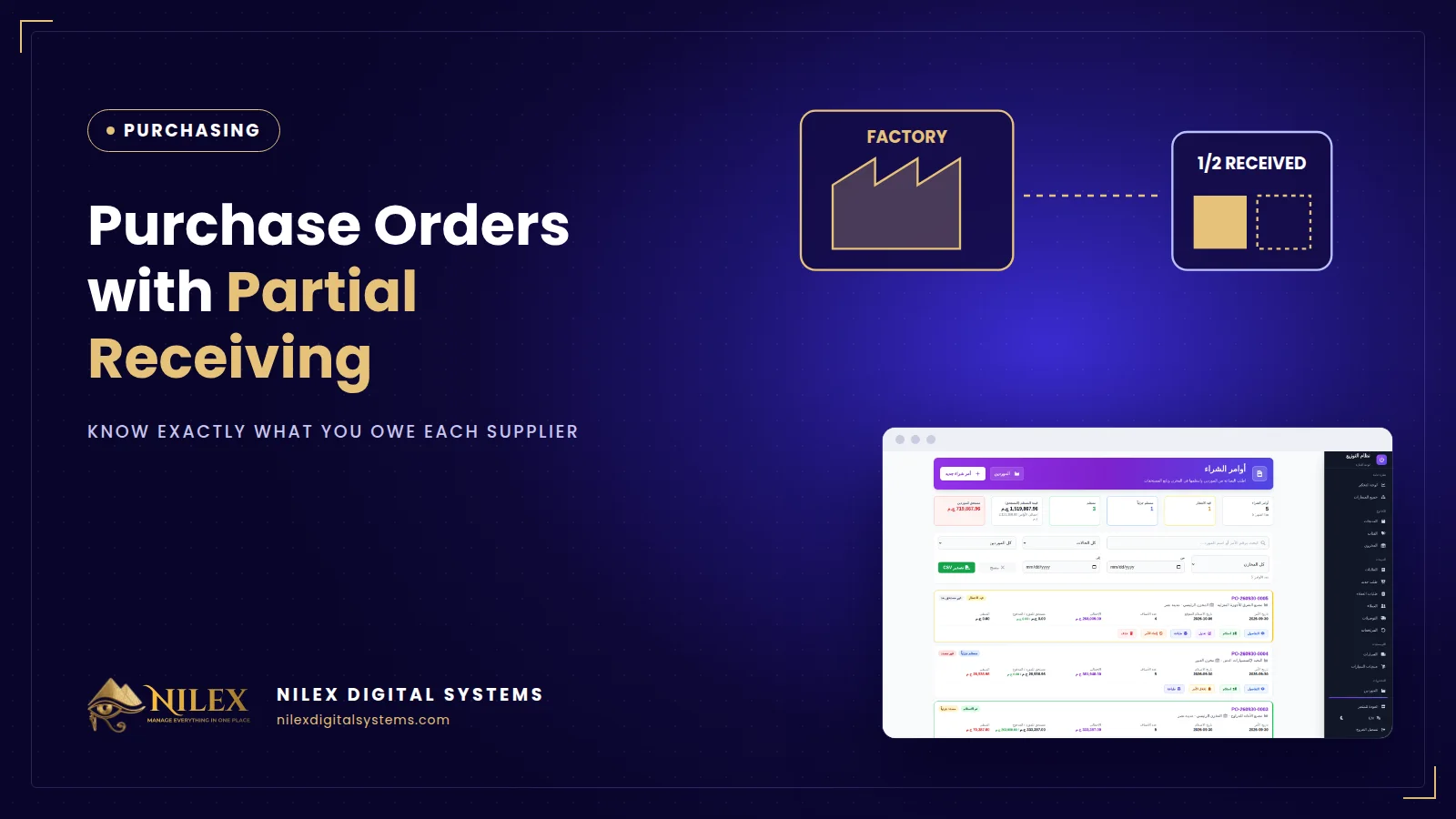 Purchase Orders with Partial Receiving: Know Exactly What You Owe Each Supplier30 September 2026 · 4 min