
ERP Pricing in Egypt: Total Cost of Ownership, Not Just Licences
Why ERP quotes in Egypt are hard to compare, every cost line to include over five years, how pricing models behave as you grow, Egypt-specific e-invoice costs and a TCO worksheet you can use.
ERP prices in Egypt are hard to compare because vendors quote different things. One quote shows a monthly fee per user, another a one-off licence, a third a project price for a custom system, and none of them shows everything you will pay over five years. The number that matters is the total cost of ownership (TCO): every cost of buying, implementing, running and eventually changing the system, divided over the years you will use it.
This guide gives Egyptian owners and finance managers a practical TCO framework: the cost lines to include, the ones vendors often leave out, how pricing models behave as your company grows, and a worksheet you can use to compare quotes like for like. We do not quote market prices, because no reliable public price index for ERP in Egypt exists and vendor price lists vary widely. What we do give you is the structure that makes any quote comparable.
Key takeaways
- Compare ERP offers on five-year total cost of ownership, not on the licence or the first invoice.
- Implementation, data migration, training, integrations and change requests often cost as much as, or more than, the software itself.
- Per-user subscriptions look cheap at the start and grow with headcount. Project-based custom systems cost more up front and less per extra user.
- In Egypt, include e-invoice costs: signing certificate or token, item-code preparation and integration testing with the Egyptian Tax Authority (ETA).
- Foreign-currency pricing, support terms and exit costs are the three hidden items most often missed.
Why the licence price misleads
Most ERP pricing pages show the easiest number to sell: a price per user per month, or a starting package. That number is real, but it covers only one layer of cost. A typical Egyptian ERP project also needs someone to set up your chart of accounts, import your items and customers, configure warehouses and branches, connect the system to the ETA, train staff in Arabic and fix the problems that appear in the first months.
Two companies can buy the same software at the same licence price and end up with very different totals, because one has clean data and simple processes and the other has 8,000 items with duplicate codes and three branches that each do things differently.
The full list of ERP cost lines
One-off costs (year one)
- Discovery and requirements. Workshops to map processes and agree scope. Skipping this is the most expensive saving you can make.
- Licence or build fee. A perpetual licence, the first year of subscription, or the development fee of a custom system.
- Configuration and customisation. Setting up the system and changing it to fit your workflow, forms and reports.
- Data migration. Cleaning and importing items, customers, suppliers, opening balances and open orders.
- E-invoice and e-receipt integration. Registering the system with the ETA, configuring the signing certificate, mapping item codes and testing in the pre-production environment.
- Integrations. Payment gateways, courier companies, your online store, banks, biometric attendance devices.
- Training. Role-based training in Arabic, plus time lost while staff learn.
- Hardware. Servers if hosted on premises, POS terminals, barcode scanners, printers, tablets for sales reps.
Recurring costs (every year)
- Subscription or annual maintenance. For packaged software, the licence renewal; for custom software, the support and maintenance agreement.
- Hosting and backups. Cloud servers, storage, backup copies and monitoring.
- Additional users. New cashiers, storekeepers and sales reps as you grow.
- Change requests. New reports, new branches, new tax rules or new business lines.
- Upgrades. Moving to new versions, and re-testing customisations each time.
- Internal team time. The system administrator or "super user" who supports colleagues.
End-of-life costs
- Exit and migration. Exporting your data and moving to another system if you change vendors. If the contract does not guarantee a full export, this cost can be very high.
How the main pricing models behave as you grow
| Pricing model | How you pay | Works well when | Watch out for |
|---|---|---|---|
| Per-user subscription (SaaS) | Monthly or annual fee per named user, plus implementation | Few users, standard processes, need to start quickly | Cost grows with every new employee; price changes on renewal; foreign-currency billing |
| Perpetual licence plus maintenance | One-off licence, then an annual maintenance percentage | Stable companies that keep systems for many years | Large upfront cost; paying for upgrades; old versions losing support |
| Custom project plus support | Project fee in phases, then a support agreement | Distinctive workflows, many users, desire to own the system | Needs clear scope and a reliable developer; change requests must be managed |
| Local packaged program | One-off or annual licence per device or branch | Small shops with simple needs | Limits on branches, integrations and e-invoice features; paid add-ons |
The crossover point between per-user subscriptions and a custom build depends on your headcount and growth plan. That is why you should model at least three scenarios: today's users, users in three years, and users if you open another branch.
Egypt-specific costs to include
E-invoice readiness
The ETA's e-invoicing SDK requires every ERP or POS system that submits documents to be registered on the taxpayer's profile, to use API credentials and to sign documents with an eSeal certificate. Budget for the certificate and its token or signing device, for developer time and for testing. Item codes also carry a cost: GS1 Egypt explains that EGS codes can be generated free through the ETA platform but require more internal effort and a review period, while GS1 (GTIN) codes are purchased (GS1 Egypt, 2026). For a company with thousands of items, preparing and registering codes is a real work package.
Currency exposure
International ERP subscriptions are often priced in US dollars or euros. When the Egyptian pound moves, your ERP bill moves with it. Ask for EGP pricing, or at least model a scenario where the rate changes during the contract.
Arabic reports and forms
Arabic invoices, statements, payslips and management reports are often extra work in international systems. Ask which Arabic reports are included and which are billed as customisation.
A TCO worksheet you can use
Ask every shortlisted vendor to fill in the same table for five years. Where they write "not included", you have found a hidden cost.
| Cost line | Year 1 | Years 2 to 5 (per year) | Included in quote? |
|---|---|---|---|
| Licence, subscription or build fee | |||
| Implementation and configuration | |||
| Data migration | |||
| ETA e-invoice / e-receipt integration | |||
| Other integrations | |||
| Training | |||
| Hosting and backups | |||
| Support and maintenance | |||
| Additional users at planned growth | |||
| Upgrades and re-testing | |||
| Hardware | |||
| Exit / data export |
How to reduce ERP cost without cutting corners
- Phase the project. Start with sales, inventory, accounting and e-invoicing. Add HR, manufacturing or CRM when the core is stable.
- Clean your data before the project starts. Every duplicate item and wrong opening balance you fix internally is time you do not pay a consultant for.
- Standardise before you customise. Ask whether each special process is truly an advantage or just a habit.
- Negotiate the support terms, not only the price. Response times, who fixes bugs and what counts as a change request matter over five years.
- Secure the exit. Put full data export in a standard format into the contract.
For context on company size, Egypt's MSME Law 152/2020 classifies small enterprises as those with annual turnover of EGP 1 million to 50 million and medium enterprises as EGP 50 million to 200 million (Shalakany, 2020). A proportionate ERP budget for a small enterprise looks very different from one for a medium manufacturer, and your TCO model should reflect your real size and growth plan.
How Nilex helps
Nilex Digital Systems builds custom ERP systems as fixed-scope projects delivered in phases, rather than per-user subscriptions. Each package is defined by scope: the Essentials package covers one company in one location (suppliers, customers, orders, stock, income and expenses, audit log and reports), and larger packages add branches, full accounting, factories and e-invoicing integration. We will help you fill in the TCO worksheet above for every option you are considering, including ours.
Frequently asked questions
How much does an ERP system cost in Egypt?
There is no reliable single figure, because scope, users, data quality and integrations vary so much. A small company with one location and standard processes needs a very different budget from a multi-branch manufacturer. Ask for a five-year TCO on your own scope rather than relying on published "from" prices.
Is a subscription ERP cheaper than a custom one?
At the start, usually yes. Over five years it depends on users and customisation. Companies with many users or heavy customisation often find the gap narrows or reverses, so model both at your planned headcount.
What are the most common hidden ERP costs?
Data migration, Arabic reports, integrations, extra users, change requests after go-live, upgrades that break customisations, and foreign-currency price changes. Ask each vendor to state in writing which of these are included.
Does e-invoice integration add to the cost?
Yes. You need an eSeal certificate and signing setup, prepared item codes, and integration and testing time. Some systems include the integration in the base price; others sell it as an add-on. Confirm this before you compare quotes.
How much should I budget for maintenance each year?
It depends on the model: renewal fees for subscriptions, a maintenance percentage for licences, or a support agreement for custom systems. Whatever the model, define response times and what counts as a bug versus a new feature.
If you have ERP quotes that do not compare like for like, send them to us. Book a free consultation and we will build a five-year cost comparison with you, line by line. For background, read our guide comparing Odoo, SAP, Dynamics and custom ERP.
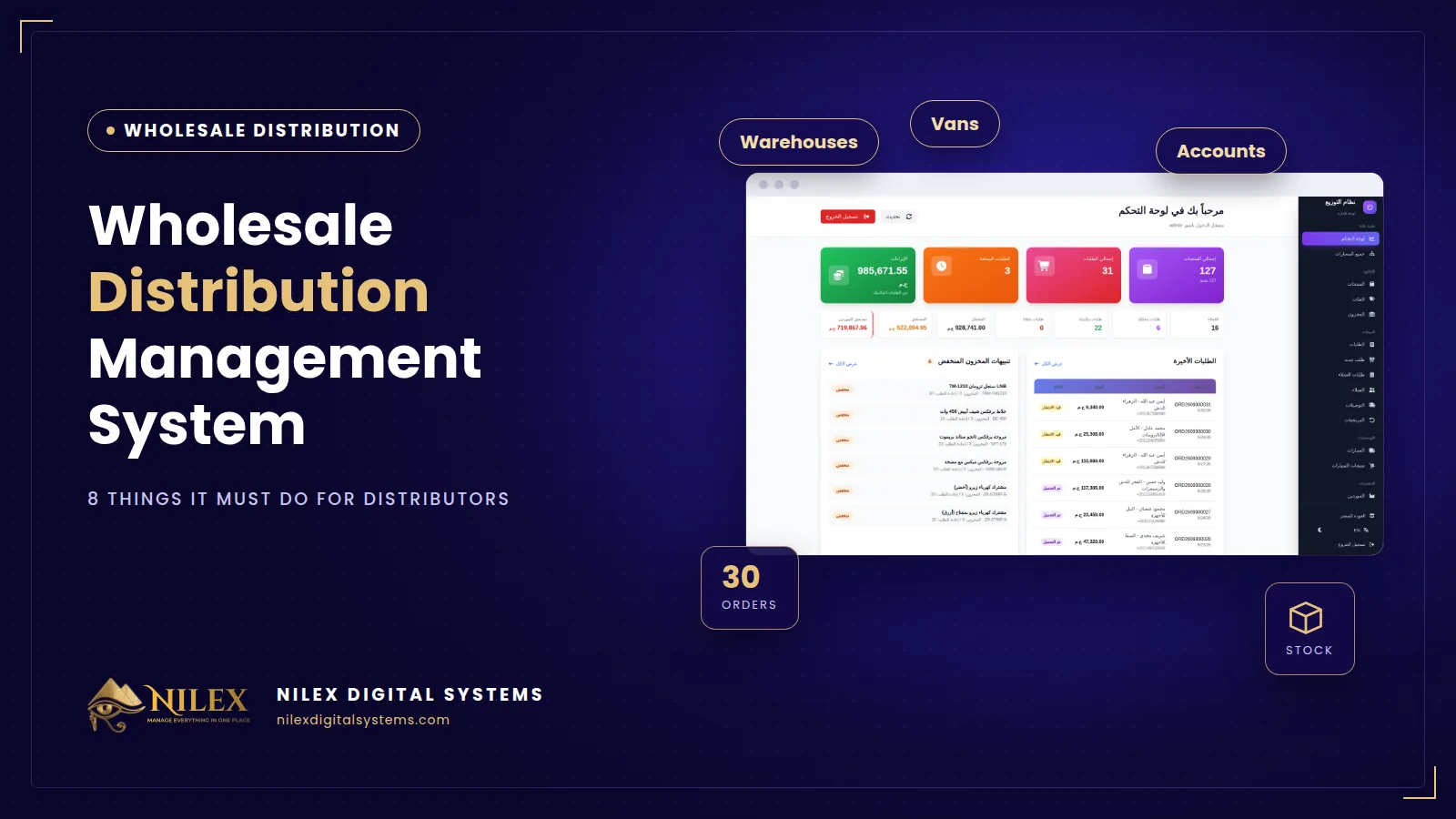 Wholesale Distribution Management System: 8 Things It Must Do for Egyptian Distributors30 September 2026 · 5 min
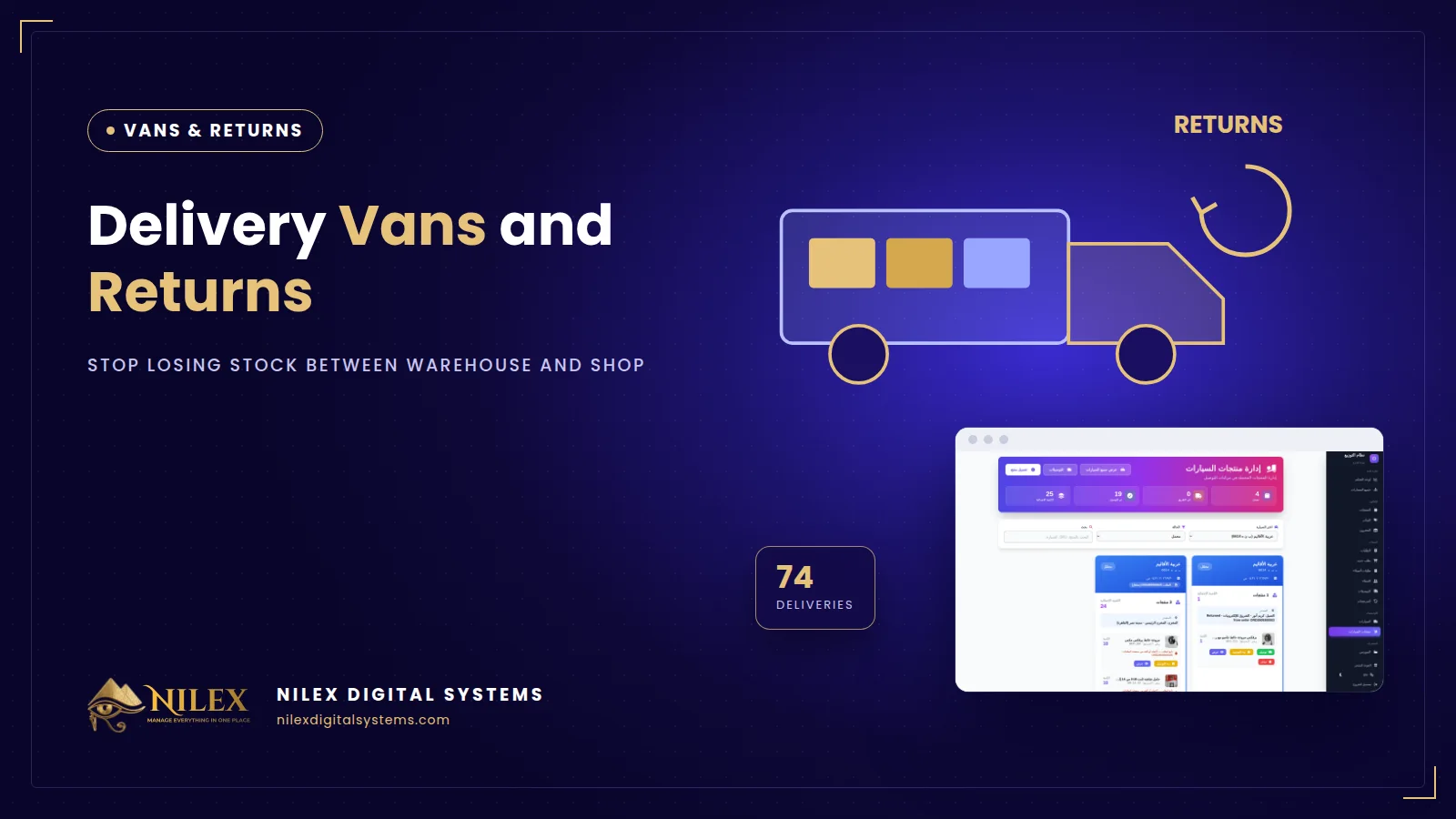 Delivery Vans and Returns: How Distributors Stop Losing Stock Between Warehouse and Shop30 September 2026 · 4 min
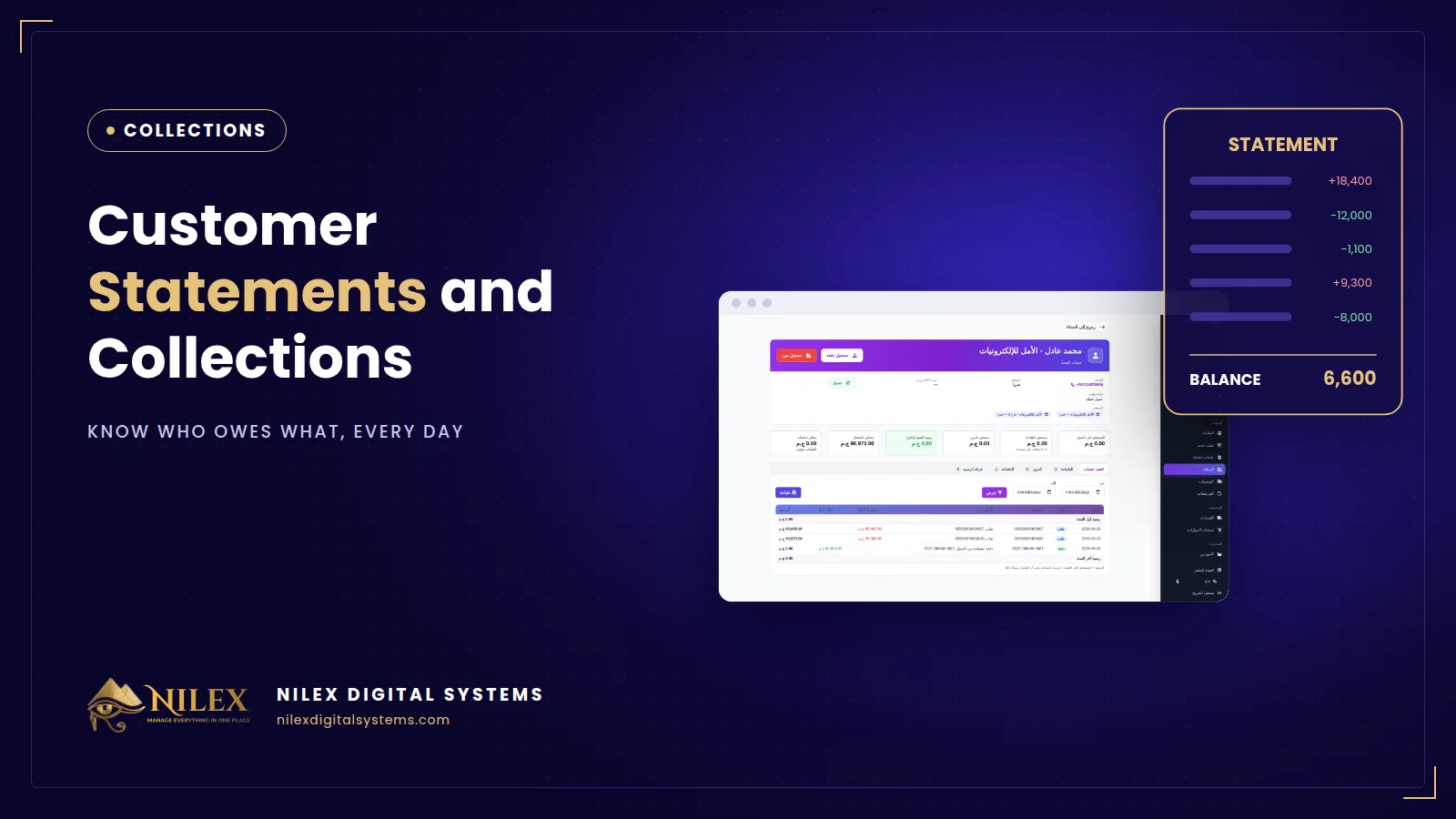 Customer Statements and Collections for Wholesalers: Know Who Owes What30 September 2026 · 4 min