
Law 6/2025 Simplified Tax Regime: Why E-Invoice Readiness Matters for Small Businesses
Egypt's Law 6/2025 lets small businesses with turnover up to EGP 20 million pay tax at 0.4% to 1.5% of turnover, but only if they integrate with the ETA e-invoice and e-receipt systems. Here is what that means.
Law 6 of 2025 created a simplified tax regime for small businesses in Egypt with annual turnover up to EGP 20 million. Instead of corporate tax on profit, eligible businesses pay a small percentage of turnover, between 0.4% and 1.5% depending on their turnover band, and receive several exemptions and lighter filing rules. The catch that many owners miss is that the benefits are conditional: one of the conditions is integration with the Egyptian Tax Authority's (ETA) e-invoice and e-receipt systems. Without a system that can issue those documents, a small business cannot rely on the lower rates.
The ETA head repeated this point publicly in March 2026, as reported by Daily News Egypt. For a workshop in Shubra El Kheima, a clinic in Heliopolis or a trading company in Mansoura, the question is therefore twofold: am I eligible, and is my invoicing ready?
This article explains the regime in plain language, the conditions and the risks, and what "e-invoice readiness" means in practice for a small business.
Key takeaways
- Law 6/2025 took effect on 1 March 2025 and covers businesses with annual turnover up to EGP 20 million.
- Tax is charged on turnover at reduced rates between 0.4% and 1.5%, with exemptions from stamp tax, state development fees and some withholding and advance-payment systems.
- Benefits depend on filing on time and on integration with the ETA's e-invoice and e-receipt systems.
- Once you opt in, you cannot withdraw for five years, and benefits are lost if turnover exceeds EGP 20 million by more than 20%.
- A simple, reliable invoicing system is now a tax decision, not only an operations decision.
What Law 6/2025 does, in plain language
Law 6 is part of a 2025 tax incentives package that also includes Laws 5 and 7 of 2025, as summarised by Andersen Egypt. According to EY's 2025 tax alert, the main features of Law 6 are:
Who is eligible
- Businesses with annual turnover not exceeding EGP 20 million.
- Excluded: businesses providing professional consulting services that earn 90% or more of their revenue from one or two clients, and entities that restructure only to qualify without real economic substance.
How the tax is calculated
Instead of calculating profit and paying corporate tax on it, the business pays a reduced rate on turnover, ranging from 0.4% to 1.5% for turnover between EGP 500,000 and EGP 20 million. The exact band that applies to your turnover is set in the law, so confirm your band with your accountant.
Exemptions
- State development fees, stamp tax, and documentation and registration fees.
- Capital gains tax on selling machinery, equipment and fixed assets.
- Withholding tax on dividends.
- Local withholding tax and advance-payment systems.
Lighter filing
- VAT returns filed quarterly instead of monthly.
- An annual corporate tax return and an annual salary tax return.
- Simplified bookkeeping rules.
The conditions that decide whether you keep the benefits
| Condition | What it means in practice | What your system must do |
|---|---|---|
| File returns on time | Missed deadlines put the benefits at risk | Produce period reports (sales, VAT, payroll) on demand, so filing is not delayed by data collection |
| Integrate with ETA e-invoice and e-receipt | Your B2B and B2C sales must be issued through the ETA systems | Issue signed e-invoices and e-receipts with registered item codes, directly or through a compliant provider |
| Stay within the turnover limit | Exceeding EGP 20 million by more than 20% revokes all reduced benefits from the following year | Show year-to-date turnover at any moment, so you can plan before crossing the limit |
| Five-year commitment | You cannot withdraw from the regime for five years, and inspection can take place five years after filing | Keep complete, retrievable records for the whole period |
Why e-invoice readiness is the real gate
For many small businesses the tax rate is attractive, but the practical barrier is technical. The e-invoice (for sales to businesses) and the e-receipt (for sales to consumers) are not PDF files. Each document is a structured record sent to the ETA, signed with an eSeal certificate and using GS1 or EGS item codes, as the ETA's official e-invoicing SDK describes. The ETA validates each document and can reject it.
Your options as a small business
- The ETA portal. You can enter invoices manually. This is workable only for very few invoices and does not help with consumer sales at volume.
- A cloud accounting or cashier program with ETA integration. Quick to start and affordable for simple businesses. Check that it handles both e-invoices and e-receipts if you sell to both.
- An ERP or custom system with built-in integration. Suits businesses that also need stock, branches, production or detailed cost tracking.
A readiness checklist
- Your tax registration and ETA digital profile are complete and up to date.
- You know whether you are on an e-receipt list, and from which date.
- You have an eSeal certificate or a provider that signs on your behalf.
- Every product and service you sell has an approved GS1 or EGS code.
- Your system records sales once and produces both the ETA document and your internal accounts.
- You can print a turnover report for any period in minutes.
- Records, including ETA document IDs, are stored safely and backed up.
Three Egyptian examples
A small furniture workshop in Damietta
It sells mostly to showrooms (B2B) and occasionally to individuals. It needs e-invoices for showroom sales, a way to issue receipts to individuals, item codes for its product range and a simple turnover report. A cloud program with ETA integration may be enough.
A café with two branches in Nasr City and New Cairo
Almost all sales are to consumers, in cash, card and wallets. It needs a cashier system that issues e-receipts from registered devices, works offline and updates stock of ingredients. The cashier system is where compliance happens.
A small distributor in the Delta approaching EGP 20 million
The main risk is crossing the limit by more than 20% without noticing. It needs e-invoices from the sales reps' orders, stock by warehouse and a live year-to-date turnover figure to plan growth. An ERP with integrated e-invoicing is the safer choice.
Common mistakes to avoid
- Opting in before the system is ready. The five-year lock-in means you should be confident you can meet the integration condition from the start.
- Treating e-invoices and e-receipts as the same thing. They use different systems and documents.
- Leaving item codes to the last week. Code approval and cleanup take time.
- Keeping sales in two places. If sales are recorded in a notebook and then typed into a program, mismatches will appear in your returns.
- Ignoring growth. A business growing quickly should model when it will pass EGP 20 million and what that means.
How to prepare in five steps
- Confirm eligibility with your accountant. Check your turnover for the last full year, your legal form, your activity and whether any exclusion applies.
- Map your sales channels. List who you sell to (businesses, consumers or both), from which branches and through which channels, such as the counter, sales reps, your website or delivery apps. Each channel needs a clear point where the ETA document is issued.
- Choose the system before you opt in. Decide between a cloud program, a cashier system or an ERP based on your volume and complexity, and test it in the ETA's test environment with your real products.
- Prepare codes and certificates. Register item codes, obtain the eSeal certificate and register every device and branch.
- Run one month in parallel. Compare the system's sales and turnover reports with your usual records before relying on them for your first return under the regime.
How Nilex helps
Nilex Digital Systems builds custom ERP systems that record each sale once and generate both the ETA document and the accounting entry, with item codes stored on the product card and turnover reports you can export at any time. For small businesses with one location, the Essentials package covers suppliers, customers, orders, stock and income and expenses, and e-invoicing integration can be scoped with it. We do not give tax advice. We work alongside your accountant or tax adviser, who confirms eligibility and filing.
Frequently asked questions
Who qualifies for the simplified tax regime under Law 6/2025?
Businesses with annual turnover up to EGP 20 million, except for excluded categories such as professional consultants earning 90% or more of revenue from one or two clients. Your accountant should confirm eligibility based on your legal form and activity.
What are the tax rates under Law 6/2025?
Reduced rates on turnover from 0.4% to 1.5%, depending on the turnover band, according to EY's 2025 summary. Check the band that applies to your turnover in the law or with your tax adviser.
Is the e-invoice really required to benefit?
Yes. Integration with the ETA's e-invoice and e-receipt systems is one of the conditions, and the ETA head repeated this in March 2026.
What happens if my turnover goes above EGP 20 million?
According to EY, if turnover exceeds EGP 20 million by more than 20% within the five-year period, all reduced tax benefits are revoked from the following year.
Does Law 6/2025 remove VAT?
No. VAT-registered businesses still deal with VAT, but under the regime VAT returns are filed quarterly instead of monthly, according to EY. Ask your accountant how this applies to your business.
If you are considering the simplified regime and want to be sure your invoicing can meet the e-invoice and e-receipt condition, book a free consultation. We will review your sales flow and tell you which system option fits your size. For the technical side, see our guides to e-invoice integration and connecting your POS to the e-receipt.
This article is general information, not legal or tax advice. Confirm the details that apply to your company with a specialist.
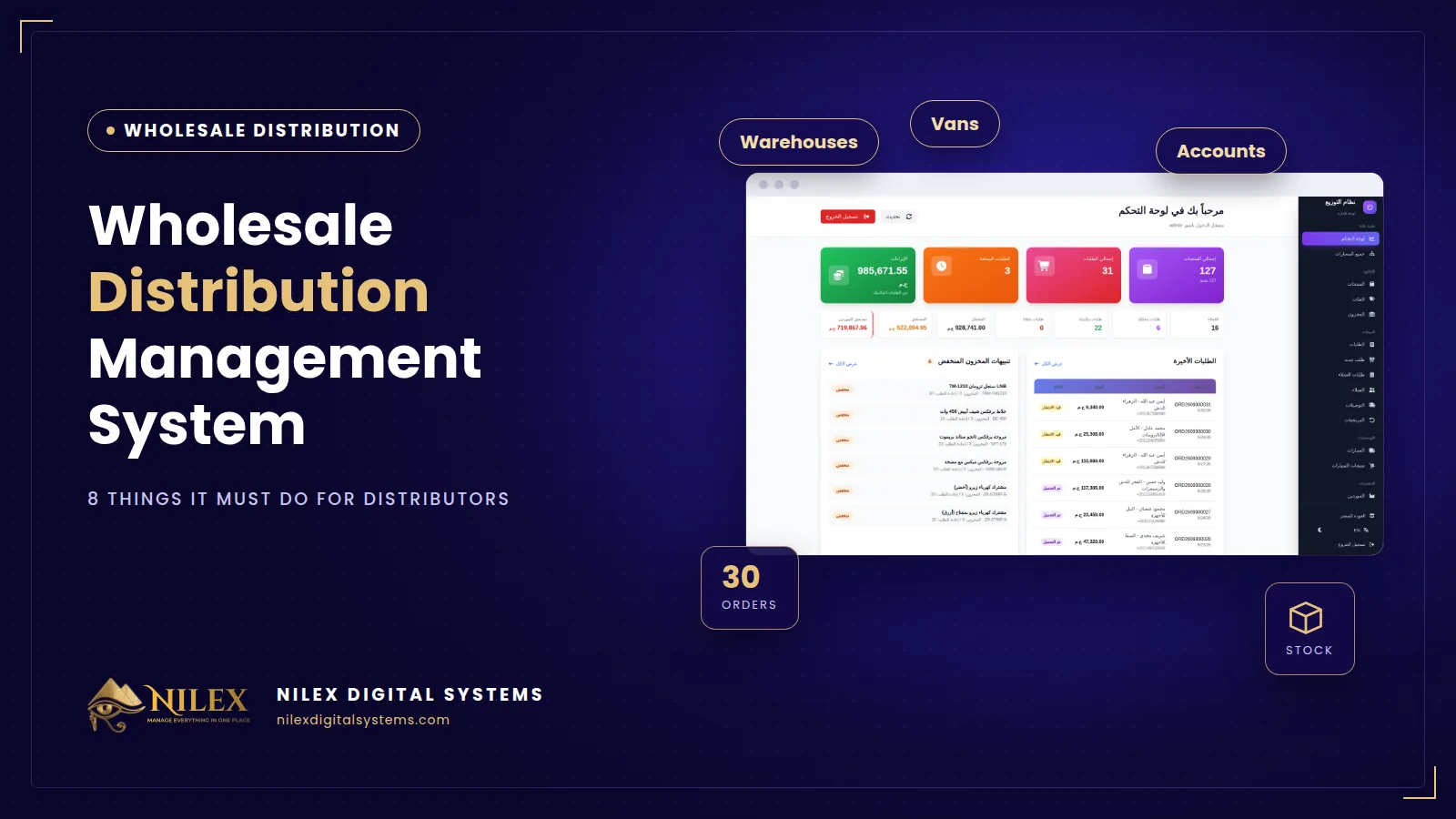 Wholesale Distribution Management System: 8 Things It Must Do for Egyptian Distributors30 September 2026 · 5 min
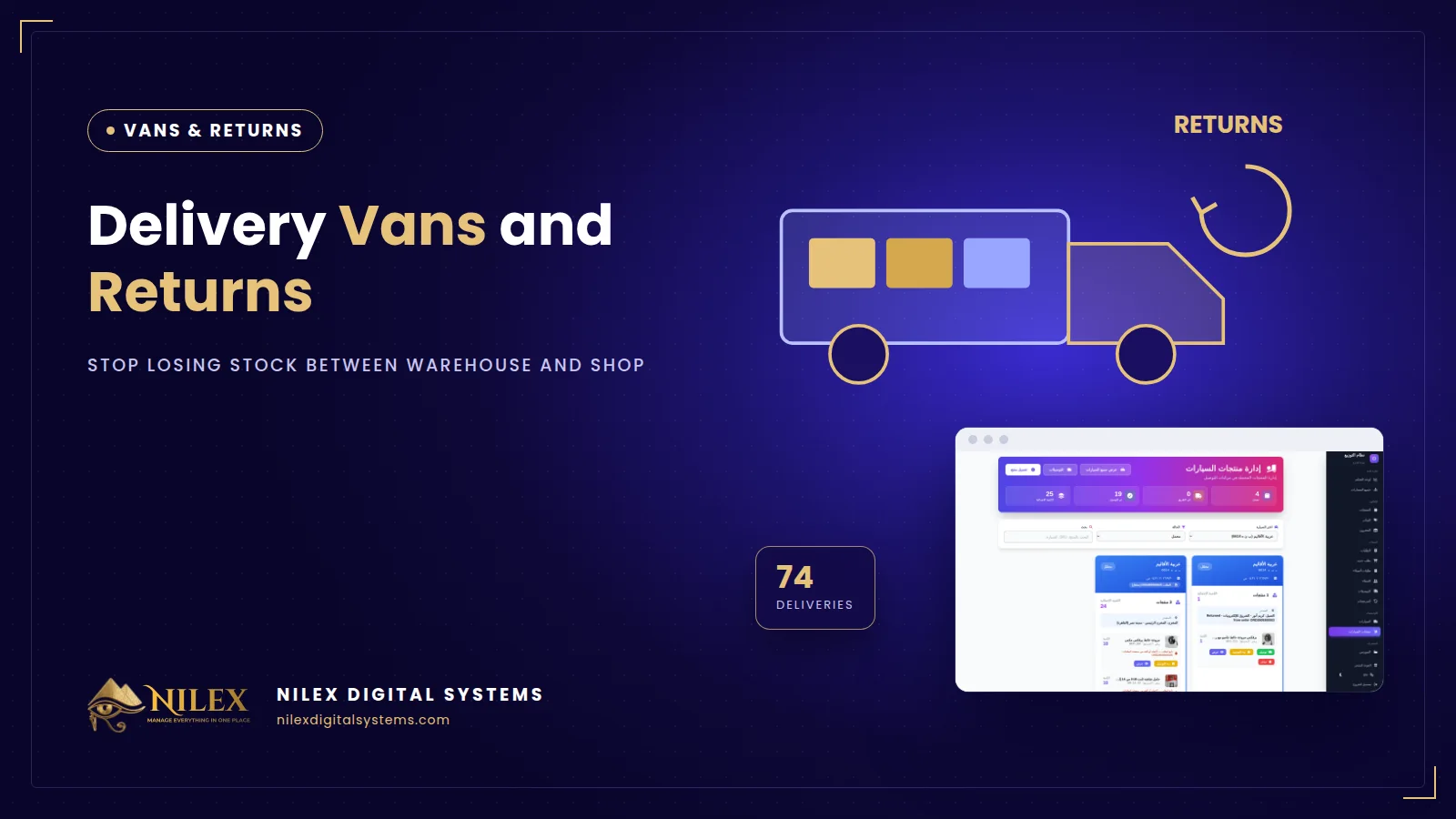 Delivery Vans and Returns: How Distributors Stop Losing Stock Between Warehouse and Shop30 September 2026 · 4 min
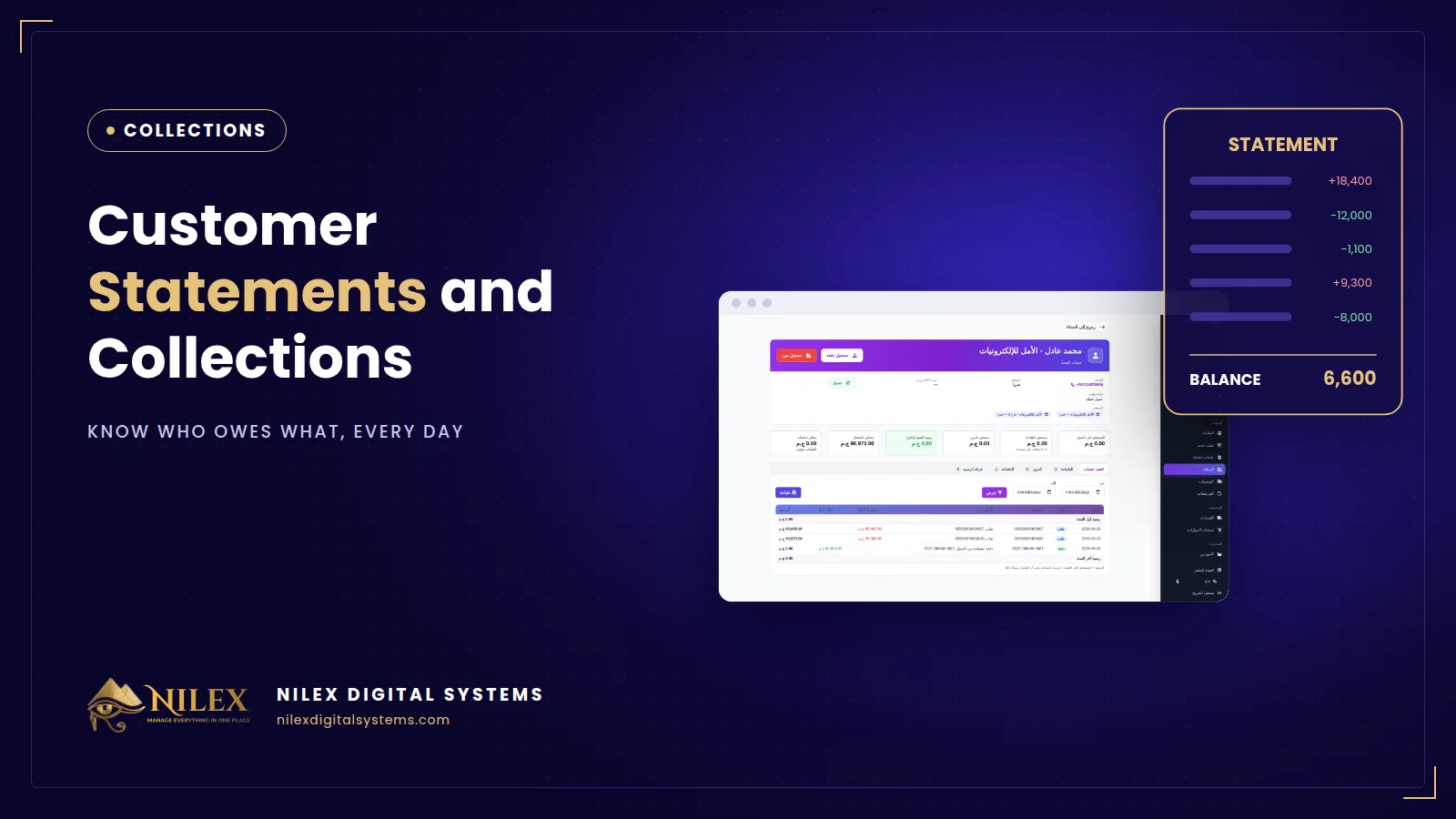 Customer Statements and Collections for Wholesalers: Know Who Owes What30 September 2026 · 4 min