

Digital Warranty Certificates for PPF, Ceramic and Tint: What to Include and How Brand Registration Fits
What a digital warranty for PPF, nano-ceramic and tint should contain: customer, car and VIN, service, film, period, end date, status and a PDF certificate. How it fits with XPEL and 3M registration, and how re-inspection follow-ups bring customers back.
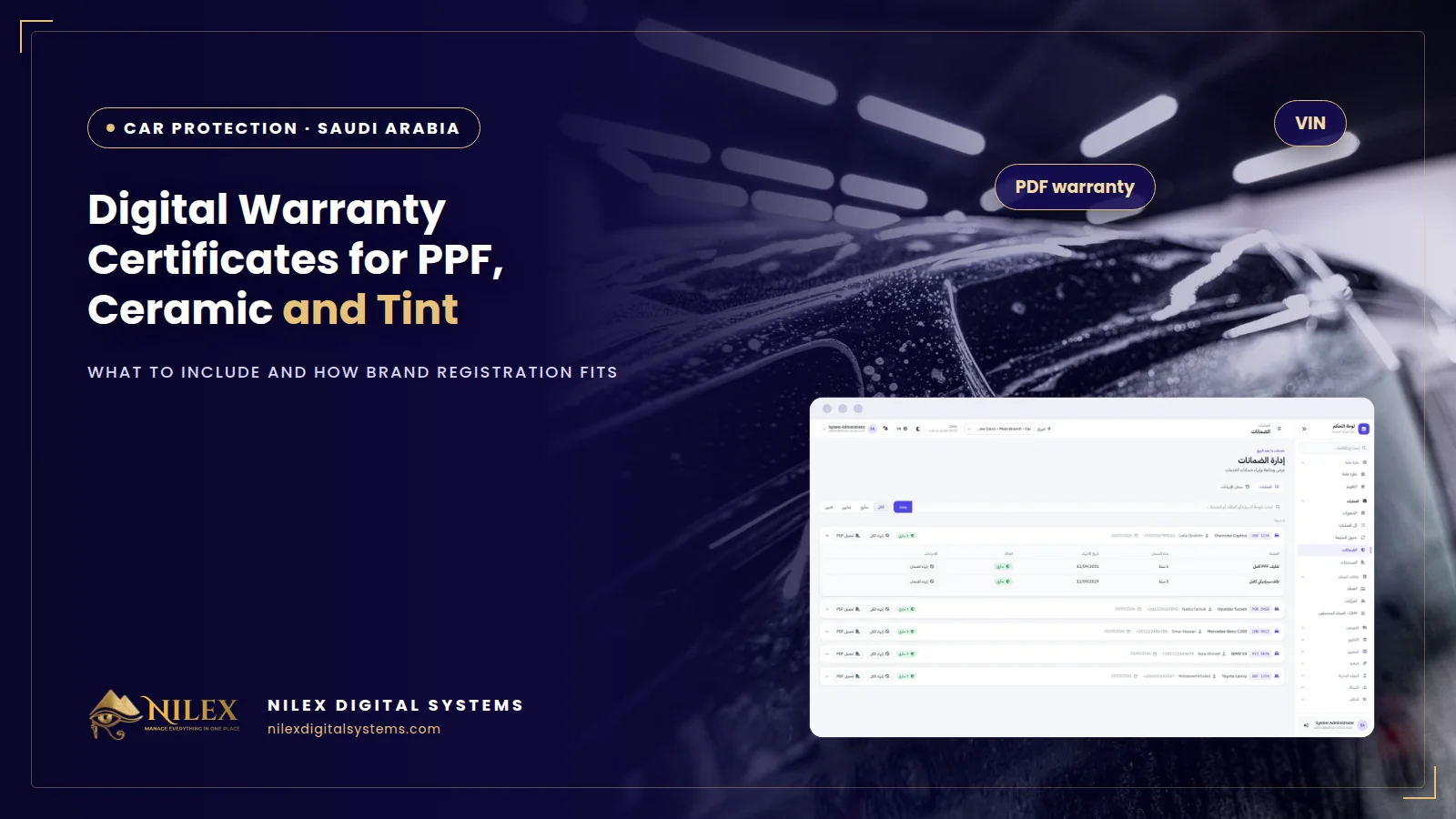
A digital warranty certificate for PPF, nano-ceramic or tint is a record the center creates at delivery for each service: who the customer is, which car (with its VIN), which service and film, the warranty period, the start and end dates, the current status, and a PDF the customer can keep. It does not replace registration with the film brand. XPEL and 3M warranties are still registered through the brand's own process, and the center's certificate is the proof of the job behind that registration.
Customers in Saudi Arabia and the Gulf already search for «ضمان حماية ppf», «ضمان حماية 3m» and «ضمان النانو سيراميك». They want to know what is covered, for how long and how to claim. A center that can answer with a clear certificate, found in seconds by plate or phone number, looks more trustworthy than one that hands over a stamped booklet. This guide explains what the certificate should contain, how it fits with brand registration, and how it brings customers back.
Key takeaways
- Create one warranty record per delivered service, not one per car: full PPF, ceramic and tint usually have different periods and conditions.
- Capture the VIN at check-in. Brand warranty processes such as 3M's ask for the full VIN, and XPEL registers warranties against the vehicle.
- Brand registration still happens on the brand's portal or card; your system keeps the job record that proves the installation.
- A warranty has a status: active, expired or terminated, with the reason recorded when it is terminated.
- Re-inspection dates calculated from delivery turn the warranty into a reason for the customer to return.
Brand warranty vs center warranty
Two different promises are often printed on the same card, and customers rarely know the difference. Writing them separately avoids most arguments.
| Question | Film brand warranty | Center (workmanship) warranty |
|---|---|---|
| Who gives it? | The film manufacturer, through its authorised installers | Your center |
| What does it usually cover? | Defects in the film itself, under the brand's terms | The installation: edges, alignment, finish, as you define it |
| Who sets the period? | The brand, per product line | You, per service |
| Where is it registered? | The brand's portal or warranty card | Your system, with a PDF certificate |
| What proof is needed for a claim? | Proof of authorised installation, vehicle details, install date | Your job record and the certificate |
Check the terms of every brand you install and copy them faithfully. Never promise on your certificate a period the brand does not give for that product.
What should the certificate contain?
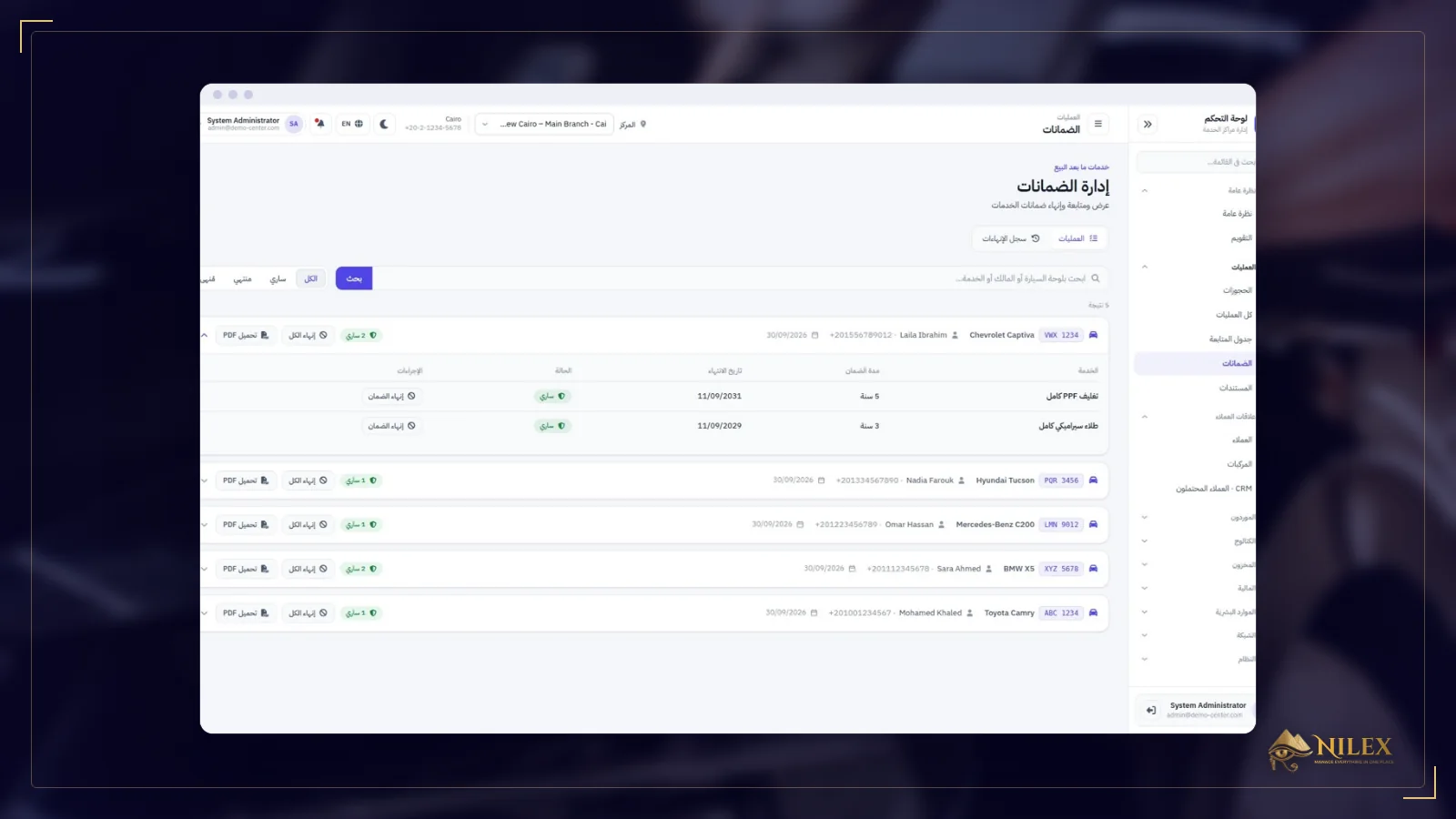
A useful certificate answers every question a customer, a buyer of the used car or a brand representative might ask two years later:
- Customer: name and mobile number, so the record can be found quickly.
- Car: plate, make, model, year, colour and VIN. The VIN stays the same if the plate changes or the car is sold.
- Service: for example full-body PPF, front package, nano-ceramic exterior, or heat-insulation tint.
- Film or product: the brand and product line, as you set up the service.
- Period, start date and end date: the end date calculated from the delivery date, not written by hand.
- Status: active, expired or terminated.
- Conditions: what is covered, what is not, and any maintenance or inspection the customer must keep up.
- Center details: name, branch, logo and contact, so the customer knows where to go.
In the Nilex car protection system, each delivered service gets a warranty with its period and end date, the status is shown as active, expired or terminated, and a PDF warranty certificate is printed for the customer in Arabic or English. The car's make, year and VIN are loaded onto the warranty document from the car record, so nobody types them twice. Our wider guide to the PDF documents a business system should produce covers invoices, receipts and reports as well.
Start at check-in: the VIN and the photos
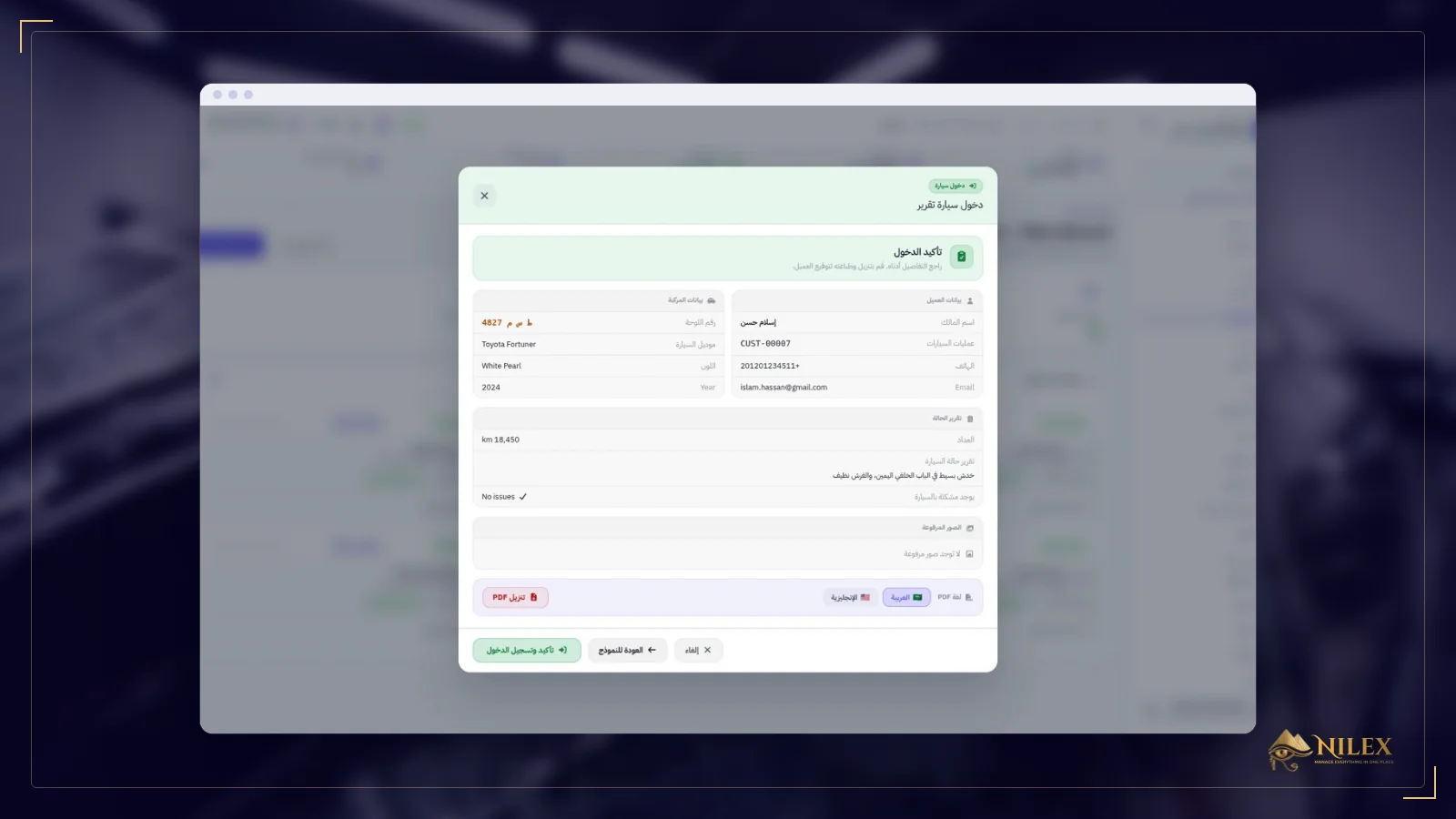
A good warranty starts the moment the car enters. Reception records the mileage, condition notes and photos, and the customer signs the check-in form. If the VIN is captured here, every later document for that job, including the warranty, can carry it. That matters most when a claim reaches the brand, because the vehicle has to be identified beyond doubt. The full check-in routine is in check-in reports and digital warranties.
The check-in also protects the warranty itself. If a customer later reports a mark under the film, the check-in photos show whether the paint was already damaged before the film went on.
How brand registration fits: XPEL and 3M
Brands are moving warranty registration online, tied to the vehicle and the installer:
- XPEL says it wants all warranties eventually completed in DAP, its dealer portal, and encourages dealers outside the US to register warranties there. Paper cards are still in use, and registration works even when the VIN cannot be decoded.
- 3M, on its Canadian Scotchgard paint protection film page, asks the installer to complete a warranty card with the VIN, the installer's 3M certified licence number and the authorised distributor the film came from. The customer then registers online with the make, model, year, full VIN, installation date and film product.
Practices can differ by country and distributor, so confirm the current process with your brand representative in the Kingdom. The Nilex system does not register warranties with film brands; that remains the installer's step on the brand's portal. A practical habit is to register on the brand portal the same day and keep the registration confirmation, or a photo of the completed card, in the job's documents, next to the work order.
Active, expired or terminated
A warranty is not just a date. Over its life it changes status, and the record should show why:
| Status | When | What to record |
|---|---|---|
| Active | From delivery until the end date | Service, period, end date, certificate |
| Expired | After the end date | Nothing extra; offer a renewal service where it makes sense |
| Terminated | When the terms say so, for example accident damage or skipped maintenance | The reason and the date, so the decision can be explained |
Terminating a warranty is a sensitive conversation. When the reason and date are recorded in the system, the branch manager can explain the decision calmly instead of relying on someone's memory.
Nano-ceramic and tint: what is different
Nano-ceramic warranties are usually tied to care: many centers require periodic inspection or maintenance visits for the warranty to stay valid. If your terms say so, write the condition on the certificate in plain words, and make sure the follow-up schedule actually calls the customer. Syarah's guide on the difference between nano-ceramic and protection films is a useful plain-language reference to share with customers who are choosing between the two.
Tint warranties usually cover fading, bubbling and peeling. Because tint limits are a legal question in the Kingdom, keep the film product clear in the service name; the Nilex system has no separate field for the tint percentage of each window, so naming the service carefully at setup is the practical approach.
The handover: five minutes that prevent claims
The certificate works best when someone explains it. At delivery, take five minutes with the customer:
- Walk around the car and show the protected panels, so the customer knows exactly what the warranty covers.
- Hand over the PDF certificate, on paper or sent to the customer's mobile, and point to the end date.
- Explain the care rules in plain words: when to wash, what to avoid, and when the first inspection is due.
- Confirm that the brand registration is done or tell the customer when it will be.
This routine fits the rest of the job record described in our guide to car protection center management software.
From warranty to repeat business
When the warranty is created, the system also calculates re-inspection dates from the delivery date and lists them as overdue, due soon and upcoming. Reception gets a daily list of who to call. The customer feels looked after, the center checks its own work, and many of those visits turn into paid services: ceramic maintenance, an extra panel, tint or interior protection. Customers with portal access can also see their cars, services and follow-up dates, as described in customer and technician portals.
Warranty records hold personal data: names, phone numbers, plates and photos. Saudi Arabia's personal data protection law has been enforceable since September 2024, and Clyde & Co reports fines of up to SAR 5 million, so limit who can open customer records.
How Nilex helps
The car protection film centers management system records check-in with mileage, notes, photos and the VIN, keeps the whole job in one work order with its documents, creates a warranty for every delivered service with its period, end date and status, prints a PDF warranty certificate in Arabic or English, and schedules re-inspection follow-ups from the delivery date. It does not register warranties with film brands or send automatic WhatsApp reminders; those stay with your team.
Digital warranties and follow-ups are part of the Single Center plan. Plans, prices and a warranty demo video are on the system page. For the full picture of a Saudi center system, read a car protection center system in Saudi Arabia, or compare options in PPF and tint shop software in the GCC. Questions? Contact us.
Sources
- XPEL knowledge base: how dealers register international warranties
- XPEL knowledge base: warranty registration process
- 3M Canada: Scotchgard paint protection film warranty program
- Syarah: the difference between nano-ceramic and protection films (Arabic)
- Clyde & Co: enforcement of the Saudi PDP Law (Mar 2026)
Frequently asked questions
Does a digital certificate replace the brand's warranty registration?
No. The brand's registration still happens through its own portal or card. The center's certificate and job record are the proof of installation behind it.
Why does the certificate need the VIN?
The VIN identifies the car even if the plate changes or the car is sold, and brand processes such as 3M's ask for the full VIN. In the Nilex system the VIN is stored on the car and printed on the job documents.
What if the customer loses the certificate?
Search the customer by phone or the car by plate, open the warranty and print the PDF again.
Can customers verify a warranty online?
There is no public verification page in the standard system. Customers receive the PDF certificate, and customers with portal access see their cars, services and follow-up dates. If you need a public check page, ask for it as custom work.
One car had PPF, ceramic and tint. How many warranties?
Three: one per service, each with its own period, end date and status.
 Clinic Management System for Every Specialty: One Professional Core, Built Around Your Clinic8 November 2026 · 8 min
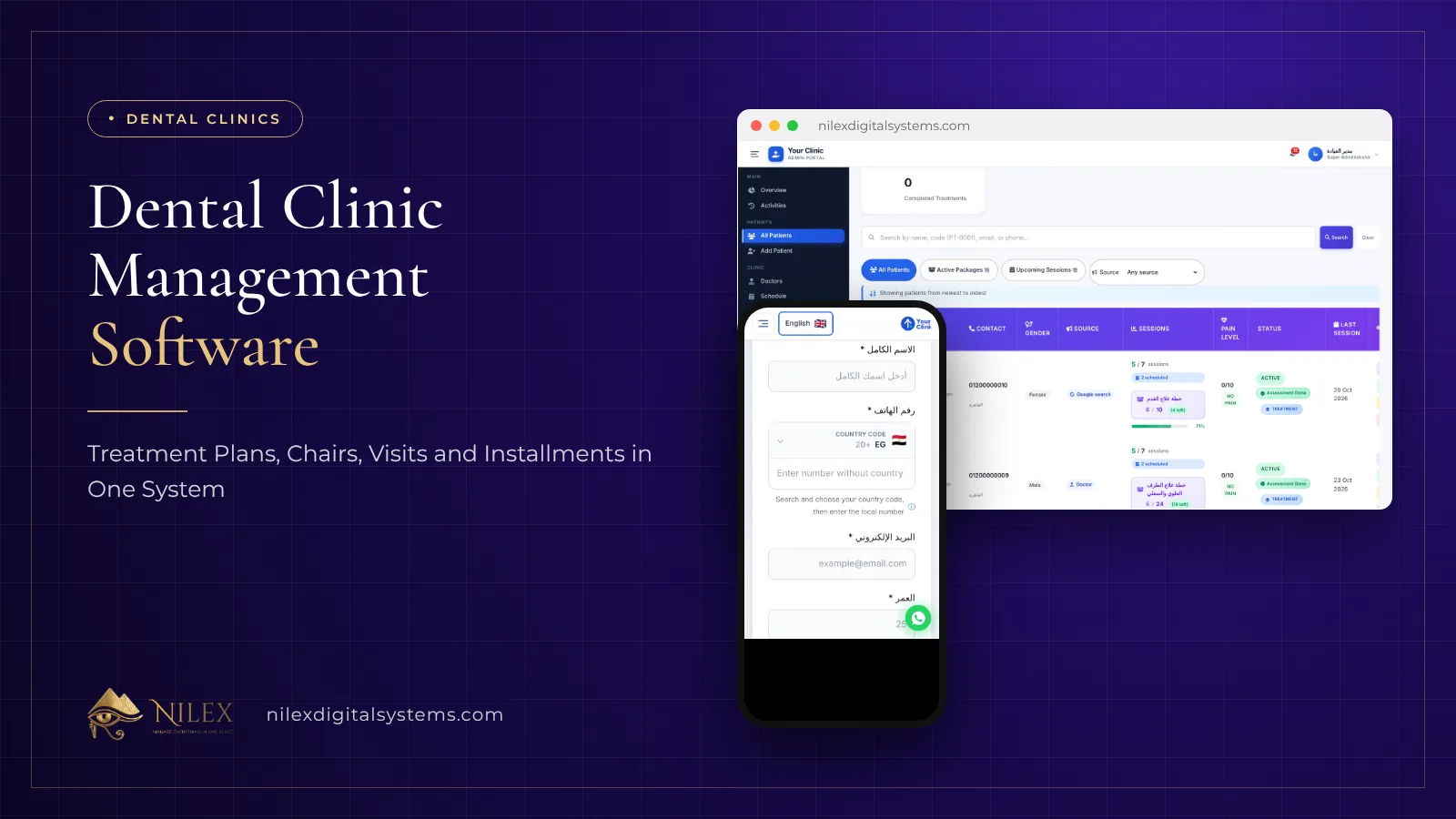 Dental Clinic Management Software: Treatment Plans, Chairs, Visits and Installments in One System8 November 2026 · 6 min
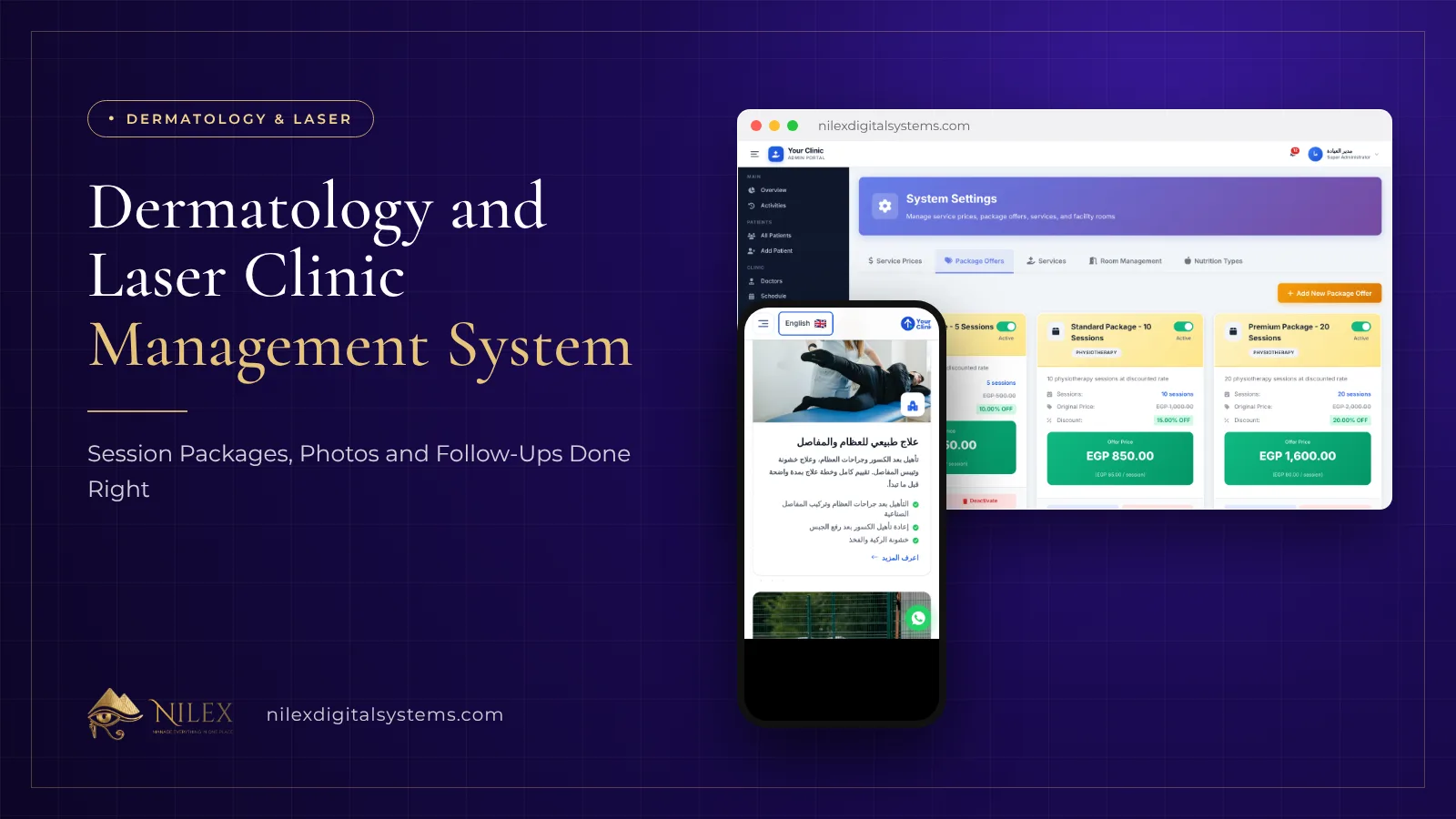 Dermatology and Laser Clinic Management System: Session Packages, Photos and Follow-Ups Done Right8 November 2026 · 5 min