
Purchase Orders with Partial Receiving: Know Exactly What You Owe Each Supplier
How distributors manage purchase orders to factories and suppliers: shipping and discounts, receiving in full or in part into a warehouse, updating product cost, and supplier accounts with statements.
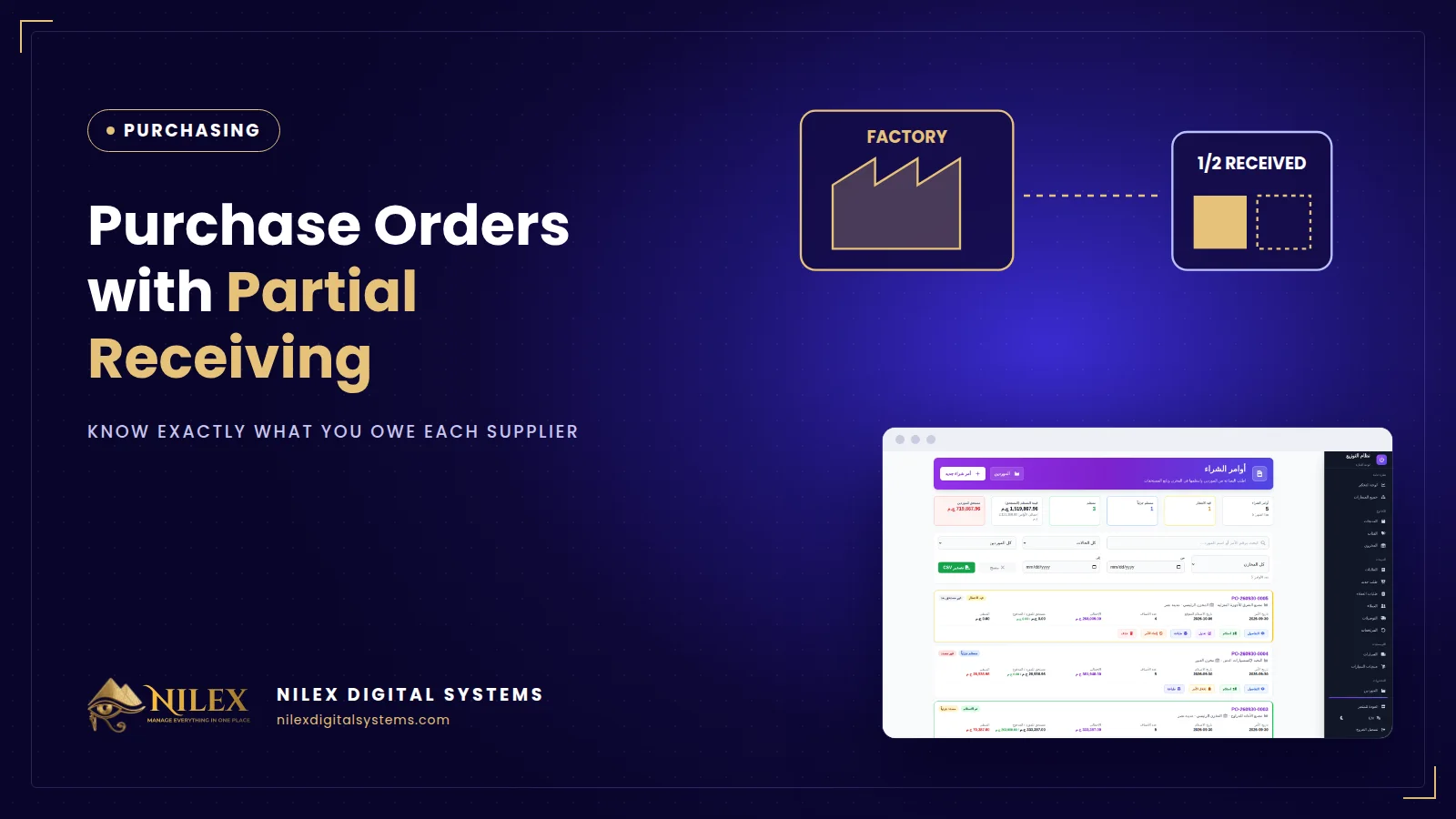
A purchase order with partial receiving is an order to a factory or supplier that can be received in several deliveries: what arrived today enters the warehouse and the supplier's account now, and the rest stays open until it arrives. For distributors, it is the difference between knowing exactly what you owe each supplier and paying for goods that never came.
Factories and importers rarely deliver a whole order at once. One model is out of stock, a container is delayed, a truck carries only part of the load. If the order is recorded as "received" when the first truck arrives, stock and payables are wrong from that day.
Key takeaways
- Every purchase goes through a purchase order with items, quantities, unit costs, shipping and discount.
- Receive what actually arrived, line by line, into a named warehouse; the rest stays open.
- Received goods update stock immediately and, if you choose, the product's cost.
- The supplier's account shows purchases received, payments and the balance you owe.
- Close an order when you accept that the remaining quantity will not come.
What a purchase order should contain
- Supplier and the destination warehouse.
- Items with quantity and unit cost; duplicate lines merged.
- Shipping cost and discount, so the total cost is real.
- Order date and expected delivery date.
- Whether payables are tracked for this order (some are paid in advance, some on credit).
Receiving in full or in part
When goods arrive, the storekeeper records the quantity received for each line. The order becomes "partially received" until everything arrives, then "received". Each receipt keeps a history with the date and quantities, so you can always see what came in which delivery.
| Status | Meaning | Stock | Supplier balance |
|---|---|---|---|
| Pending | Ordered, nothing arrived | No change | No payable yet |
| Partially received | Some lines or quantities arrived | Received quantities added | Value received is payable |
| Received | Everything arrived, or the order was closed | All received quantities added | Full value received is payable |
| Cancelled | Nothing will arrive | No change | Nothing payable |
Landed cost and product cost
The cost of a product is not only the supplier's price. Shipping and discounts change it. When a purchase order is received, updating the product's cost from the order's unit cost keeps margins in reports honest. If prices move often, as they do with imported electronics, this is the only way to know whether an old selling price still makes money.
The supplier's account
Each supplier needs an account like a customer's, from the other side: purchase orders received (what you owe), payments made, other debts, and a statement with a running balance. Payments are allocated to open purchase orders, and any overpayment stays as credit with the supplier. The payables summary shows what you owe all suppliers in total.
Common mistakes
- Marking the whole order received when only part arrived.
- Receiving goods into "the warehouse" when you have several.
- Paying the invoice amount instead of the received value.
- Keeping the old product cost after prices rise.
- Recording supplier payments in a separate notebook.
Linking purchasing to stock
Purchasing starts from stock: low-stock alerts per warehouse tell you what to order. Our overview of what a distribution system must do and our guide to ERP for distributors explain the stock side.
How Nilex helps
The wholesale distribution and warehouse management system from Nilex creates purchase orders with shipping and discount into a chosen warehouse, receives them in full or in part with a receipt history, updates stock and product cost, and keeps an account per supplier with payments, debts, statements and a payables summary. Watch the "purchasing and suppliers" video on the system page.
Frequently asked questions
What if we pay the supplier in advance?
Record the payment on the supplier's account; it stays as credit and is applied when the order is received.
The rest of the order will never come. What do we do?
Close the order. It becomes received with the quantities that actually arrived, and the payable is based on those.
Can one order go to two warehouses?
Create one order per destination warehouse, or receive into one and transfer. Keeping one destination per order keeps stock clear.
Can we print the order for the supplier?
Yes, purchase orders can be printed or exported and sent to the supplier.
If you are not sure what you owe each supplier today, talk to Nilex.
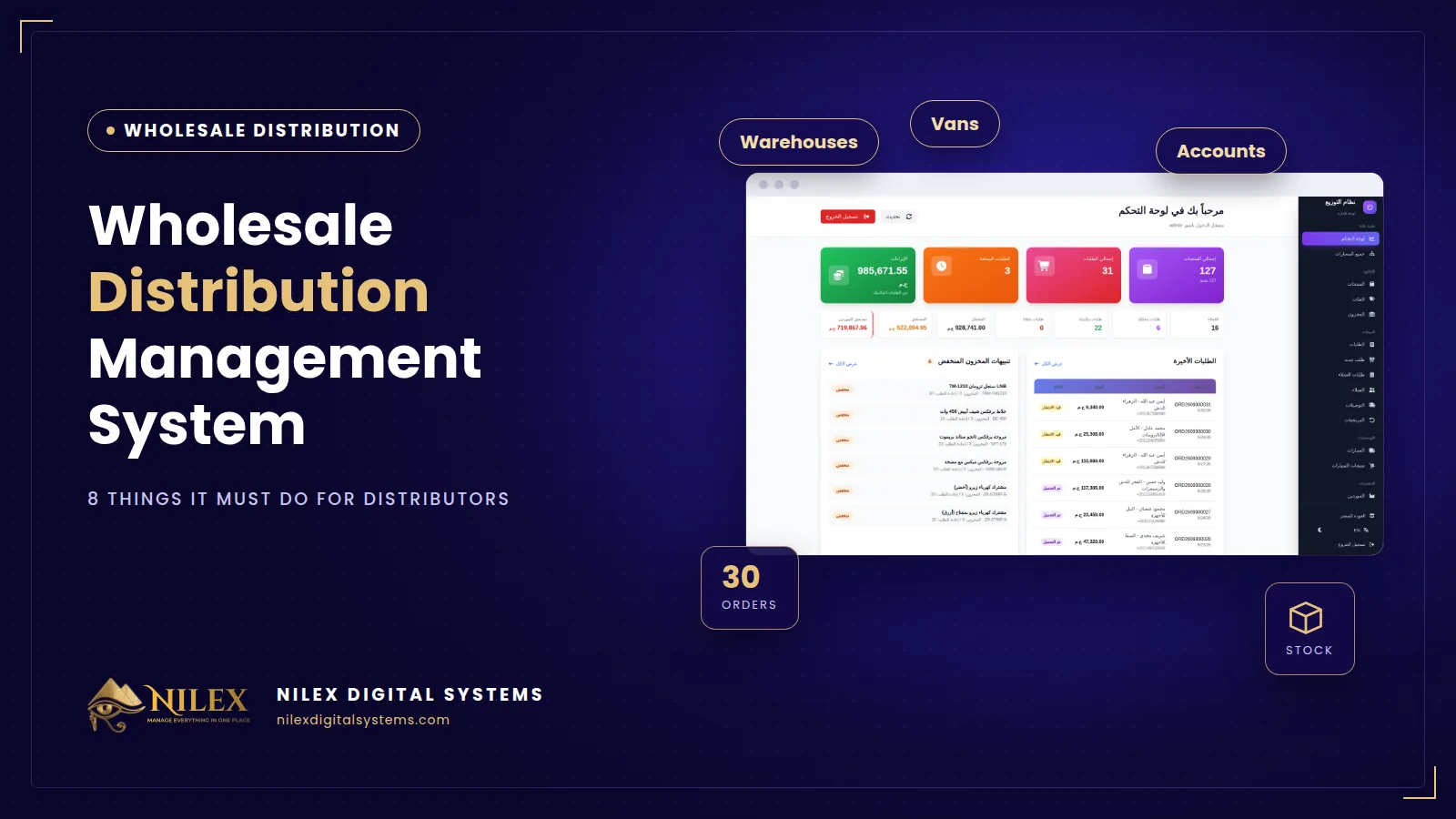 Wholesale Distribution Management System: 8 Things It Must Do for Egyptian Distributors30 September 2026 · 5 min
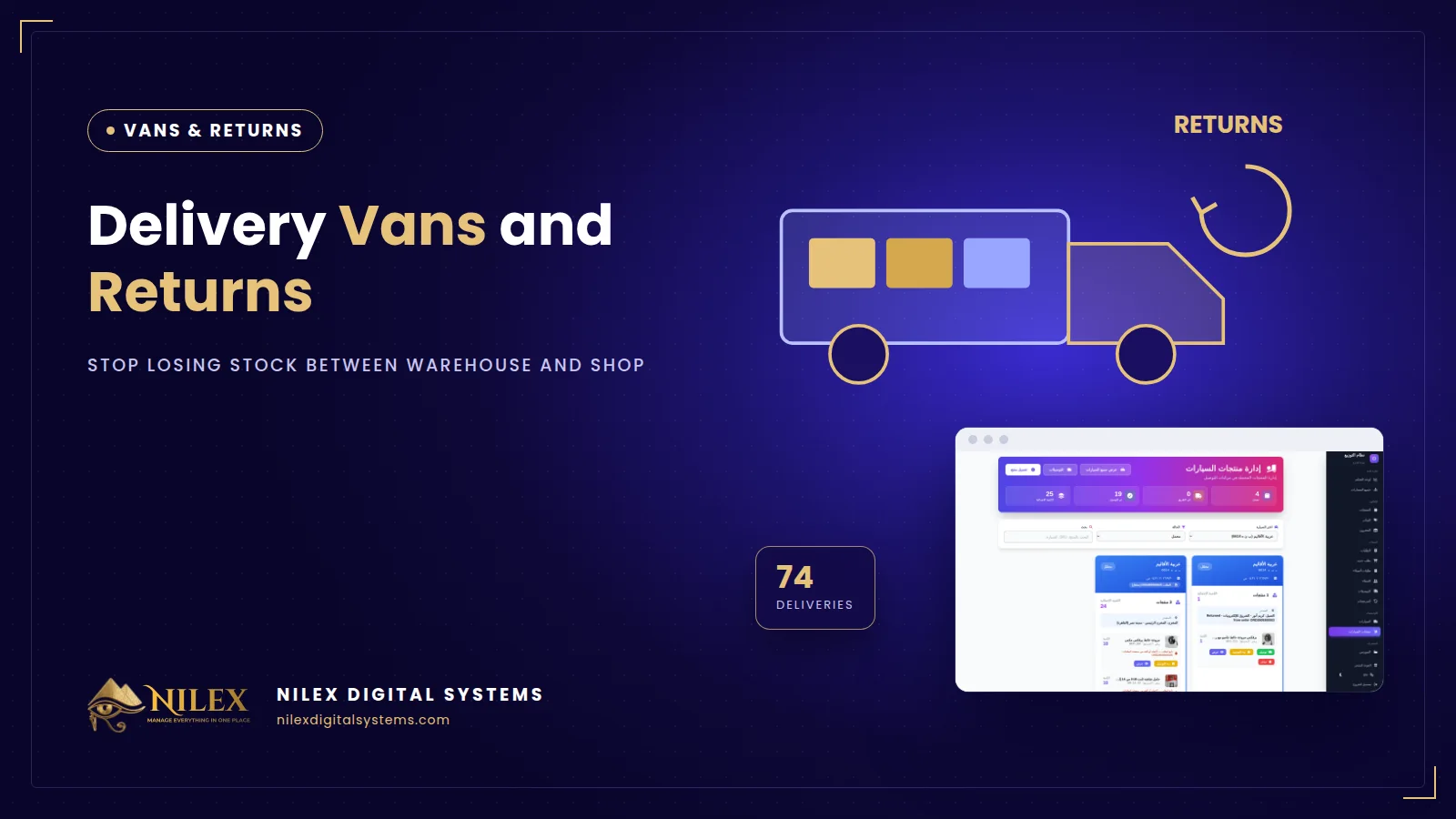 Delivery Vans and Returns: How Distributors Stop Losing Stock Between Warehouse and Shop30 September 2026 · 4 min
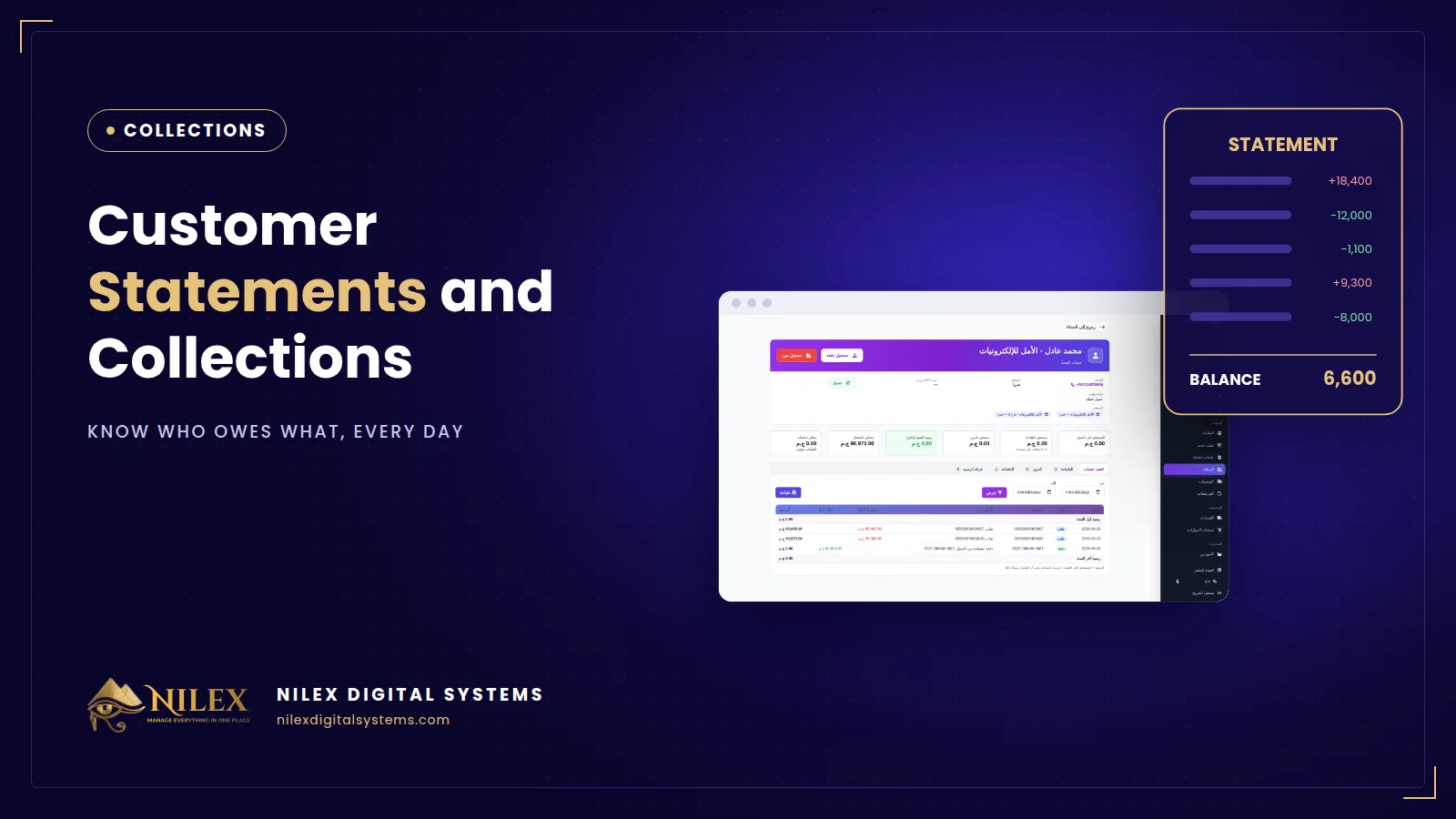 Customer Statements and Collections for Wholesalers: Know Who Owes What30 September 2026 · 4 min