

Salla, Zid or a Custom Online Store? An Honest Guide for Saudi Merchants
Salla or Zid, or should you build your own store? When a platform is the right start, how to choose between the two using their official plans, the five signs a custom store makes sense, and how to plan a later move without losing data or rankings.
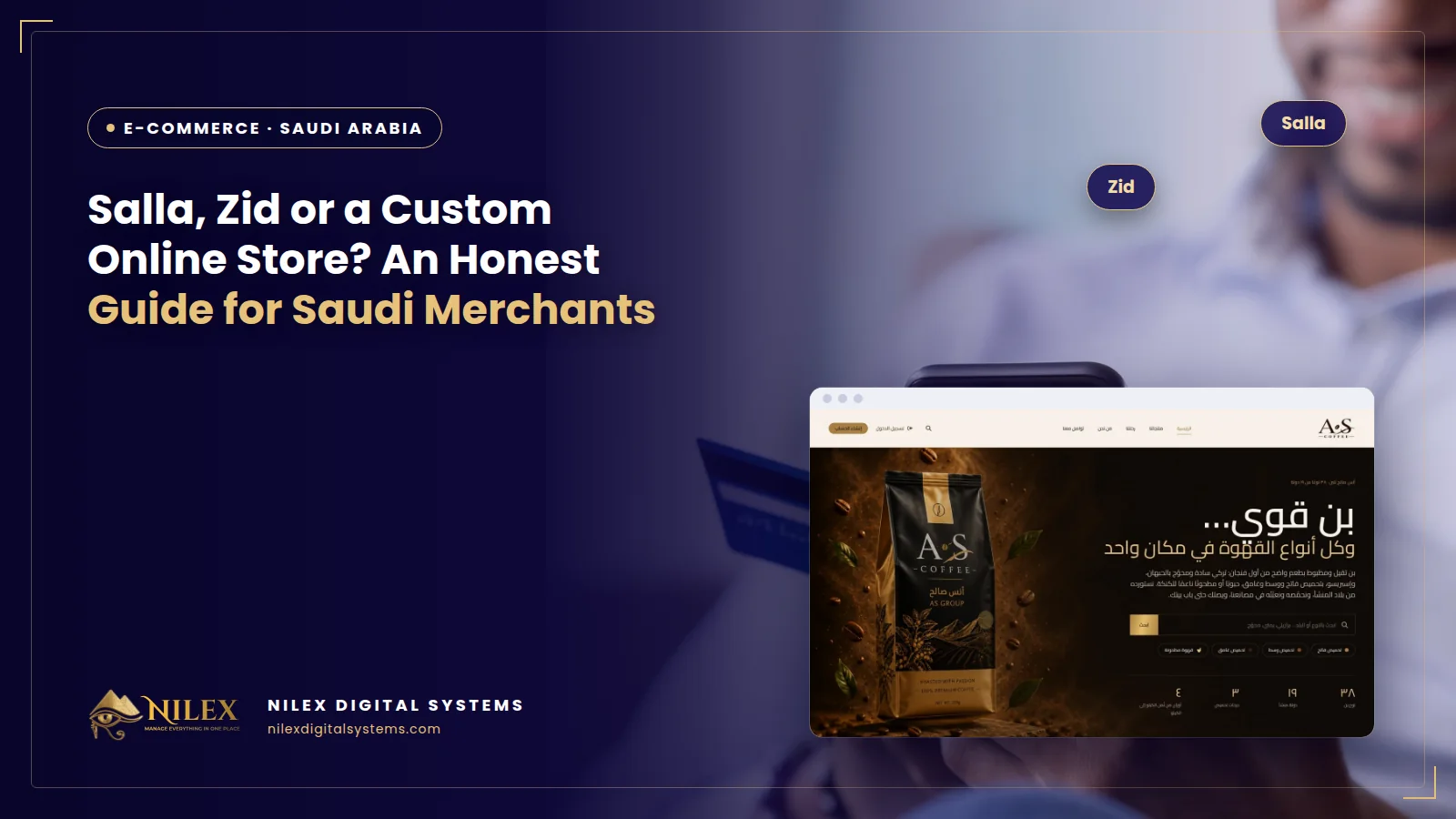
For most new stores in Saudi Arabia, Salla or Zid is the right place to start: you can launch quickly, payments and shipping are available through the platform's paid plans, and the yearly cost is known in advance. A custom store makes sense when the way you sell needs things a platform template is not built for: an AI assistant that advises customers, catalogue logic specific to your trade, a direct connection to your management system, or full control over design and how your data is handled. Between Salla and Zid, choose the one whose plan includes the features you need at your size, at a price you can read on its official page today.
The question «وش افضل سلة ولا زد» (which is better, Salla or Zid?) is one of the most common among Saudi merchants, and it usually hides a second question: should I be on a platform at all? This guide answers both honestly. It does not rank one platform above the other, because the right answer depends on your catalogue, your budget and how you expect to grow.
Key takeaways
- Start on a platform when you need to sell quickly with a standard catalogue and a predictable yearly cost.
- Compare Salla and Zid on the specific plan features you need (payments, shipping, staff accounts, design control) using each platform's official page.
- Consider a custom store when your sales depend on advice, special catalogue logic or integration with your own systems.
- Ownership matters either way: know where your customer data lives and how you can export it.
- Many merchants start on a platform and move to a custom store later; plan for that move from day one.
What Salla and Zid do well
Hosted store platforms solve the hardest part of starting: you do not build anything. You pick a theme, add products, connect payment and shipping through the platform, and you are selling. The platform handles hosting, security updates and new features for every store at once. Salla's partner Tap Payments describes Salla 4.0 as powering 68,000 Saudi stores, which is partner marketing rather than an audited figure, but it shows how many merchants start this way.
The cost is also easy to read. Salla's official plans page lists a free Basic plan without online payments, shipping or a custom domain, Plus at SAR 990 a year with payments, shipping and a custom domain, Pro at SAR 2,990 a year with staff accounts, design customisation in CSS/JS, marketing tools and accounting, and Special with custom pricing for multi-store and ERP integrations. For a new merchant who wants to test demand, that predictability is worth a lot. Our breakdown of online store costs in Saudi Arabia in 2026 puts these plans next to payment, shipping and marketing costs.
Salla or Zid: how to choose between the two
Both are Saudi platforms aimed at Saudi merchants, and both change their plans from time to time, so any comparison copied from a blog ages quickly. Instead of asking which is "better", list what your store needs in its first year and check which plan on each platform includes it:
- Payments: which payment methods are available on the plan you can afford, and at what transaction fees.
- Shipping: which couriers are connected and how delivery fees are calculated for different cities.
- Staff: whether you need separate accounts for employees, and on which plan they start.
- Design control: whether a theme is enough or you will need code-level changes.
- Apps: which features come from paid add-ons, and what those add-ons cost per month.
- Language: whether the storefront, product pages and checkout work properly in Arabic and English.
Then read both official plan pages on the same day and write the answers in two columns. The platform that covers your list on the lower total cost, including add-ons and fees, is the better one for you right now. Where a free plan or trial is offered, build a small test store with ten real products before deciding.

Five signs a custom store makes sense
Platforms handle standard catalogues well: categories, variants, offers and a checkout. A custom store earns its cost when your business sells in a way that a template is not designed for. These are the five signs we see most often.
1. Your customers need advice before they buy
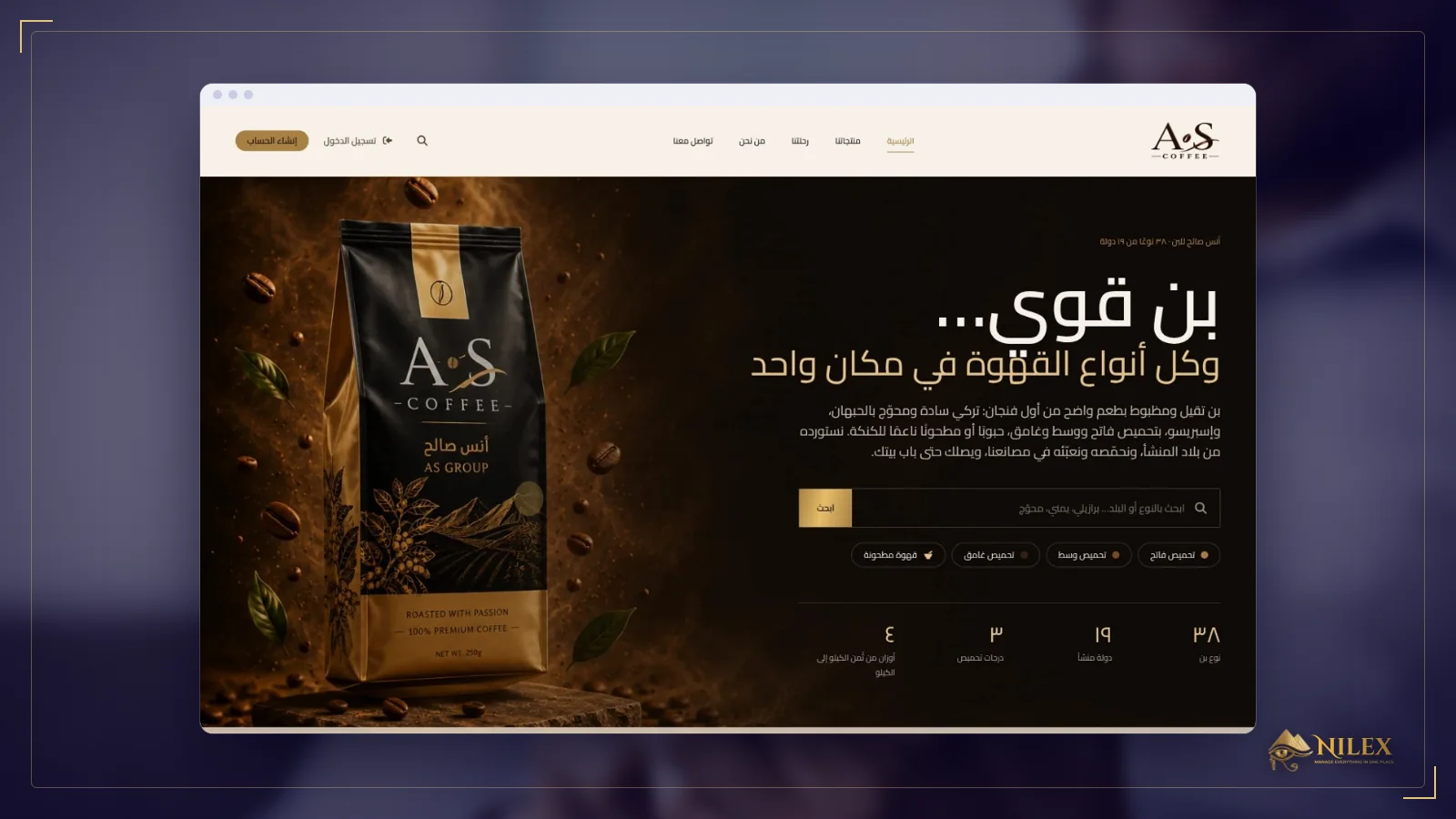
Some products are sold by explanation. At Anas Saleh Coffee in Egypt, an AI coffee expert turns a customer's description of the taste they want into a custom blend and opens it in an editor. At Bashayer El Khair, an AI appliance advisor asks about the room before recommending an air conditioner and compares models side by side. Both read the store's live catalogue and prices. Our guide to AI shopping assistants for online stores explains how they work and the guardrails they need.
2. Your catalogue follows logic specific to your trade
Coffee is bought by brewing method, legal books by branch of law and by author, appliances by model code and brand. When the way people search your products is the heart of your sales, a catalogue built around that logic, with a page for each group, helps customers and search engines find the right item.
3. The store must talk to your management system
If orders, stock or customers also live in an accounting or management system, a custom store can be built to share that data instead of re-typing it. We explain why our client websites are connected rather than standalone in a website connected to your management system.
4. You want control over design and data handling
On a platform, your store runs on the platform's terms, features and roadmap. With a custom store, the design follows your brand without a theme's limits, and the data rules are written into your agreement. Be precise about what "ownership" means: with Nilex, your content and business data are yours and you can get a copy, for example in Excel or CSV, even after the agreement ends, while Nilex keeps the source code and gives you a licence to use it. We explain that split in data ownership and software licences. Ask any provider the same questions.
5. You sell to businesses as well as consumers
Wholesale customers, sales reps taking orders from shops, or different terms for different buyers are workflows a consumer template is not designed around. They are usually better served by a system built for them.
Platform or custom store: side by side
| Question | Salla or Zid | Custom store |
|---|---|---|
| How fast can I start? | Quickly; you configure rather than build | After a build project; can launch in phases |
| Upfront cost | Low: a yearly plan | Higher: a one-off project priced by scope |
| Ongoing cost | Plan, add-ons and payment fees | Hosting, support and payment fees |
| Payments and shipping | Through the platform on paid plans | Connected per project to providers you choose |
| Design freedom | Themes; code changes on higher plans | Designed for your brand |
| Special catalogue logic | Standard categories and variants | Built around how your customers buy |
| AI assistant that advises | Depends on available apps | Built on your live catalogue and rules |
| Integration with your systems | ERP integrations on the Special plan (Salla) | Part of the project scope |
| Who maintains it | The platform | The developer, under a support agreement |
Neither column is "better". The platform column is the safer start for most merchants; the custom column pays off when one of the five signs above describes your business.
What the evidence says matters to shoppers
Two well-known studies apply to both routes. CSA Research's 2020 survey of 8,709 consumers in 29 countries found that 76% prefer to buy products with information in their own language and 40% will not buy from websites in other languages, so an Arabic-first storefront with complete Arabic product information matters whichever platform you use. A Deloitte study commissioned by Google and published on web.dev found that a 0.1-second improvement in mobile site speed raised retail conversions by 8.4%. Check the speed and the Arabic content of any store before you commit to it, whether it is a theme or a custom build.
Starting on a platform and moving later
Starting on Salla or Zid and moving to a custom store when you outgrow it is a sensible path. It goes smoothly when you prepare from the start:
- Keep product data clean: consistent names, codes, prices and photos make an export usable.
- Know how to export: check how products, customers and orders can be exported from your plan.
- Protect your search rankings: when URLs change, old addresses should redirect to the new ones. Our guide to redesigning a website without losing SEO explains the redirect map.
- Own your domain: register it in your company's name so it moves with you.
If you are still weighing the two routes, the same decision for Egyptian merchants is covered in SaaS platform or custom store, and the marketplace option in selling on noon or on your own store.
How Nilex helps
Nilex builds custom online stores for businesses that have reached one of the five signs above. Our three live stores are in Egypt: Dar El Ahram's legal bookshop with an AI book assistant, Anas Saleh Coffee with an AI coffee expert, and Bashayer El Khair with an AI appliance advisor. All three are Arabic-first, with English versions, catalogue pages prepared for Google, customer accounts and a dashboard for orders and stock. The Anas Saleh Coffee case study shows the full build.
We have not yet launched a store for a Saudi client; for a Saudi store, payment and shipping providers are connected per project to the ones you choose. Every project starts with a written quotation, can be paid in installments, includes 14 days to test and report errors after delivery, and 30 days of free fixes for errors in the delivered work after acceptance. If a platform still suits you, we will say so. Read more in custom e-commerce development for Saudi Arabia and Kuwait or contact us.
Sources
- Salla: official plans and pricing page
- Tap Payments blog: Salla 4.0 (partner content)
- CSA Research: "Can't Read, Won't Buy – B2C" press release (2020)
- web.dev: Milliseconds make millions (Deloitte study commissioned by Google)
FAQ
Which is better, Salla or Zid?
Neither is better for every store. List the features you need in year one, such as payments, shipping, staff accounts and design control, and check which plan on each platform includes them at the lowest total cost, using both official pages.
Should a new store start with a custom build?
Usually not. If you are still testing demand with a standard catalogue, a platform is cheaper and faster. A custom store makes sense when advice, special catalogue logic or integration with your systems is central to how you sell.
Can I move from Salla or Zid to a custom store later?
Yes. Keep product data clean, check how you can export products, customers and orders, own your domain, and redirect old URLs to new ones so you keep your search rankings.
Can a platform store have an AI shopping assistant?
It depends on the apps available for that platform. A custom assistant, like the ones on our Egyptian stores, is built on your live catalogue and your own buying rules, which is why it is usually part of a custom project.
Who owns my data in a custom store?
With Nilex, your content and business data are yours, and you can get a copy, for example in Excel or CSV, even after the agreement ends. Nilex keeps the source code and gives you a licence to use the system.
 Payment Gateways in Saudi Arabia for Online Stores: mada, Apple Pay, STC Pay, Tabby and Tamara5 November 2026 · 11 min
 Documenting an Online Store in Saudi Arabia: Commercial Registration, Freelance Document and E-Commerce Law5 November 2026 · 9 min
 Shipping for Online Stores in Saudi Arabia: Couriers, National Address, Cash on Delivery and Delivery Fees5 November 2026 · 9 min