
Delivery Fees per Governorate at Checkout: How Our Stores Price Delivery Across Egypt
Four ways our stores price delivery: a fixed fee for each of the 27 governorates, a fee per governorate for large appliances, local rates plus per-country shipping for a bookshop, and delivery areas with minimums and time slots for groceries, and how to choose yours.
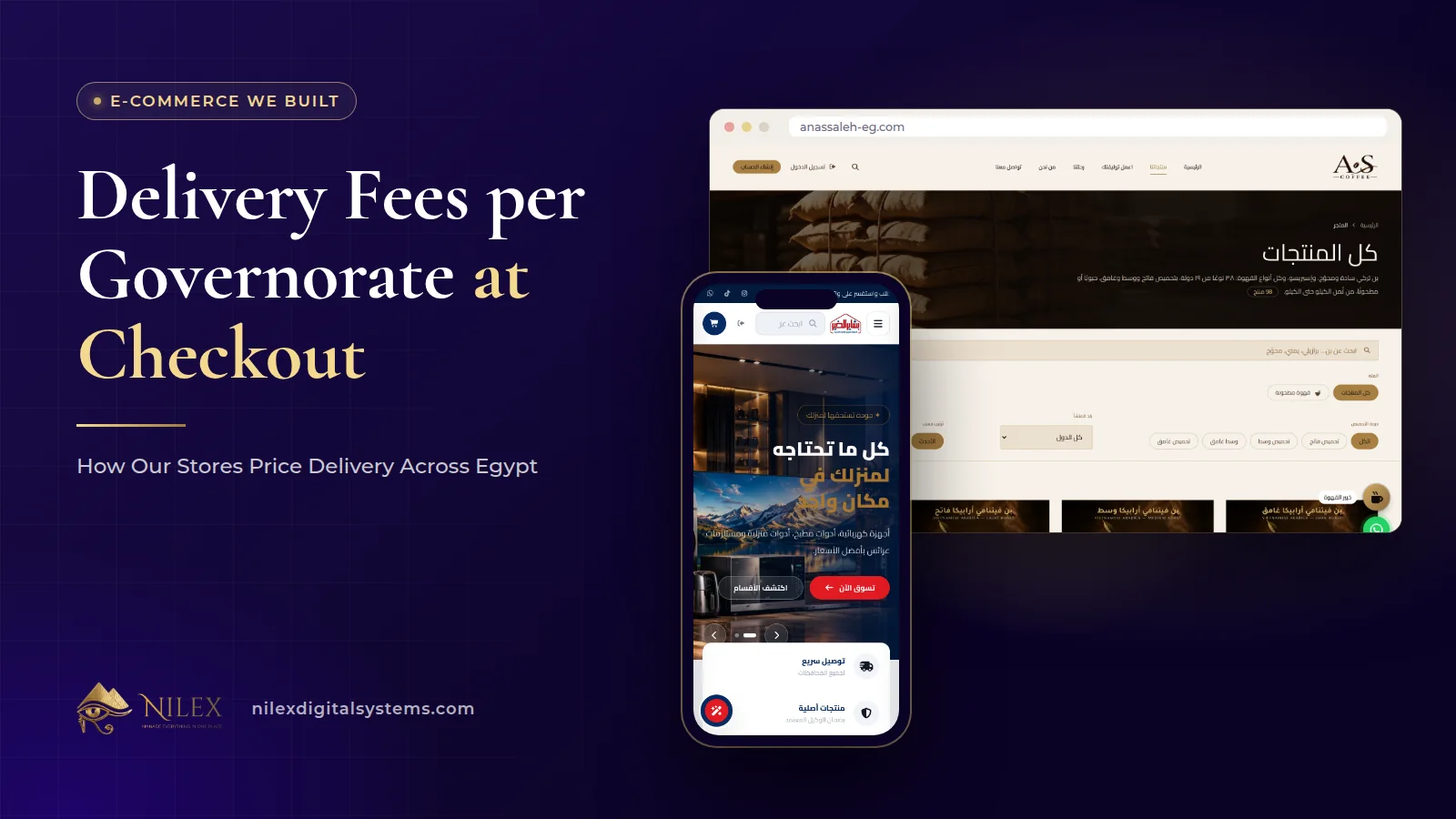
The simplest way to price delivery for an Egyptian online store is a fee for each governorate, stored in the store and added automatically at checkout when the customer picks their governorate. The customer sees the full total before confirming, and nobody has to quote delivery by phone. Stores that also ship abroad add a price per country and shipping method, and grocery stores usually price by delivery area with a minimum order and time slots.
We have built all of these. This article compares how delivery is priced in the stores we built for Anas Saleh Coffee, Bashayer El Khair and Dar El Ahram, and in the Nilex online supermarket system, so you can choose the model that fits what you sell and how far you deliver.
Key takeaways
- A delivery fee the customer can see before confirming answers "how much to my city?" before anyone has to ask.
- A fixed fee per governorate suits most stores selling across Egypt; it is easy to explain and easy to change.
- Stores that ship abroad need a second layer: countries, shipping methods and a cost that depends on the order.
- Grocery delivery is priced by area, with a minimum order, a free-delivery threshold and time slots with capacity.
- Whatever the model, keep fees in the store's dashboard, not in staff members' heads or in a chat template.
Why visible delivery fees matter
When the delivery price is not shown, every order from outside your city starts with a conversation: the customer asks, someone checks with the courier, the answer comes back, the customer thinks about it. Some customers simply leave instead of asking. A fee that appears at checkout removes that loop. It also protects your team from quoting different prices to different customers for the same governorate, which is how disputes start on cash-on-delivery orders.
Anas Saleh Coffee is a clear example. Before its store, orders from other cities were arranged one by one on the phone, with the delivery price worked out for every order. The store now has a fixed fee for each of the 27 governorates, calculated at checkout.
Four delivery pricing models we have built
| Store | How delivery is priced | What the customer does |
|---|---|---|
| Anas Saleh Coffee (roastery) | A fixed fee for each of Egypt's 27 governorates | Chooses the governorate; the fee is added to the total |
| Bashayer El Khair (home appliances) | A delivery fee per governorate, with a shipping policy page | Chooses or reuses an address; the store quotes the fee before the order is placed |
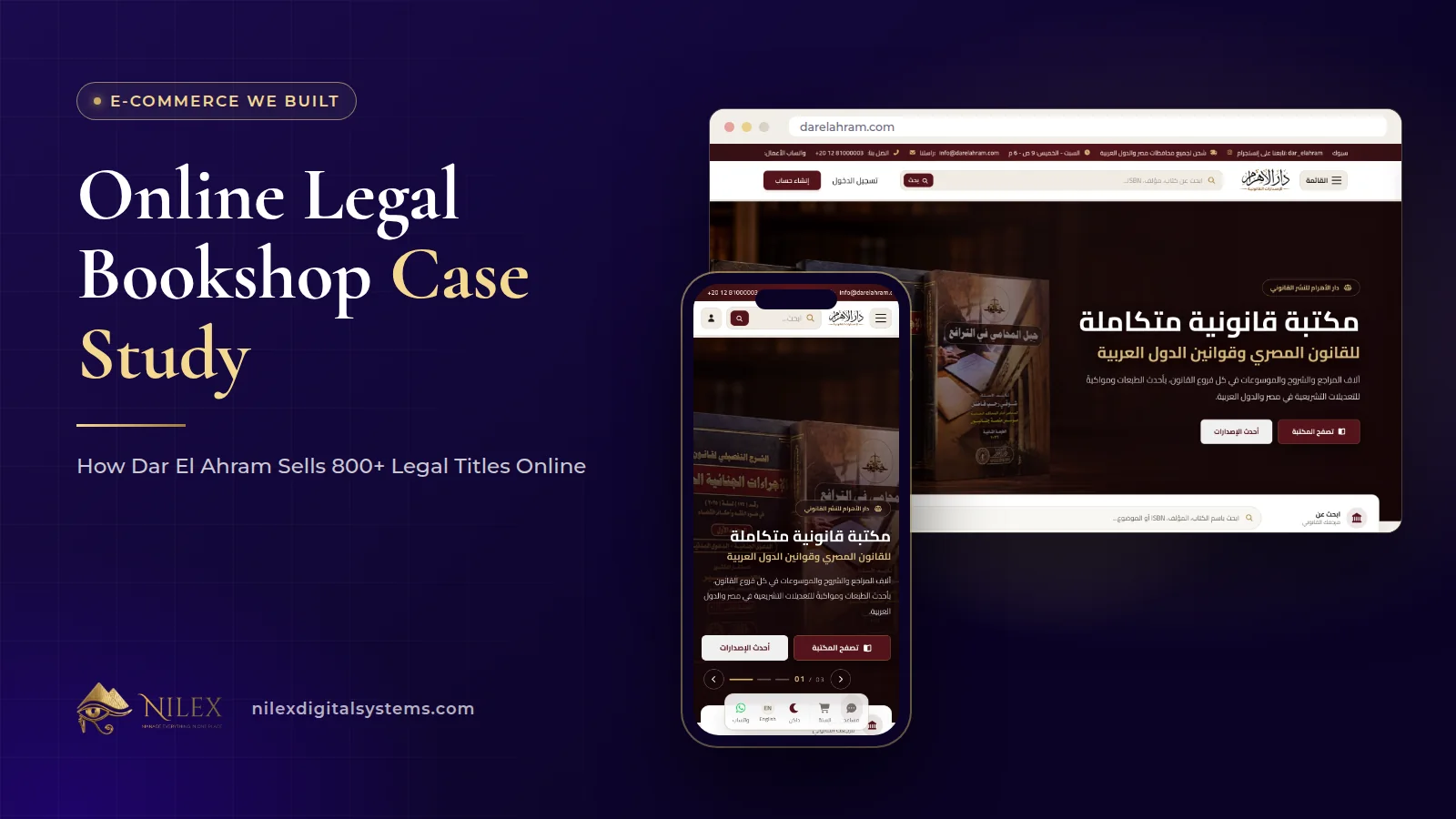
| Dar El Ahram (legal bookshop) | Local delivery rates per Egyptian governorate, plus shipping to other countries with methods per country | Picks Egypt and a governorate, or a country and a shipping method; the cost is calculated for the order |
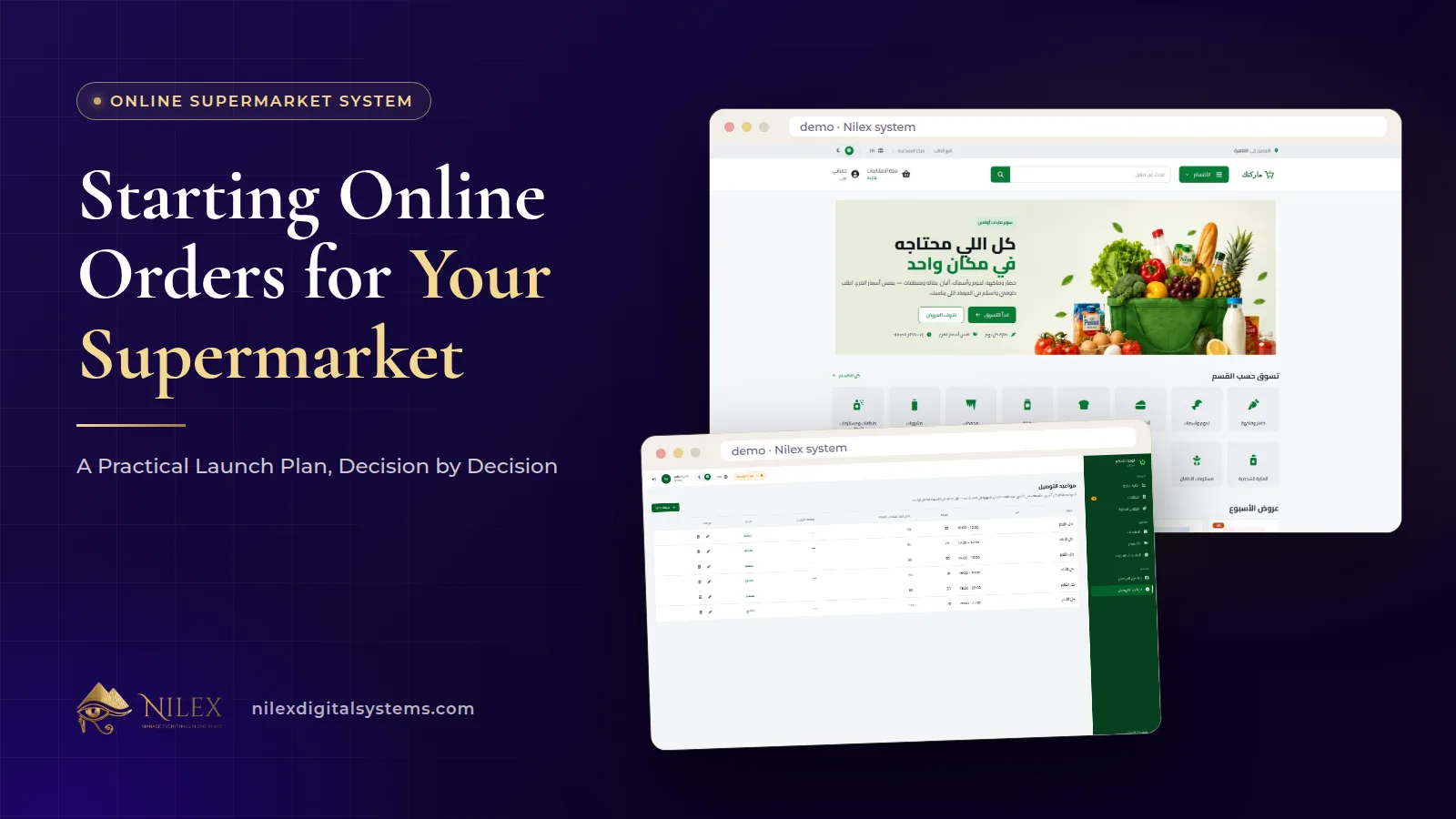
| Nilex online supermarket system | Delivery areas, each with its own fee, minimum order and free-delivery threshold, plus time slots | Picks the area, a day and a time slot; the basket shows the minimum and how far they are from free delivery |
Model 1: a fixed fee for every governorate
This is the model we recommend to most stores selling across Egypt. You agree prices with your courier or your own drivers, set one fee for each governorate you serve, and decide which governorates you do not serve yet. At checkout, the customer chooses the governorate and the store adds the fee.
- Easy to explain: the shipping policy page can list the same fees the checkout uses.
- Easy to change: when the courier changes prices, you edit the fee once and every new checkout uses it.
- Fair enough for most products: coffee bags, books, small appliances and accessories do not vary enough in size to need weight-based pricing.
Anas Saleh Coffee launched with this model for all 27 governorates and cash on delivery.
Model 2: a fee per governorate for large items
Bashayer El Khair sells appliances, from small kitchen tools to air conditioners and fridges. Its checkout also adds a delivery fee per governorate, and the store publishes a shipping policy alongside a warranty policy. Signed-in customers can choose from their saved addresses, and the store quotes the delivery fee before the order is placed, so the confirmed total is the one the customer pays. For appliances, the policy page matters as much as the fee: it is where you say what delivery includes and what it does not.
Model 3: local rates plus shipping abroad
Dar El Ahram sells legal books to readers across Egypt and in other countries. Its store has two layers, both managed from the dashboard:
- Local delivery: a rate for each Egyptian governorate, which the checkout reads.
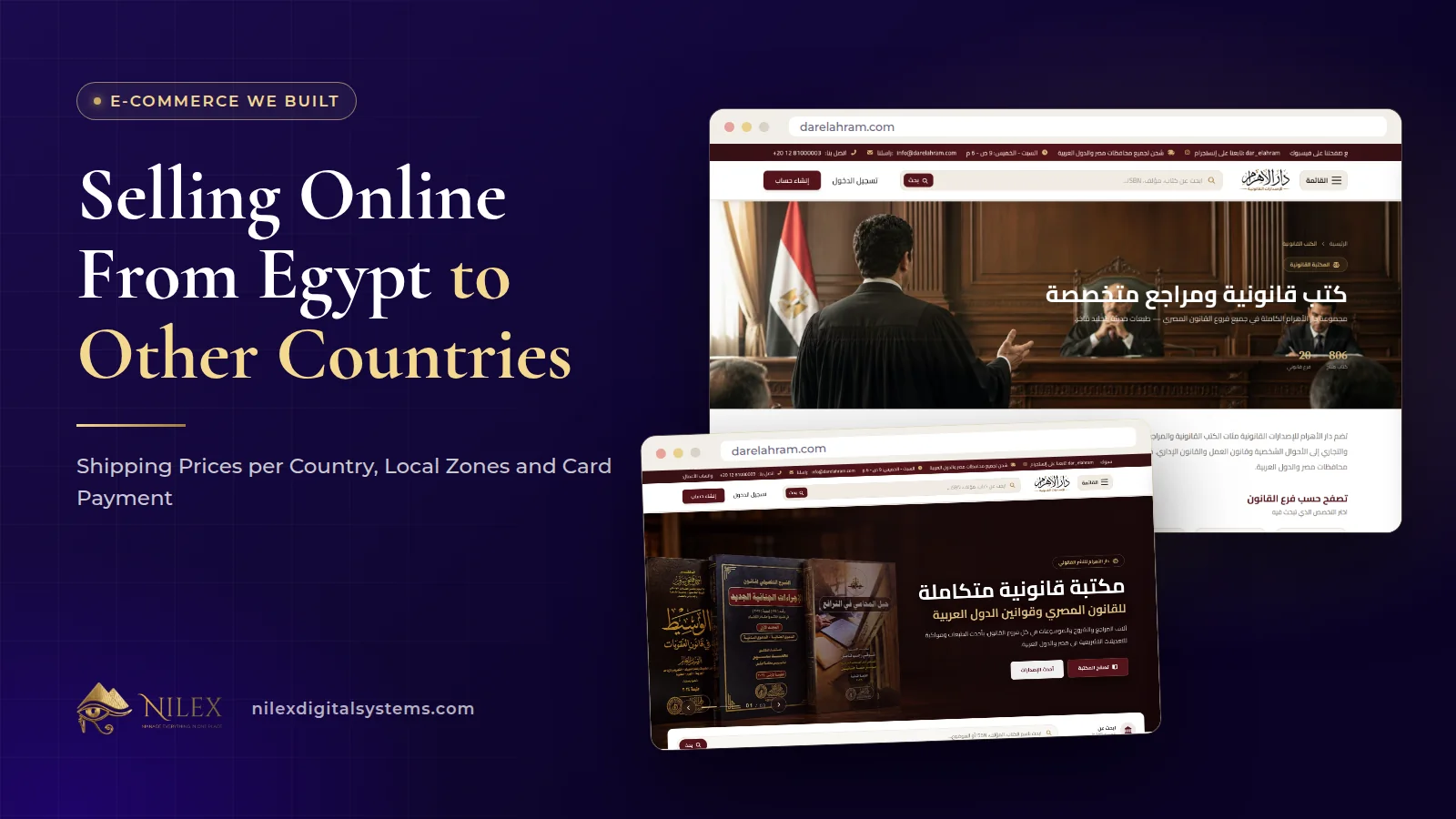
- International shipping: a list of countries that can be switched on or off, and for each country one or more shipping methods. The checkout calculates the cost for the chosen method and the items in the order.
The checkout also includes a location picker for the address, and online card payment sits alongside cash on delivery. If you plan to sell abroad, our guide to selling online from Egypt to other countries covers the rest of the setup.
Model 4: delivery areas, minimums and time slots
Groceries are different: baskets are frequent and low in value, and customers want a delivery time. The Nilex online supermarket system prices delivery by area. Each area has its own fee, minimum order and free-delivery threshold, and customers book a day and a time slot; each slot has a capacity and closes when it is full. In the basket, the customer sees the minimum order and how much is left for free delivery. Customers can order as guests or with an account that keeps saved addresses. The details are in our guide to grocery delivery zones and time slots.
How to set your own fees
- List where you deliver. Start with the governorates you can serve reliably; it is fine to leave some out at launch.
- Get your real costs. Ask your courier for prices per governorate, including any cash-on-delivery collection charge.
- Decide what you absorb. Some stores charge the full cost, others round it down for nearby governorates.
- Write the shipping policy. The same fees, the expected delivery time and what happens if the customer is not available.
- Enter the fees in the store and place a test order to each zone to check the total.
An illustrative example of a starting fee table, with made-up numbers chosen only to show the shape:
| Zone (illustrative example) | Governorates | Fee (illustrative) |
|---|---|---|
| Home zone | Cairo, Giza | EGP 50 |
| Delta and Canal | Governorates within a day's courier route | EGP 70 |
| Upper Egypt and remote | Longer routes and remote governorates | EGP 100 |
Even when you group governorates into zones like this, store a fee per governorate so you can change one without touching the others.
Couriers and cash on delivery
Pricing delivery is only half of it; the other half is handing orders to a courier and reconciling the cash they collect. Our guide to integrating your store with couriers explains shipment creation, status updates and cash-on-delivery reconciliation, and cash on delivery in Egypt covers how to reduce refused and fake orders. A visible fee helps there too: a customer who agreed to a total at checkout is less likely to dispute it at the door.
How Nilex helps
We have built each of these approaches: a fee per governorate, local and international shipping, and delivery areas with minimums and slots, so we can plan the one that fits how your business delivers. See the store projects for Anas Saleh Coffee and Bashayer El Khair, the e-commerce store service page for what is included, or the online supermarket system if you sell groceries. Then tell us where you deliver today and how you price it.
Frequently asked questions
Can I start with one fee for all of Egypt?
You can, but you will either overcharge nearby customers or lose money on far ones. A fee per governorate takes little more effort to set up and is fairer.
Can I offer free delivery?
Yes, as a business decision. In the supermarket system each area has a free-delivery threshold built in; for a store priced per governorate, any free-delivery rule is agreed as part of the project scope.
What if I do not deliver to some governorates?
Leave them out of the delivery list and say so in the shipping policy, so customers know before they fill the cart.
Should delivery depend on weight?
For most stores no; a fee per governorate is simpler for customers. For international shipping, Dar El Ahram's store calculates the cost from the shipping method and the items in the order.
How often can I change the fees?
Whenever you need to. In Dar El Ahram's store and in the Nilex supermarket system, delivery rates are managed from the dashboard and the checkout reads the current rates.
 Starting Online Orders for Your Supermarket: A Practical Launch Plan, Decision by Decision11 October 2026 · 9 min
 Online Legal Bookshop Case Study: How Dar El Ahram Sells 800+ Legal Titles Online11 October 2026 · 11 min
 Selling Online From Egypt to Other Countries: Shipping Prices per Country, Local Zones and Card Payment11 October 2026 · 8 min