
Bilingual Online Stores: Arabic-First Storefronts With an English Version That Also Ranks
How we build Arabic-first online stores with a complete English version: every public page under /ar and /en, product and category pages in both languages, SEO for each version and assistants that understand Egyptian Arabic, Franco and English.
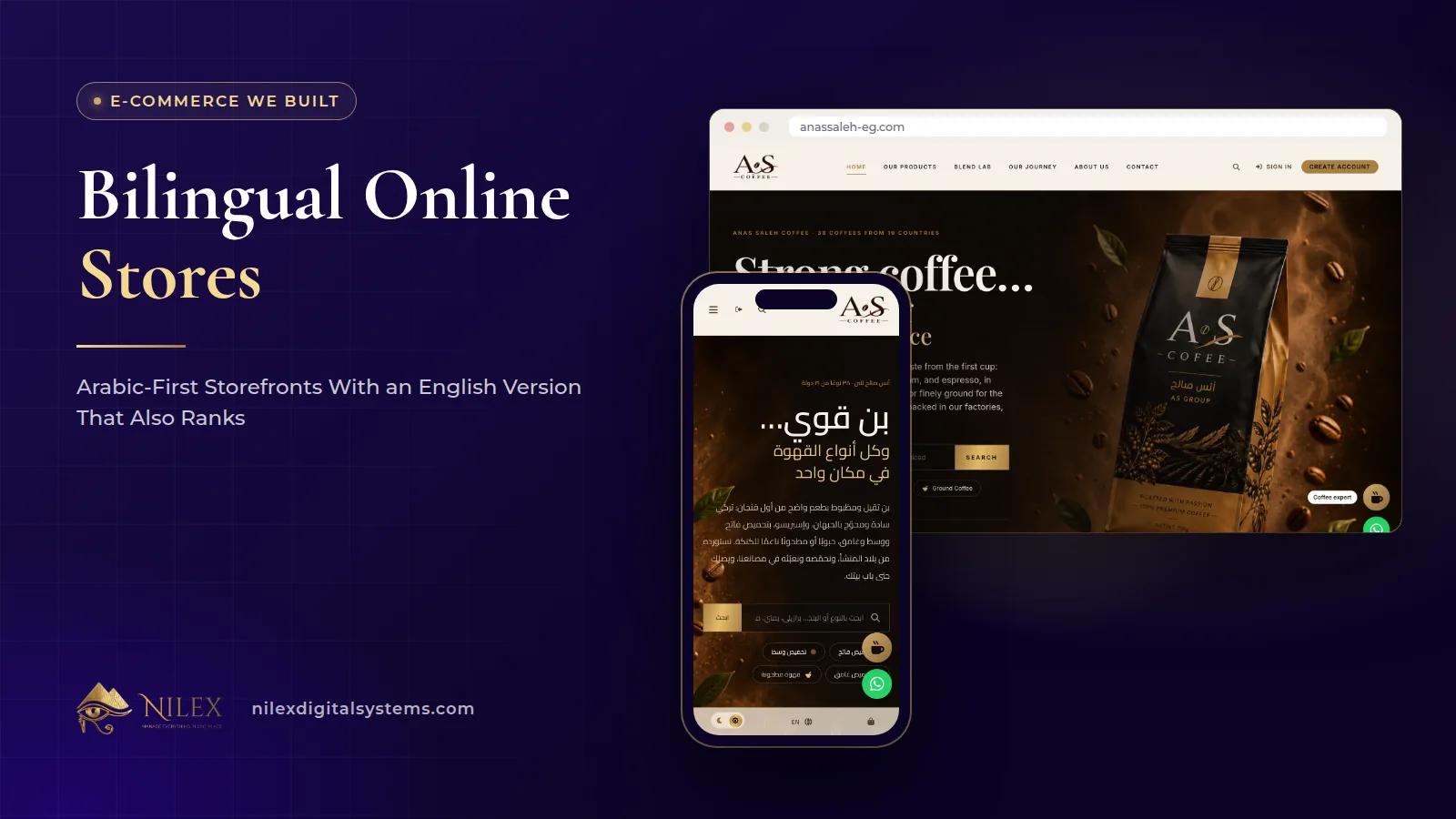
A bilingual online store is not an English site with a translate button. It is two complete versions of the same store: every public page exists once in Arabic and once in English, each with its own address, its own title and description for Google, and the same product, price and stock behind both. In the stores we built for Anas Saleh Coffee and Bashayer El Khair, Arabic comes first: the home address opens the Arabic version, and the English version sits beside it under its own path.
This matters because many Egyptian shoppers browse and search in Arabic, while some searches and customers use English, especially for brand names, model codes and coffee terms. A store that serves both properly can be found by both, and a customer never lands on a page in the wrong language with half the words untranslated.
Key takeaways
- Every public page of the Anas Saleh Coffee and Bashayer El Khair stores exists under /ar and /en, from the home page to checkout and the policy pages.
- The bare domain opens Arabic: both stores are Arabic-first, with English beside it.
- Product and category pages exist in both languages, so each version can rank on Google on its own.
- One product record sits behind both versions: the price and stock a customer sees are the same in Arabic and English.
- The AI assistants on these stores talk with customers in Egyptian Arabic, and the coffee expert also understands Franco and English.
What does a bilingual store actually include?
When we say a store is bilingual, we mean the whole journey, not only the home page. The table below lists the public pages of the two stores and shows that each one exists in both languages.
| Page | Anas Saleh Coffee | Bashayer El Khair | Languages |
|---|---|---|---|
| Home | Yes | Yes | Arabic and English |
| All products and products by category | Yes | Yes | Arabic and English |
| Product page | A page for every roast | A page for every model | Arabic and English |
| Offers and offer detail | No | Yes | Arabic and English |
| Articles | No | Yes | Arabic and English |
| About us, contact, FAQ | Yes, plus Our Journey | Yes | Arabic and English |
| Shipping, privacy, terms | Yes, plus returns policy | Yes, plus warranty policy | Arabic and English |
| Cart, checkout, order confirmation | Yes | Yes | Arabic and English |
| Register, email verification, login, my account | Yes | Yes | Arabic and English |
The point of listing all of it: a customer who starts in English should be able to read the shipping policy, verify their email and confirm the order in English too. If the language breaks at checkout, the store loses the trust it built on the product page.
Why Arabic first?
Both stores sell to customers across Egypt's governorates, so the Arabic version is the default: the root address opens it, and the English version sits beside it under its own path.
English is still a full version, not a summary. It serves customers who prefer English, and it catches searches typed in English. People often search for appliance brands and model codes in Latin letters, and coffee drinkers often use English words such as espresso, roast or single origin. An English page for each product gives those searches somewhere to land.
What Arabic-first means in practice
- Layout, menus, forms and numbers are designed for right-to-left reading first.
- Product names and descriptions are written for Arabic readers, not translated word for word from a supplier's English sheet.
- The English version mirrors the structure, so both languages have the same pages and the same products.
One address per page, per language
Each page has a separate address in each language: the Arabic version under /ar and the English version under /en, followed by the same structure for shop, category and product pages. A language switcher in the storefront lets the customer move between the two. Product addresses can also be written in Arabic, so an Arabic product page carries Arabic words in its link.
Separate addresses are what allow Google to index both versions and show each searcher the right one. We do not switch the language on the same address, because Google would then see only one version. The technical side of linking the two versions for search engines, including hreflang, is explained in our guide to bilingual websites and hreflang, so we will not repeat it here.
Product and category pages that rank in both languages
A store ranks through its product and category pages far more than through its home page. On both stores, every product and category page is optimised on its own: its own title, description, address and share image, with product structured data, an XML sitemap and Google Search Console connected at launch. Because these pages exist in Arabic and English, each language version is a separate page that can be found in search.
Two details keep the versions consistent:
- One product, one price. The Arabic and English pages read the same product record. At Bashayer El Khair the team changes a price once in the dashboard and it changes everywhere, so the English page can never show an older price than the Arabic one.
- Codes stay as they are. A model code is the same string in both languages, which is exactly what a shopper copies into Google. The Bashayer catalogue carries a model code, price and availability on every product.
For the wider rules of product-page SEO, see e-commerce SEO for product pages and structured data. For how the catalogues are organised, see product categories, brands and filters.
Checkout, accounts and policies in the customer's language
The parts of a store that build trust are often the last to be translated, and that is where customers hesitate. On these stores the cart, checkout and order confirmation pages are part of both versions. So are registration, the email verification step, login and the customer's account page with their orders, and the shipping, privacy and terms pages. Anas Saleh Coffee also has a returns policy page and Bashayer El Khair a warranty policy page, both in Arabic and English.
Checkout itself does not force an account: a guest can place an order, and a signed-in customer gets the order attached to their account. The delivery fee for the customer's governorate is calculated at checkout in either language.
The dashboard speaks both languages too
Bilingual is not only for customers. The dashboards of both stores have a language switcher, so the owner and staff can manage products, categories, orders and financials in the language they prefer. That matters when one person writes product descriptions in English and another processes orders in Arabic. We explain the same principle for business systems in Arabic and English in one business system.
Assistants that understand how Egyptians type
Customers do not write in one tidy language. They mix Arabic and English, and many type Arabic in Latin letters and numbers, known as Franco. The AI coffee expert on Anas Saleh Coffee talks with customers in Egyptian Arabic, Franco or English and draws on the words Egyptians use to describe coffee. The shopping assistant on Bashayer El Khair talks with customers in Egyptian Arabic, the way they would talk to a salesman in the shop.
A bilingual store that only accepts formal Arabic or only English in its chat would miss many real questions. The two assistants are covered in detail in the AI coffee expert case study and the AI appliance advisor case study.
Common mistakes with two-language stores
- Translating only the home page. Customers arrive on product pages from Google; those are the pages that need both languages.
- Machine-translating product names. A roast name or a model description translated literally reads badly and is not what people search for.
- Keeping two price lists. If English and Arabic prices are typed separately, they will drift. Keep one product record behind both versions.
- Forgetting the policy pages. Shipping, returns and warranty pages need the same care as product pages.
- Mixing languages on one page. Each version should be clearly one language, with the switcher as the way to change it.
How Nilex helps
We build online stores that are Arabic-first and fully bilingual, with every product and category page prepared for Google in both languages and a dashboard your team can use in Arabic or English. You can:
- See what is included in our e-commerce store service, where the plans are listed.
- Read the store case studies for Anas Saleh Coffee and Bashayer El Khair.
- Read what we learned launching online stores in Egypt.
- Tell us about your catalogue and customers on the contact page.
Frequently asked questions
Do I really need an English version if my customers are in Egypt?
Not always, but it often helps. Many product searches are typed in English, such as brand names and model codes, and some customers prefer English. If your products are searched that way, an English page for each product gives those searches a page to land on.
Which language should open first?
The language most of your customers buy in. For the stores we built for Anas Saleh Coffee and Bashayer El Khair that is Arabic, so the root address opens the Arabic version and English has its own path.
Can the Arabic and English pages show different prices by mistake?
Not in the way we build stores. Both versions read the same product record, so a price changed once in the dashboard appears on both pages.
Who writes the English and Arabic content?
The content is yours. We build the structure for both languages and the dashboard to manage products and pages; the product names and descriptions should be written by someone who knows the products and the customers in each language.
Will an AI assistant understand customers who write in Franco?
The coffee expert on Anas Saleh Coffee does: it understands Egyptian Arabic, Franco and English. When we build an assistant for a store, we design it around how that store's customers actually write.
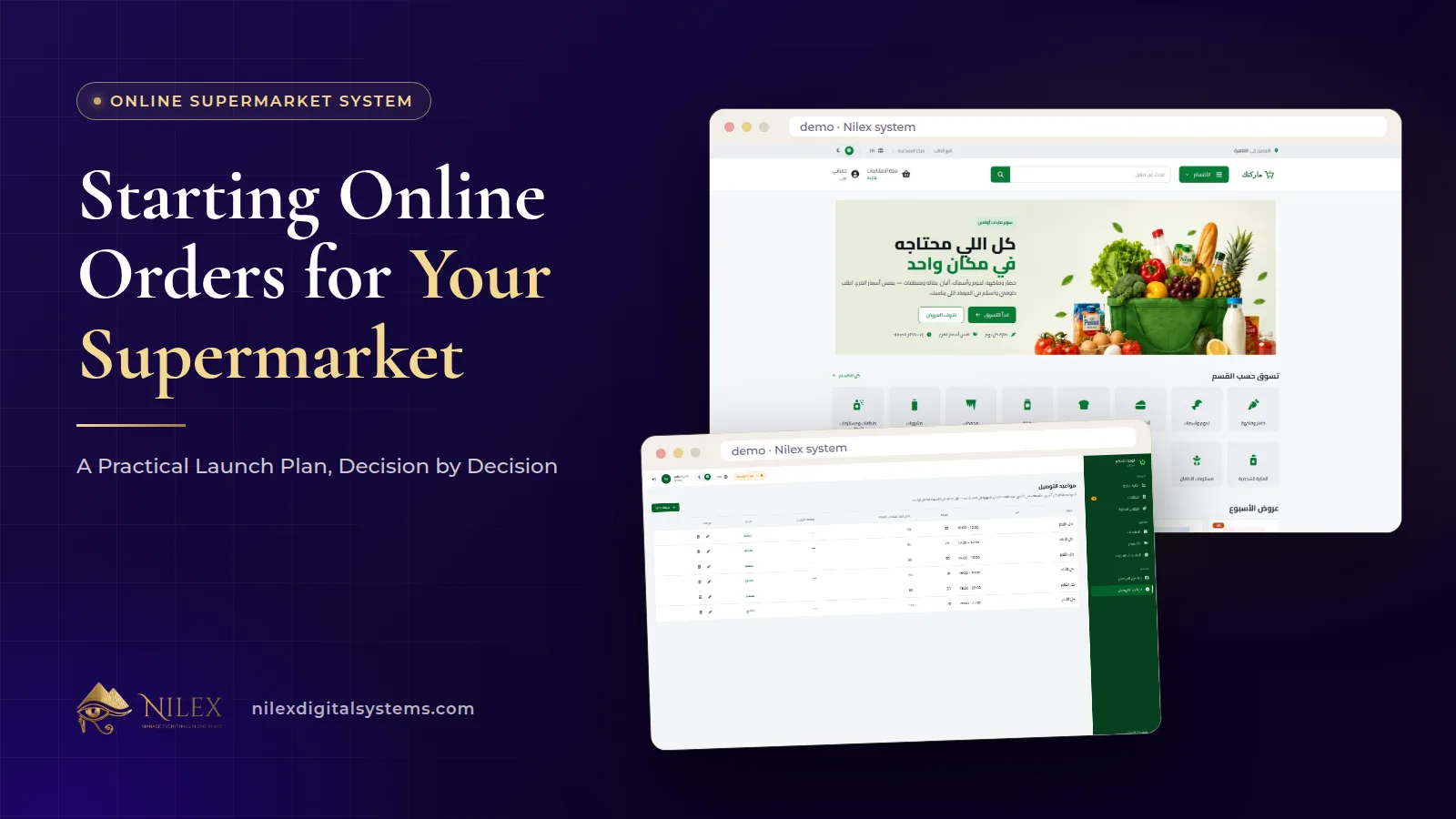 Starting Online Orders for Your Supermarket: A Practical Launch Plan, Decision by Decision11 October 2026 · 9 min
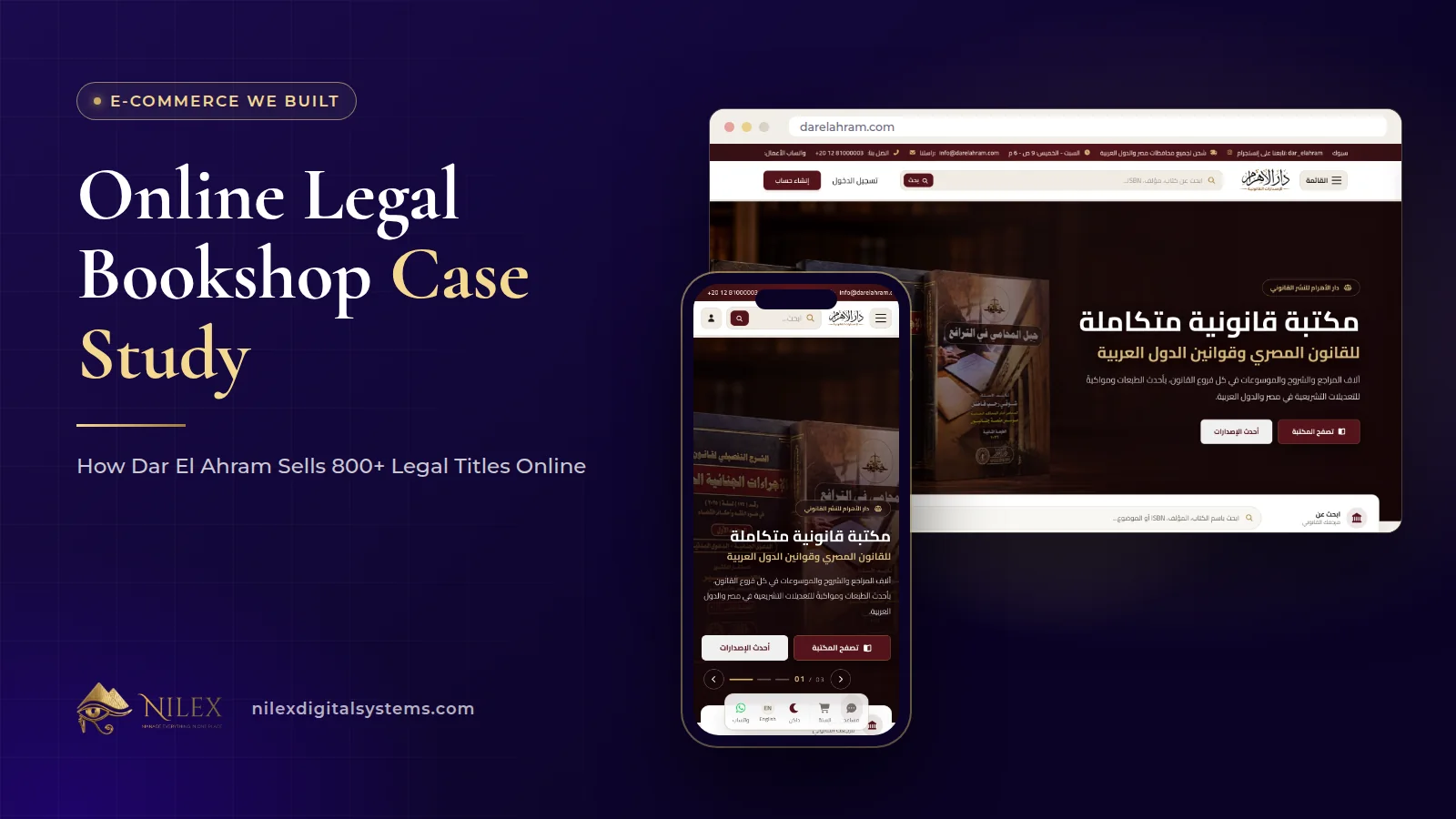 Online Legal Bookshop Case Study: How Dar El Ahram Sells 800+ Legal Titles Online11 October 2026 · 11 min
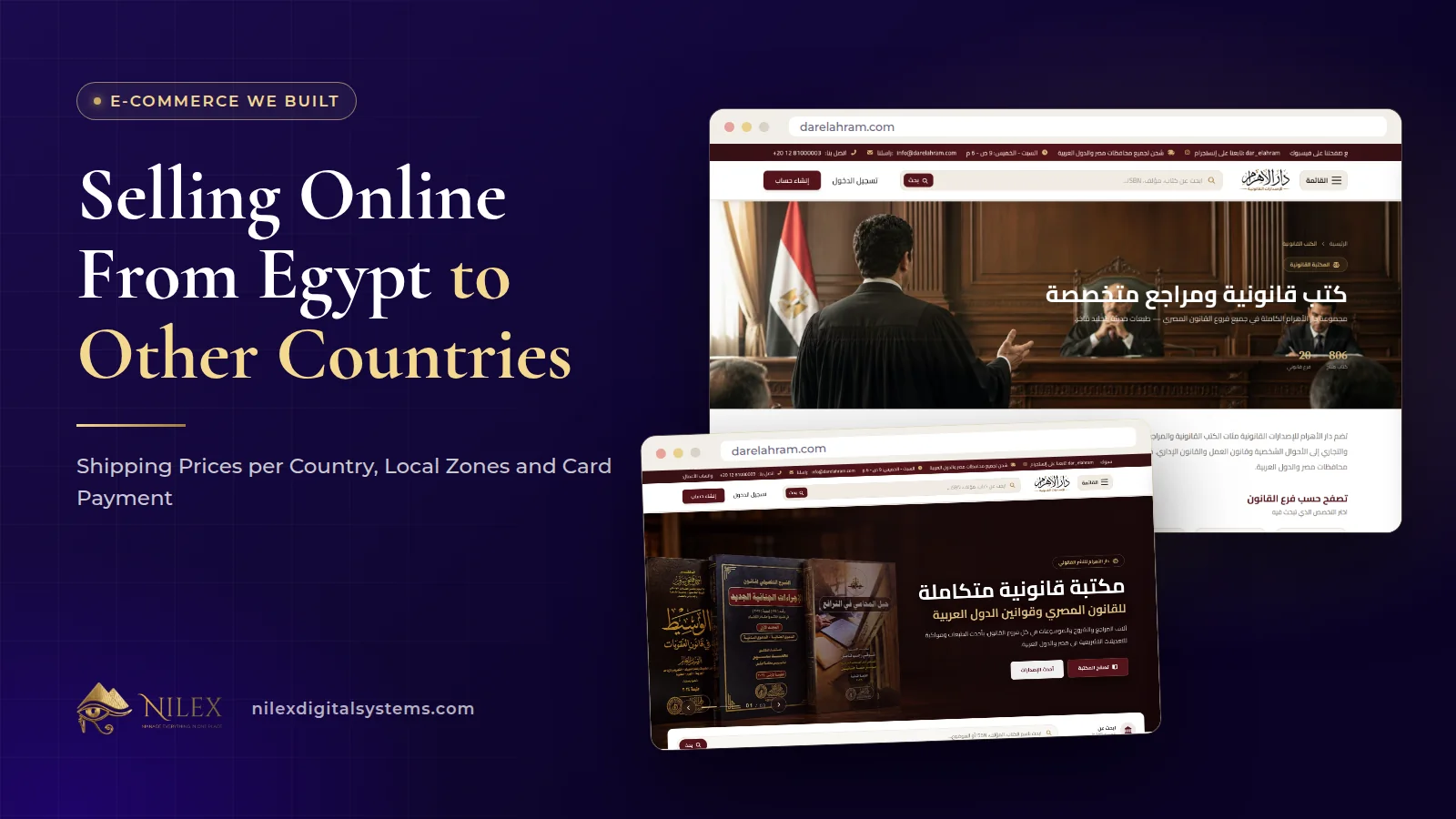 Selling Online From Egypt to Other Countries: Shipping Prices per Country, Local Zones and Card Payment11 October 2026 · 8 min