
What We Learned Launching Online Stores in Egypt: Lessons From a Bookshop, a Roastery and an Appliance Store
Eight lessons from three online stores we launched in 2026 for Dar El Ahram, Anas Saleh Coffee and Bashayer El Khair: launch a first version fast, structure the catalogue the way people buy, show delivery fees, keep one price, add AI after the basics, and make every product an SEO page.
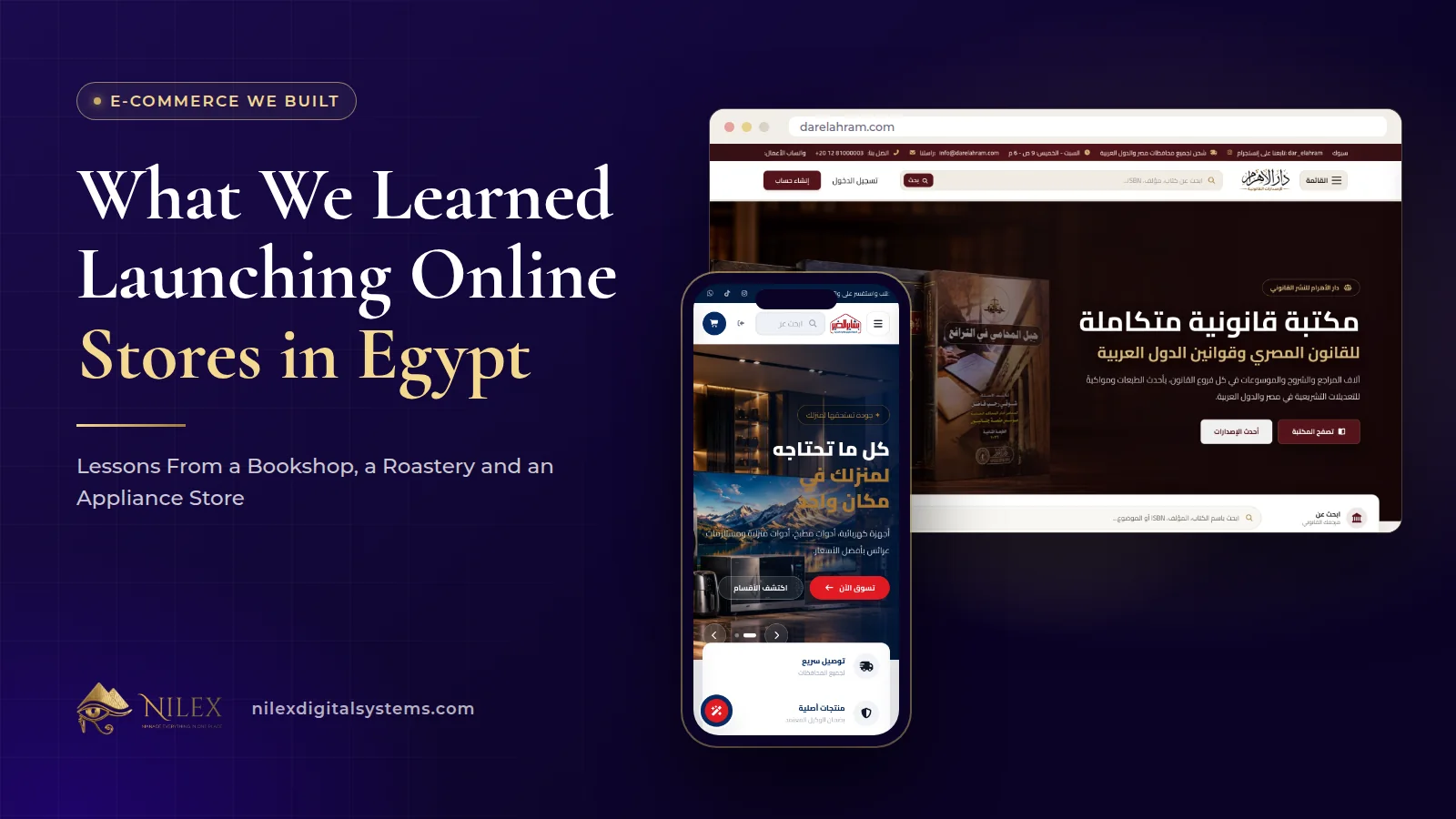
In 2026 we launched three online stores for three very different Egyptian businesses: Dar El Ahram, a legal publisher, went live on 6 March; Anas Saleh Coffee, a Cairo roastery, on 17 August; and Bashayer El Khair, a home-appliance shop, on 12 September. Different products, different customers, and yet the same lessons kept coming back.
The short version: launch a first version quickly and add the rest in phases; organise the catalogue the way customers actually buy; show delivery fees before the customer orders; keep one price in one place; make every product page a page Google can find; and add an AI assistant only once the basics work. This article is the overview of that experience, with links to the detailed case studies and guides for each part.
Key takeaways
- A first version that sells is worth more than a complete version that waits: Dar El Ahram's first version was live within days.
- The catalogue should follow the buyer's logic: brewing method for coffee, category and brand for appliances, legal branch and author for books.
- Delivery fees per governorate, calculated at checkout, replace the back-and-forth of working out a price for each order.
- One product record and one price, edited once in the dashboard, is what stops prices going out of date.
- In all three stores, the AI assistant came after the catalogue, checkout and dashboard were working.
- SEO is built into every product, category and brand or author page, not added to the homepage at the end.
The three stores at a glance
| Store | Launched | What it sells | Results from the case study |
|---|---|---|---|
| Dar El Ahram | 6 March 2026 | Legal books | 800+ titles, 340+ author pages, 19 legal branch pages |
| Anas Saleh Coffee | 17 August 2026 | Coffee roasts by brewing method | 98 products, a fixed delivery fee for each of 27 governorates, Arabic and English |
| Bashayer El Khair | 12 September 2026 | Home appliances, kitchen tools, bridal packages | 400+ products, 38 brand pages, 23 categories, Arabic and English |
The full stories are in the Dar El Ahram case study, the Anas Saleh Coffee case study and the Bashayer El Khair case study.
Lesson 1: launch a first version fast, then add phases
Dar El Ahram started with what sells: books, authors and legal branches with their own pages, a cart, and checkout with cash on delivery and order emails. That first version went live within days. Card payment, shipping prices per country, local delivery zones, coupons and the full dashboard came in the second phase; the AI book assistant in the third; content, SEO and growth features in the fourth.
The other two stores followed the same pattern: catalogue first, then checkout, then the dashboard and launch, and the AI assistant as a later phase. Each phase delivers something usable, so the business sells while the next part is built. Our launch checklist lists what to prepare for that first version.
Lesson 2: structure the catalogue the way people buy
Every catalogue in this group is organised around how its customers think:
- Coffee is bought by roast and by how it is brewed, so Anas Saleh Coffee's store is organised by brewing method, with a page for every roast.
- Appliances are bought by category and brand, so Bashayer El Khair has categories and sub-categories, a page for each brand and a section for bridal packages.
- Legal books are bought by subject and author, so Dar El Ahram has a page for each legal branch and each author, and an assistant for readers who know their case but not the title.
The structure is not decoration. It decides which pages exist, which pages Google can rank, and how many clicks a customer needs. Selling appliances specifically is covered in selling home appliances online in Egypt.
Lesson 3: show delivery fees before the customer orders
Before its store, Anas Saleh Coffee worked out the delivery price for every order on the phone. Now a fixed delivery fee for each of the 27 governorates is calculated at checkout. Bashayer El Khair charges a delivery fee per governorate in the same way. Dar El Ahram has local delivery rates per governorate and, for buyers abroad, shipping methods and prices per country.
A visible fee removes a question from every order and lets the customer see the full total before deciding. How each store prices delivery is compared in delivery fees per governorate at checkout, and selling abroad in selling online from Egypt to other countries.
Lesson 4: one price, in one place
Bashayer El Khair's main problem before the store was prices in social media posts going out of date. The fix was structural: every product carries its model code, price and availability in one record, edited from the dashboard, so a price changed once changes everywhere, in both languages. The same principle applies to all three stores, and it is why we encourage sellers to point posts at product pages rather than write prices into them. That move is described in from Facebook posts and WhatsApp orders to your own store.
Lesson 5: every product page is an SEO page
None of these stores relies on the homepage for search. Every product, category and brand or author page carries its own title, description, address and share image, with structured data, an XML sitemap and Google Search Console connected at launch. That is how a single roast, a single appliance model or a single legal title can be found by someone searching for exactly that. For the large catalogue case, see SEO for a large catalogue; for content beyond products, see store content that sells.
Lesson 6: Arabic first, English complete
Anas Saleh Coffee and Bashayer El Khair are Arabic-first stores with a complete English version: every public page exists in both languages, including checkout, accounts and policies. Arabic is the default; English is complete because brand names, model codes and coffee terms are often searched in English. See bilingual online stores.
Lesson 7: add AI after the basics work
All three stores now have an AI assistant, and in all three it came after the catalogue, checkout and dashboard. That order is deliberate. An assistant that recommends products needs a clean, live catalogue with correct prices; without it, it has nothing reliable to recommend.
- Dar El Ahram's assistant reads the catalogue, including the table-of-contents PDFs of the books, and answers a legal question with the books that fit and why; see the AI book assistant case study.
- Anas Saleh Coffee's coffee expert designs custom blends that the server validates and prices; see the AI coffee expert case study.
- Bashayer El Khair's assistant sizes air conditioners and compares models, with every price checked against the catalogue; see the AI appliance advisor case study.
Lesson 8: the dashboard is where the team lives
Customers see the storefront; the team spends its day in the dashboard. In these stores the team follows every order from one screen, edits items on an order, updates its status and payment, and sees the financials. Bashayer El Khair adds PDF invoices sent by email, hero slides, offers and roles for the owner and staff; Dar El Ahram adds payments, coupons, shipping settings, reviews, events and author applications. A dashboard that matches the daily work is what replaces the paper lists and phone messages each business had before. See running your homepage from the dashboard and the store back office.
What we would tell the next store owner
| Decision | What we recommend | Where it came from |
|---|---|---|
| Launch scope | Catalogue, cart, checkout and order emails first | Dar El Ahram, live within days |
| Payment | Start with cash on delivery; add cards as a phase | Dar El Ahram |
| Catalogue | Organise by how customers buy | All three stores |
| Delivery | A visible fee per governorate at checkout | Anas Saleh Coffee, Bashayer El Khair, Dar El Ahram |
| Prices | One record per product, edited once | Bashayer El Khair |
| Accounts | Allow guest checkout; offer accounts with order history | All three stores |
| Search | SEO on every product and category page from launch | All three stores |
| AI | After the basics, connected to the live catalogue | All three stores |
Two more topics from this group fill in the details: customer accounts and email verification and adding card payment to a cash-on-delivery store. For a publisher's growth features, see more than a store.
How Nilex helps
We build online stores for Egyptian businesses in phases: a first version that sells, then payments, delivery, the dashboard and AI as your business needs them. You can:
- See the e-commerce store service and its plans.
- Read the case studies for Dar El Ahram, Anas Saleh Coffee and Bashayer El Khair.
- See the AI business chatbot service if your store is ready for an assistant.
- Tell us what you sell and how on the contact page.
Frequently asked questions
How long does it take to launch an online store?
It depends on the scope and the number of products. Dar El Ahram's first version was live within days because it started with the catalogue and cash-on-delivery checkout. For your own store, the delivery time is set in the written quotation once the scope is agreed.
What should the first version of a store include?
The catalogue with a page per product, a cart, checkout with cash on delivery and delivery fees, order emails, and the policy pages. Payments by card, shipping abroad and AI can follow as phases.
Should I start with an AI assistant?
We recommend adding it once the catalogue, prices and checkout are working. In all three stores the assistant came after the basics, because it depends on a correct, live catalogue.
Do these lessons apply to a small catalogue?
Yes. Anas Saleh Coffee has 98 products and the same principles applied: a structure that matches how customers buy, visible delivery fees and a page for every product.
Who owns the store and its data?
You own your content and your business data, and can get a copy of it on request. Nilex keeps the source code and gives you a licence to use the system for your business.
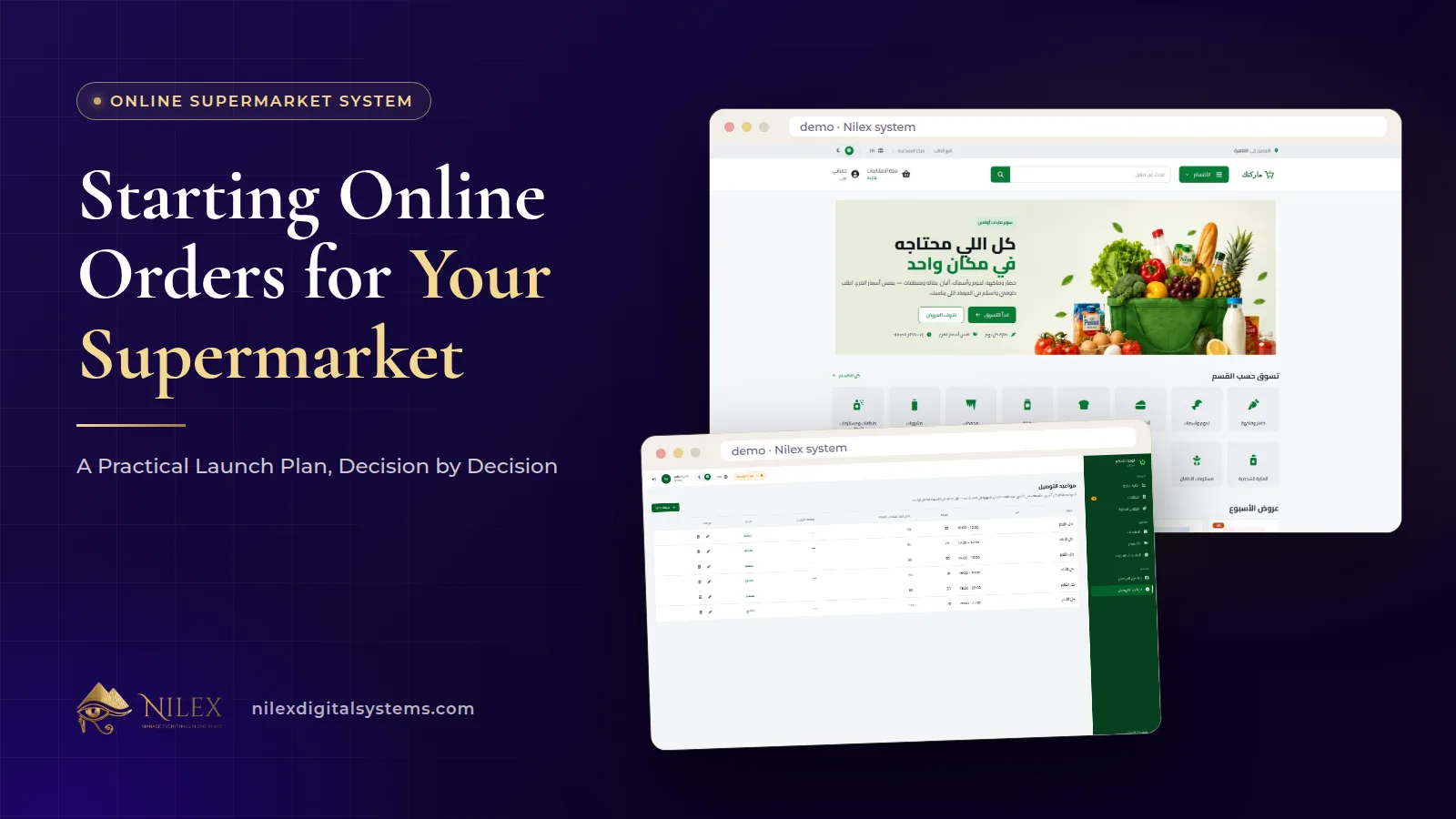 Starting Online Orders for Your Supermarket: A Practical Launch Plan, Decision by Decision11 October 2026 · 9 min
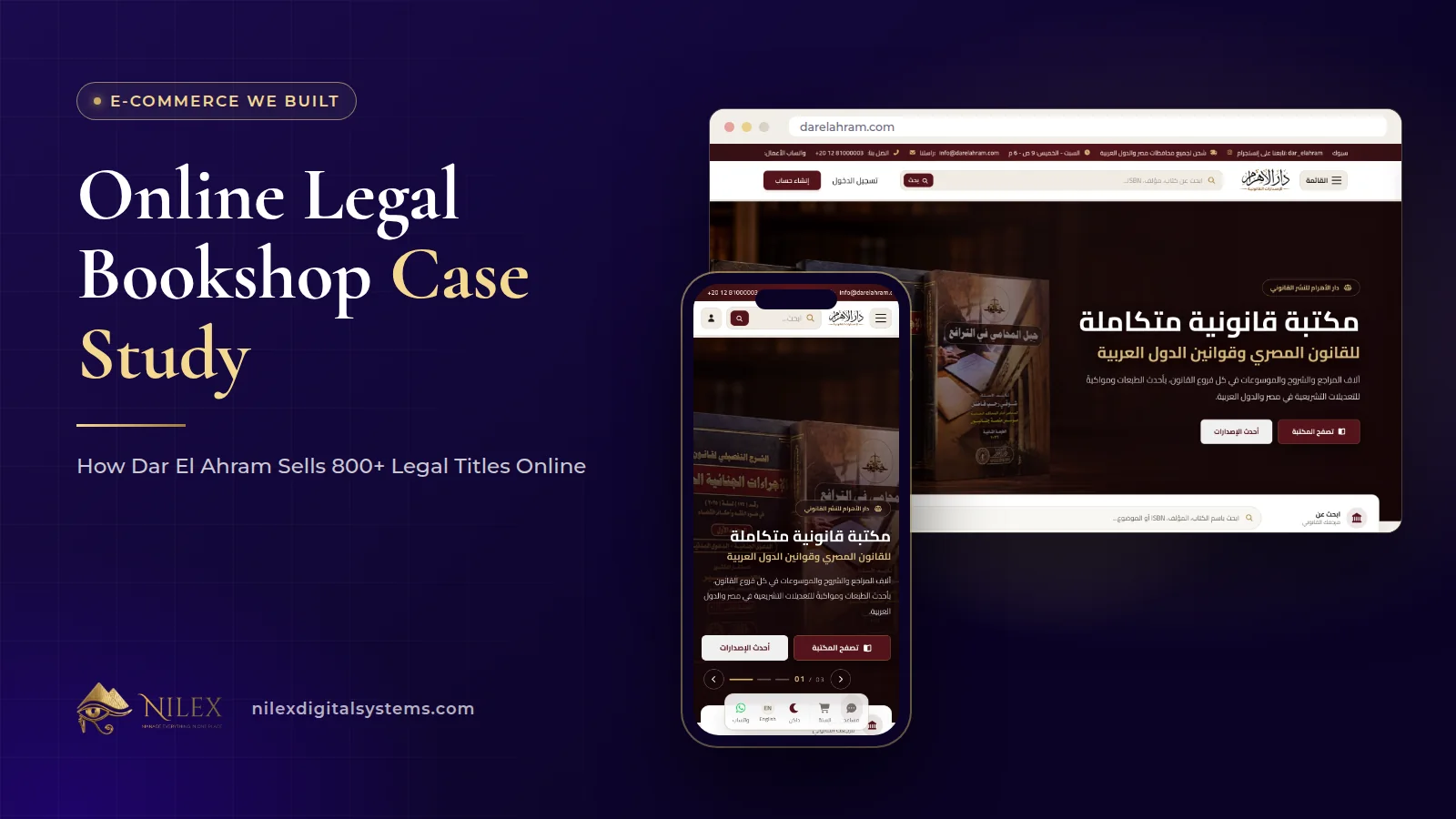 Online Legal Bookshop Case Study: How Dar El Ahram Sells 800+ Legal Titles Online11 October 2026 · 11 min
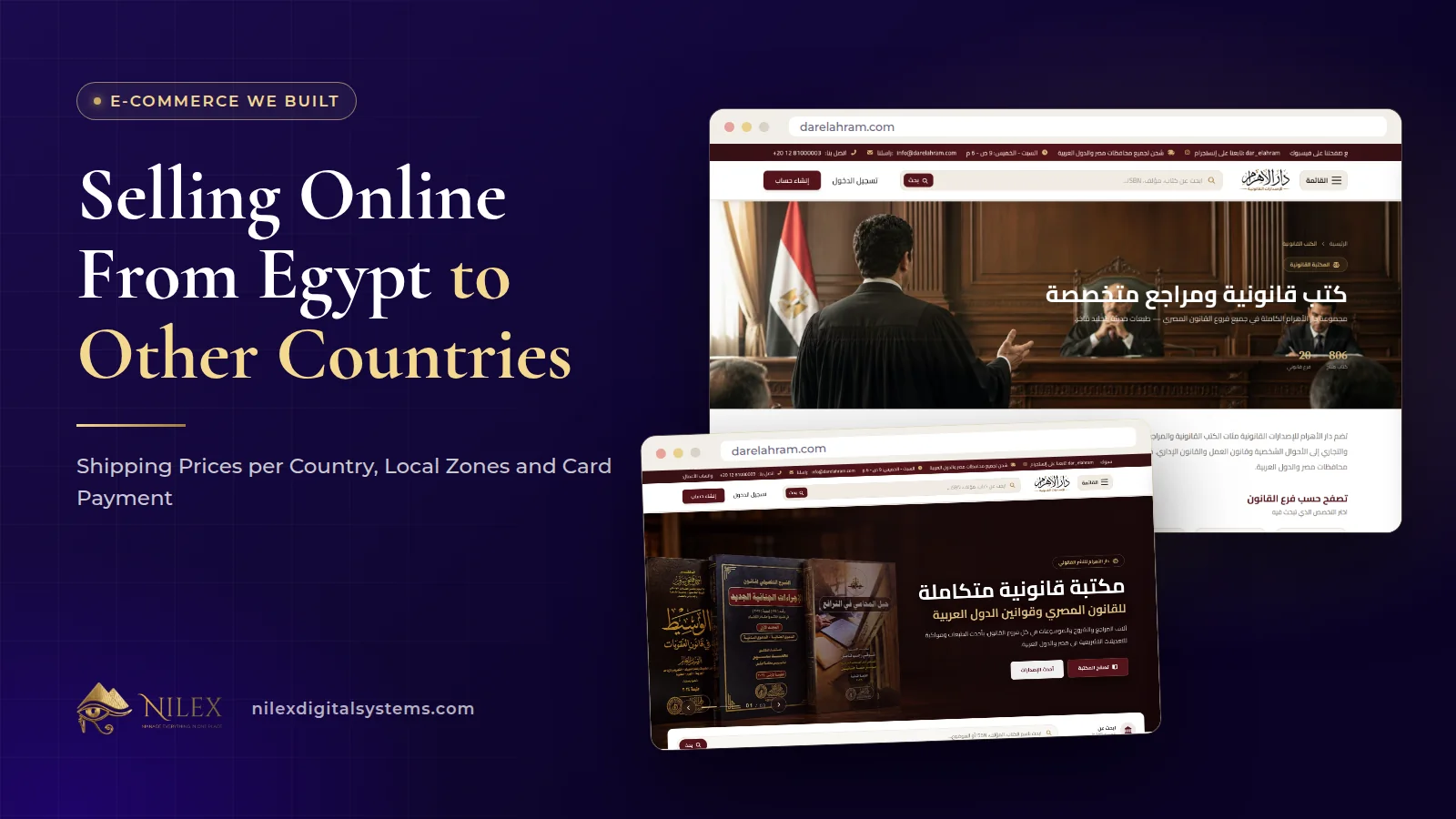 Selling Online From Egypt to Other Countries: Shipping Prices per Country, Local Zones and Card Payment11 October 2026 · 8 min