
Coffee Orders with Roasting and Grinding Services: Pricing, Customer Beans, Payments and Returns
How roasteries handle customer and wholesale orders: three-step orders, roasting, grinding and packing services priced per product, service-only orders on the customer's own coffee, payments on the order and returns.
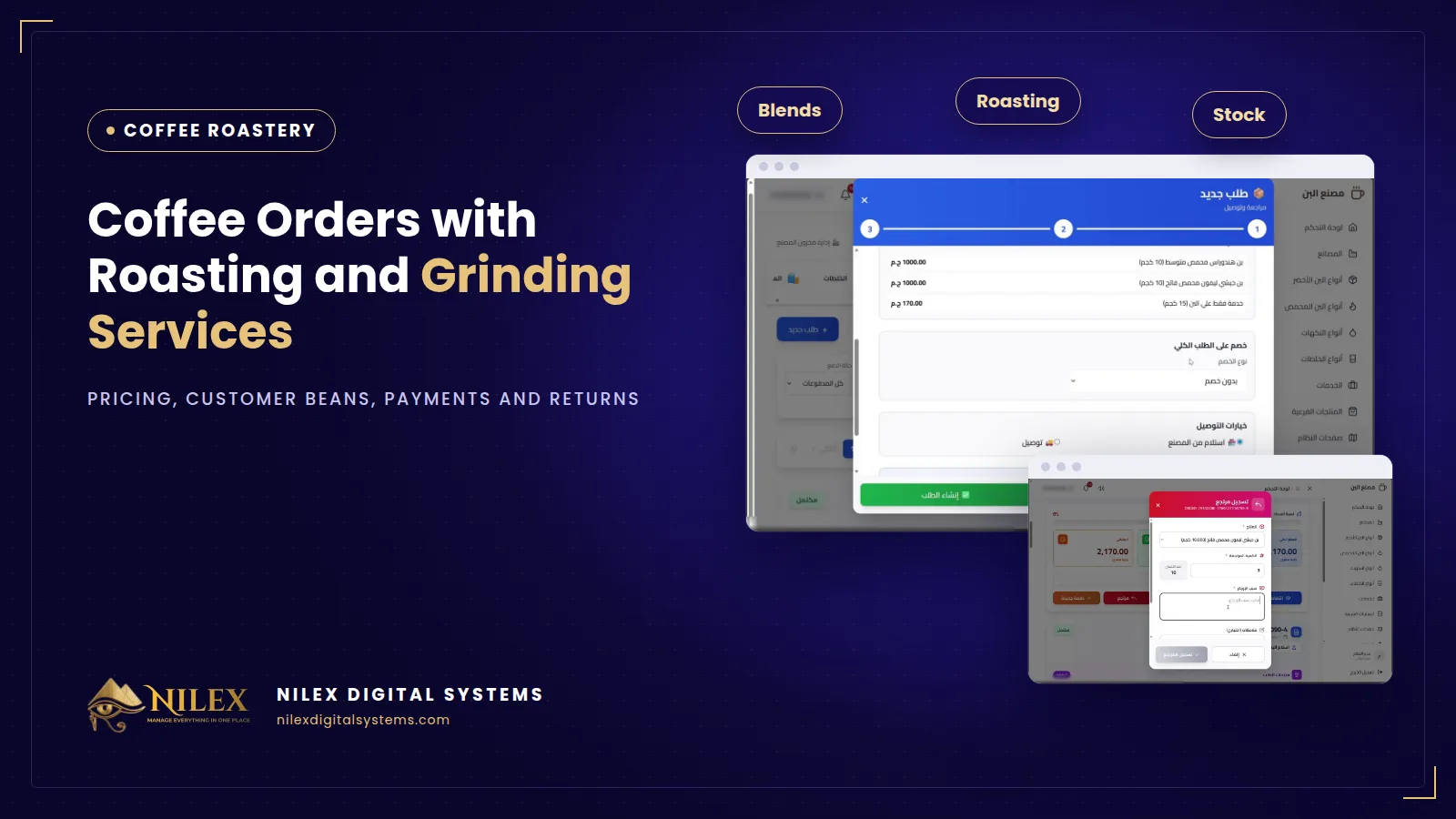
A coffee order is rarely just "two kilos of coffee". It is a product (green, roasted, a blend, a flavour or a side product) plus services such as roasting, grinding, bag packing, premium wrapping or express delivery, each with its own price, and sometimes only a service on coffee the customer brought. A roastery that records orders with their services, payments and returns in one place knows what it sold, what it earned on services and what came back.
This guide explains how roasteries and coffee factories can organise customer and wholesale orders: building the order, pricing services, handling the customer's own coffee, recording payments and dealing with returns.
Key takeaways
- Build every order in the same three steps: customer, products and services, then review discount, pickup or delivery and total.
- Price services separately from the product, so the order shows base price plus services.
- Treat coffee the customer brings as a service-only order, so your stock is never touched.
- Keep payments, order status and a printable PDF on the order itself.
- Record every return with product, quantity and reason, then decide: back to stock or disposed.
What goes wrong with roastery orders?
Orders in roasteries are taken in many ways: at the counter, by phone, from a café that buys every week, from a shop that wants its blend ground for espresso. When they live on paper slips or in WhatsApp chats, the same problems repeat:
- Services are forgotten. The coffee is charged but the grinding or the premium bags are not.
- Prices vary by who took the order. One employee charges grinding, another includes it "as a favour".
- Customer coffee is confused with stock. Beans brought in for roasting are weighed into the roastery's own numbers.
- Payments are unclear. A café pays at the end of the month, and nobody is sure which orders are covered.
- Returns vanish. A bag comes back, is put aside and never recorded as restocked or written off.
Building an order in three steps
- Choose the customer. A walk-in buyer, a café or a wholesale shop: the order belongs to someone.
- Add products and services. Pick from green coffee, roasted coffee, blends, flavours and side products such as tea, sugar or biscuits, or choose a service only. On each product, add the services it needs.
- Review. Apply any discount, choose pickup from the factory or delivery, and check the total before saving.
Using the same three steps for every order, at the counter or for a wholesale customer, is what makes orders comparable and reports reliable.
How to price roasting, grinding and packing services
Services are where many roasteries quietly lose money, because they are seen as part of the product. A clearer approach is to give each service its own price and show it on the order:
| Line | Base price | Services | Line total |
|---|---|---|---|
| House blend, 5 kg | 1,750 | Grinding 75 + bag packing 50 | 1,875 |
| Roasted Brazil, 2 kg | 640 | Premium wrapping 60 | 700 |
| Customer's own beans, 10 kg (service only) | 0 | Roasting 300 + grinding 150 | 450 |
| Express delivery | 40 | 40 | |
| Order total before discount | 3,065 |
Illustrative example: prices are made up to show the structure, not market rates. The pricing detail for each line shows the base price plus services, so the customer sees what they pay for and the roastery can see how much of its revenue comes from services. To price services correctly you also need the real cost of the coffee itself; our guide to blend recipes and costing explains how.
The customer's own coffee: service-only orders
Many roasteries roast and grind coffee that customers bring. The coffee is not yours, so it must not enter or leave your stock. A service-only order solves this: the order contains only the services (roasting, grinding, packing) with their prices. Revenue is recorded, and green and roasted stock stay correct. This is one of the causes of stock mismatches described in our article on green coffee stock and roasting loss.
Payments, status and paperwork on the order
For a café or shop that buys regularly, the order is also the record of what is owed. Keeping these on the order page avoids most disputes:
- Payments recorded against the order they pay for.
- Order status, so the team knows what is being prepared, ready or delivered.
- A PDF of the order to print or send to the customer.
Wholesale customers who buy for resale raise the same questions distributors face; our article on ERP for distributors covers the wider side of selling to shops.
Returns: back to stock or disposed
A return in a roastery is usually one of two things: a sealed bag returned in good condition, or coffee that cannot be sold again (opened, damaged, or past its best). Each return should record:
- the product and the quantity returned;
- the reason;
- the decision: added back to stock, or recorded as disposed;
- who made the decision and when.
A short monthly review of returns by product and reason shows patterns, such as a blend that is returned more often or a packing problem with one bag type.
Order checklist for roasteries
| Check | Why |
|---|---|
| Every order has a customer | Know who buys what and who owes what |
| Services added per product with prices | No forgotten grinding or packing |
| Customer coffee entered as service only | Stock stays correct |
| Discount and delivery set at review | Total agreed before saving |
| Payments recorded on the order | Clear balance for regular customers |
| Returns decided and signed off | Nothing left in the corner |
How Nilex helps
In the coffee roastery and factory management system from Nilex, customer orders are created in three steps: choose the customer, add products (green, roasted, blends, flavours, side products, or a service only on the customer's own coffee), and review the discount, pickup or delivery and the total. Each product can carry services such as roasting, grinding, bag packing, premium wrapping and express delivery, each with its price, and the pricing details show the base price plus services. Payments, order status and PDF are on the order page. Returns are recorded with product, quantity and reason, then added back to stock or recorded as disposed, with who decided and when. An online store for your customers is available in the Enterprise package; see the packages on the system page and our overview of a coffee roastery system.
Frequently asked questions
Can I sell only a service, without selling coffee?
Yes. Choose "service only" and add roasting, grinding, packing or other services, each with its own price.
Can one product carry several services?
Yes. For example, a blend can be ground and packed in premium bags on the same line, and the pricing shows each service on top of the base price.
Do you handle pickup and delivery?
The order records whether the customer picks up from the factory or receives a delivery, and express delivery can be added as a priced service.
What happens to a returned bag?
It is recorded with the product, quantity and reason, then either added back to stock or recorded as disposed, with who decided and when.
If grinding and packing are still "included" because nobody wrote them down, talk to Nilex and see your orders with services priced line by line.
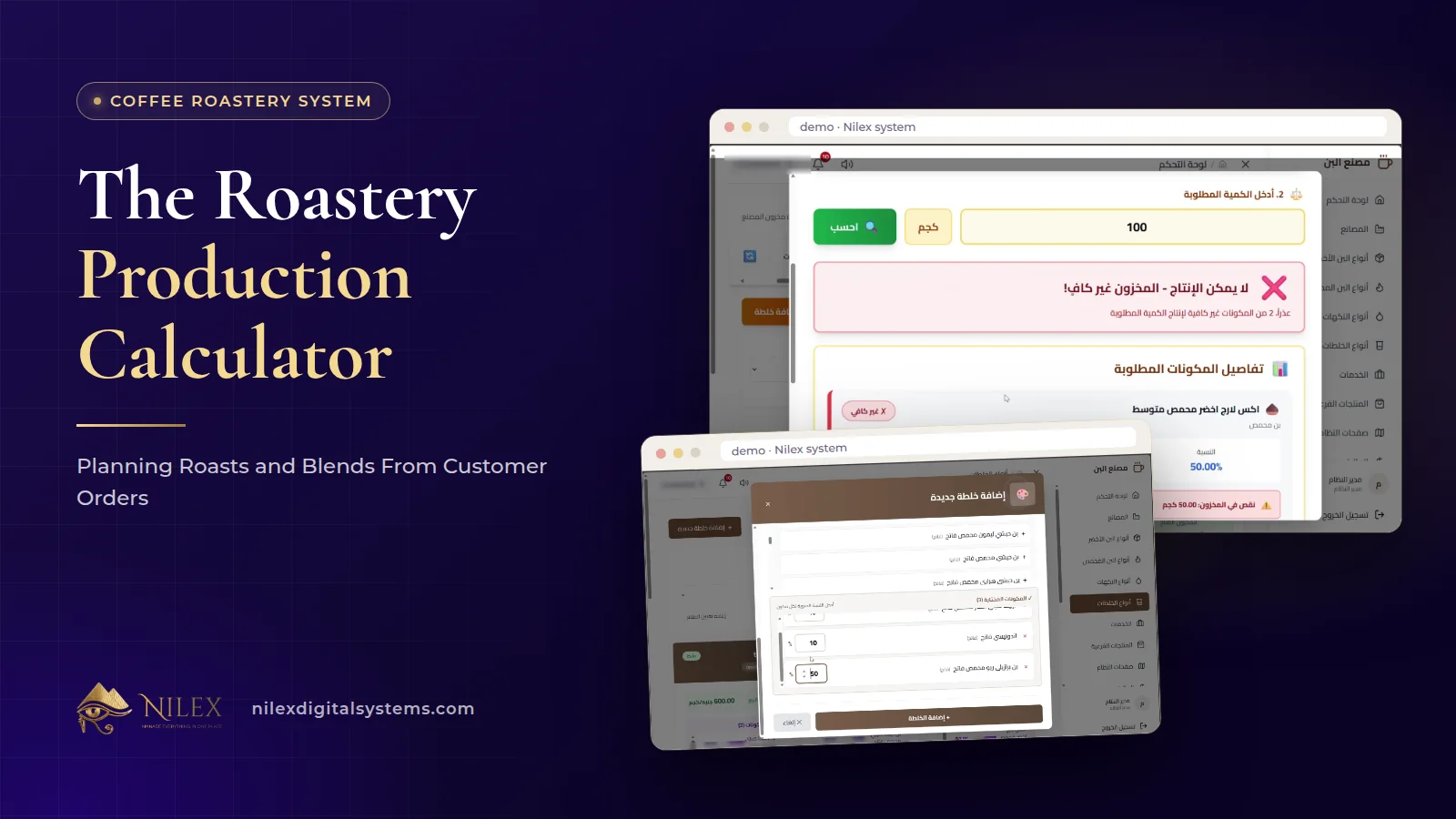 The Roastery Production Calculator: Planning Roasts and Blends From Customer Orders11 October 2026 · 9 min
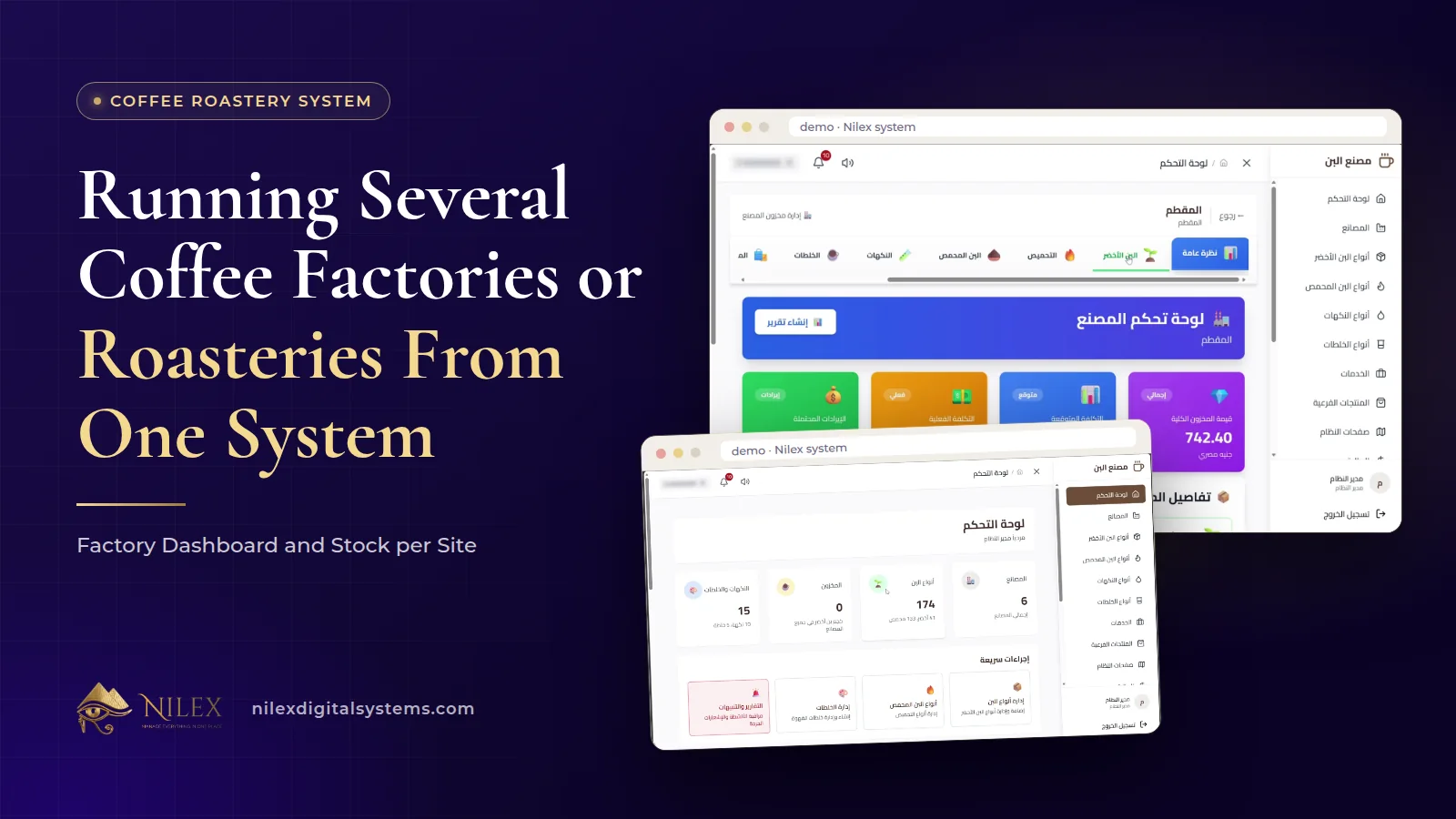 Running Several Coffee Factories or Roasteries From One System: Factory Dashboard and Stock per Site11 October 2026 · 8 min
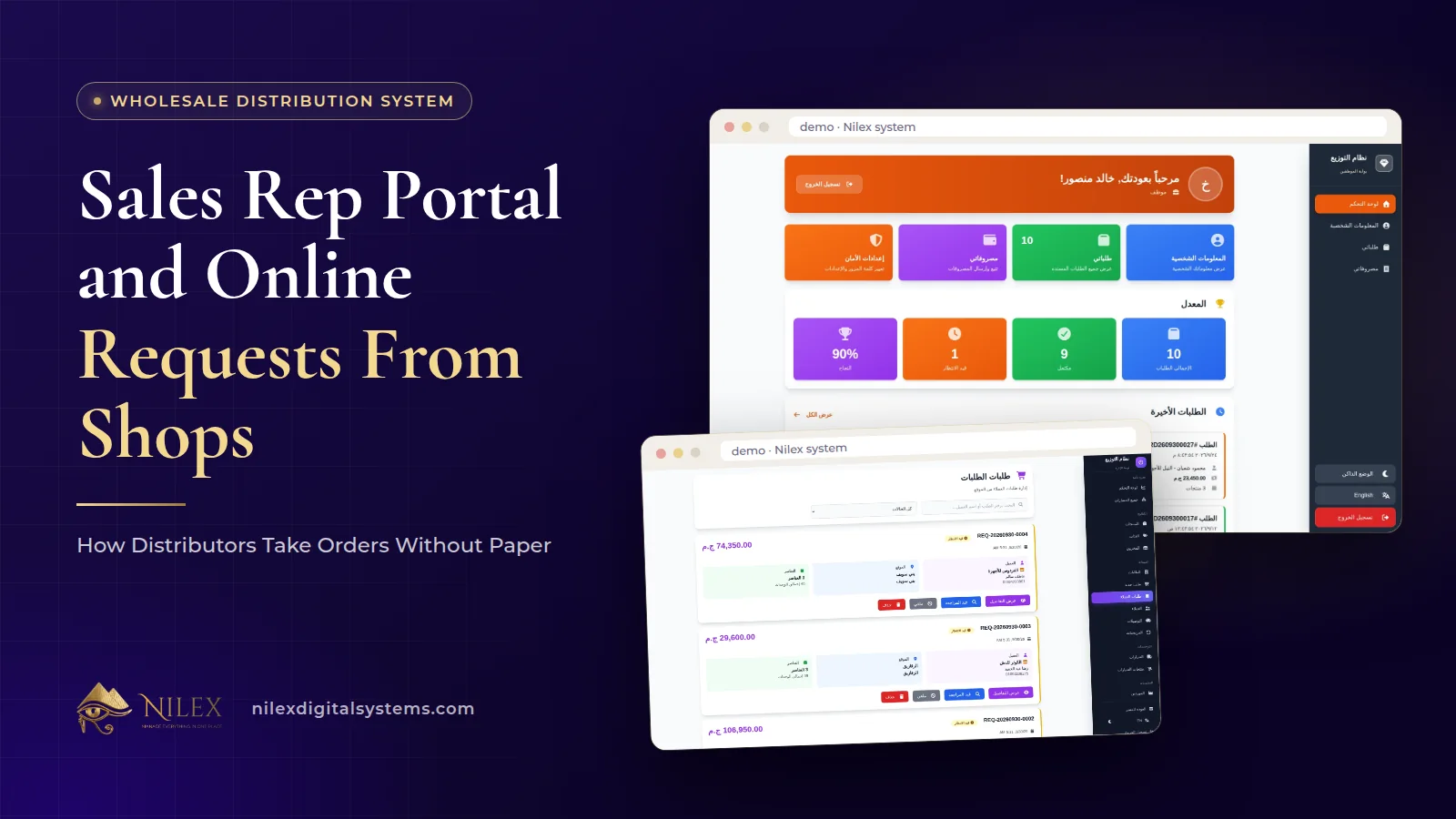 Sales Rep Portal and Online Requests From Shops: How Distributors Take Orders Without Paper11 October 2026 · 10 min