
Coffee Blend Recipes and Costing: Percentages, Batch Checks and the Real Cost per Kilo
How roasteries manage coffee blends: recipes by percentage that total 100%, batch quantities and stock checks before production, blend stock by batch, and costing a blend from roasted cost, with an illustrative example.
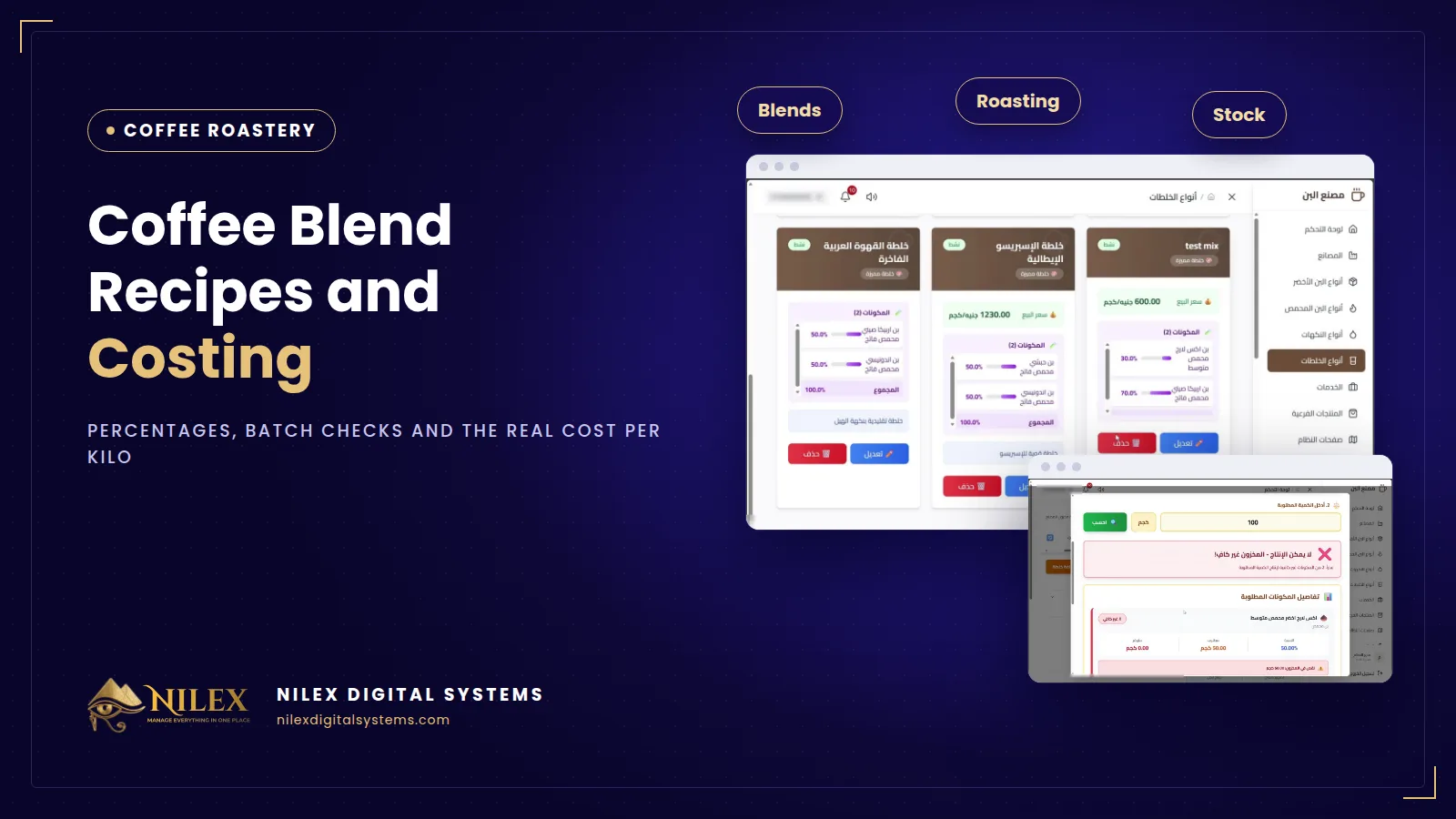
Managing coffee blends properly means saving each blend as a recipe by percentage, checking stock for every ingredient before a batch is produced, and costing the blend from the real cost of roasted coffee, not the price of green beans. When the recipe lives in the head roaster's memory and the cost in an old spreadsheet, every batch is slightly different and nobody knows the margin on the blend that sells the most.
This guide explains how roasteries and coffee factories can organise blends: how to write a recipe, how to calculate what a batch needs, how blend stock should work, and how to cost a kilo of blend with a worked, illustrative example.
Key takeaways
- A blend is a recipe: roasted coffees at a stated roast level, flavours, and the percentage of each, adding up to exactly 100%.
- Quantities for a batch come from the percentages: 60% of a 50 kg batch is 30 kg, every time.
- Check every ingredient against stock before production and know exactly how many kilos are missing.
- Each finished batch should enter blend stock with a batch number and production date.
- Cost a blend from roasted coffee cost, which already includes the weight lost in roasting, plus flavours.
Why should a blend be a recipe, not a habit?
Most roasteries start with a blend that "the owner makes". It sells, so it is made again, a little differently each time: a bit more of the cheaper bean when it runs low, a darker roast on a busy day, a spoon more cardamom for a regular customer. Over months, three problems appear:
- Taste drifts. Customers notice before the roastery does.
- Cost drifts. If the cheaper bean slowly replaces the expensive one, margin changes without anyone deciding it.
- Knowledge leaves. When the head roaster is on leave, or leaves for good, the blend leaves with him.
A written recipe in the system solves all three. It is the same idea as a bill of materials in a factory, explained in our guide to ERP for manufacturers, adapted to how coffee is actually blended.
How to write a blend recipe
- Choose the roasted coffees and the roast level of each (light, medium or dark). The same bean at two roast levels is two different ingredients.
- Add flavours if the blend uses them, such as hazelnut, cardamom or chocolate.
- Set the percentage of each ingredient. The recipe is valid only when the total is exactly 100%. A recipe at 98% or 103% is a mistake waiting to happen.
- Give it a clear name that sales, production and customers all use, so an order for "House Blend" always means the same recipe.
How much of each ingredient does a batch need?
Once the recipe is in percentages, quantities follow automatically. For a 50 kg batch of a blend made of 60% Brazil medium roast, 30% Colombia dark roast and 10% hazelnut flavour, production needs 30 kg, 15 kg and 5 kg. The important question is the next one: is it all in stock?
| Ingredient | % | Needed for 50 kg | In stock | Missing |
|---|---|---|---|---|
| Brazil, medium roast | 60% | 30 kg | 22 kg | 8 kg |
| Colombia, dark roast | 30% | 15 kg | 18 kg | 0 kg |
| Hazelnut flavour | 10% | 5 kg | 6 kg | 0 kg |
Illustrative example. Without this check, production starts, runs out of Brazil after about 36 kg of blend, and the rest is either delayed or quietly made with a substitute. With the check, the roaster knows before starting that 8 kg of Brazil must be roasted first, and because of roasting loss that means putting more than 8 kg of green coffee in the roaster. Our article on green coffee stock and roasting loss shows how to calculate it.
How should blend stock work?
A finished batch is a product in its own right. It should enter blend stock with:
- a batch number, so a complaint can be traced to the day it was produced;
- a production date, so older batches are sold first;
- the quantity produced, which is then reduced by orders.
Keeping blend stock separate from roasted coffee stock also answers a common question: "we have 40 kg of roasted Brazil, but how much is already committed to the house blend?"
Costing a blend: an illustrative example
The cost of a kilo of blend is the weighted cost of its ingredients. The trap is using the price of green coffee. A kilo of roasted coffee costs more than a kilo of green because part of the weight is lost in the roaster.
| Ingredient | Green cost per kg | Roasting loss | Roasted cost per kg | Share | Cost in 1 kg of blend |
|---|---|---|---|---|---|
| Brazil, medium | 200 | 16% | 238.10 | 60% | 142.86 |
| Colombia, dark | 260 | 20% | 325.00 | 30% | 97.50 |
| Hazelnut flavour | n/a | n/a | 150.00 | 10% | 15.00 |
| Total | 100% | 255.36 |
Illustrative example: the figures are made up to show the method, they are not market prices or typical loss rates. Roasted cost per kg is green cost divided by (1 minus loss), so 200 ÷ 0.84 = 238.10. If the same blend were costed from green prices only, it would come to 60% × 200 + 30% × 260 + 15 = 213 per kg, about 42 less than the real ingredient cost. A selling price set on that basis gives away margin on every kilo.
Ingredient cost is not the whole cost. Gas or electricity for roasting, labour, bags and labels still have to be added. A practical method is to keep an expected cost and an actual cost for each item and compare them every month, so a rise in green coffee prices shows up in the blend before it shows up in the bank account.
Blend management checklist
| Check | Why it matters |
|---|---|
| Every blend has a recipe totalling 100% | Same taste and cost every batch |
| Roast level is part of each ingredient | Medium and dark of the same bean differ in cost and taste |
| Stock checked before each batch | No half-finished batches or silent substitutions |
| Batches recorded with number and date | Traceability and first-in, first-out |
| Costing uses roasted cost, not green price | Real margin per kilo |
| Expected vs actual cost reviewed monthly | Price changes caught early |
If most of this still lives in spreadsheets, our article on moving from Excel to ERP explains when it is time to change.
How Nilex helps
In the coffee roastery and factory management system from Nilex, blends are saved as recipes: you choose roasted coffee of any roast level and flavours, set the percentage of each, and the recipe is saved only when the total is 100%. Before a batch, the production calculator shows every ingredient, the quantity needed, what is available and exactly how much is missing. Each batch enters blend stock with its number and production date. Roasted coffee, flavours and side products each carry an expected cost, an actual cost and a selling price, and green coffee types carry their roasting loss per roast level, used when costing roasted coffee. See the packages on the system page, and read the full picture in what a coffee roastery system must track.
Frequently asked questions
Can flavours be part of a blend recipe?
Yes. A recipe can combine roasted coffees of any roast level with flavours such as hazelnut, cardamom or chocolate, each with its own percentage.
Why must the recipe total exactly 100%?
Because batch quantities are calculated from the percentages. If the total is not 100%, the batch will be bigger or smaller than planned and the cost per kilo will be wrong.
What if I change a blend?
Treat a real change of taste or ingredients as a new recipe with a new name, so past batches and their costs remain traceable.
What happens if an ingredient is missing?
The production check shows how many kilos are missing before production starts, so you can roast or buy what is needed first.
If your best blend is still made "by feel", talk to Nilex and see it saved as a recipe on the system.
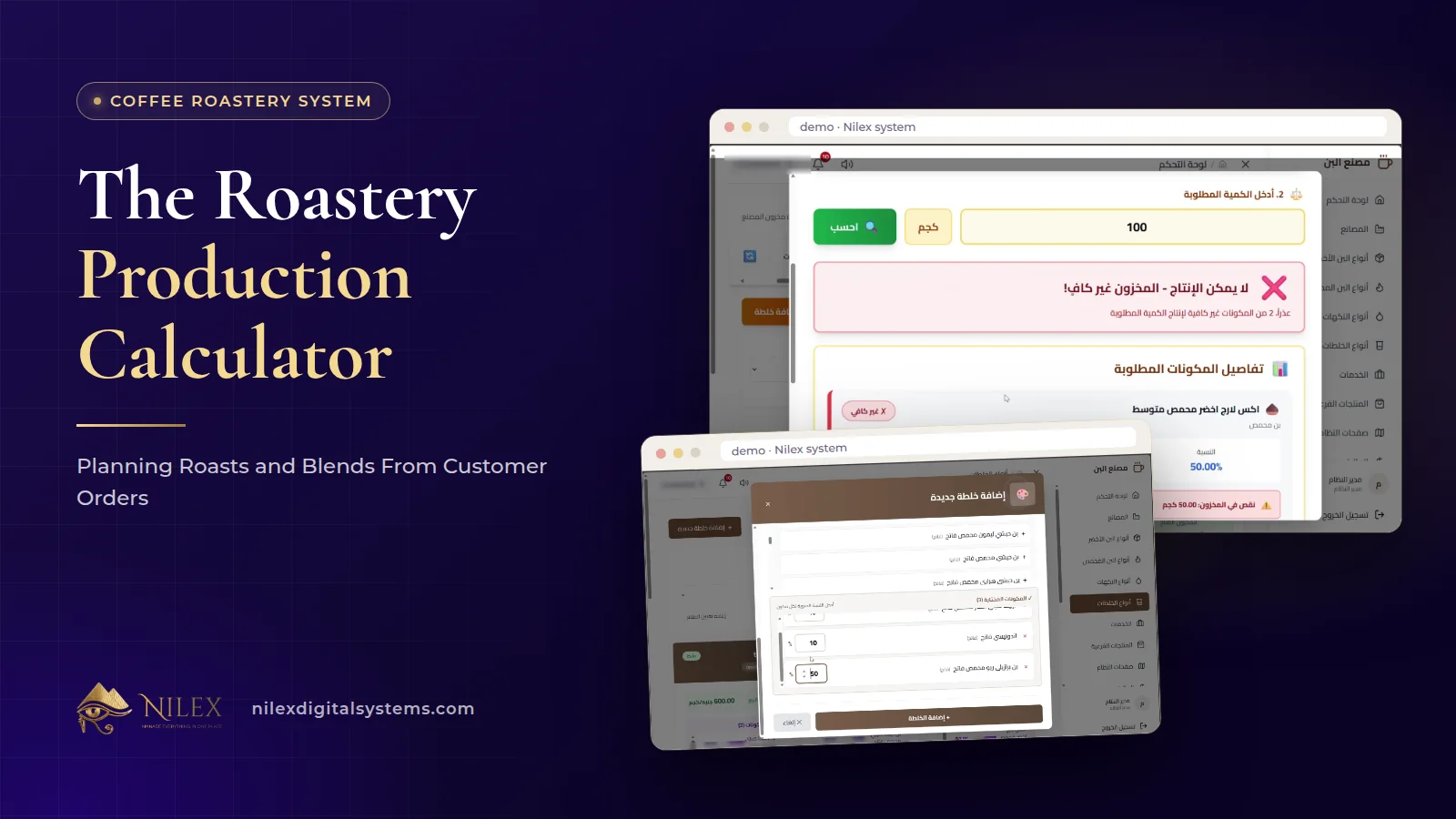 The Roastery Production Calculator: Planning Roasts and Blends From Customer Orders11 October 2026 · 9 min
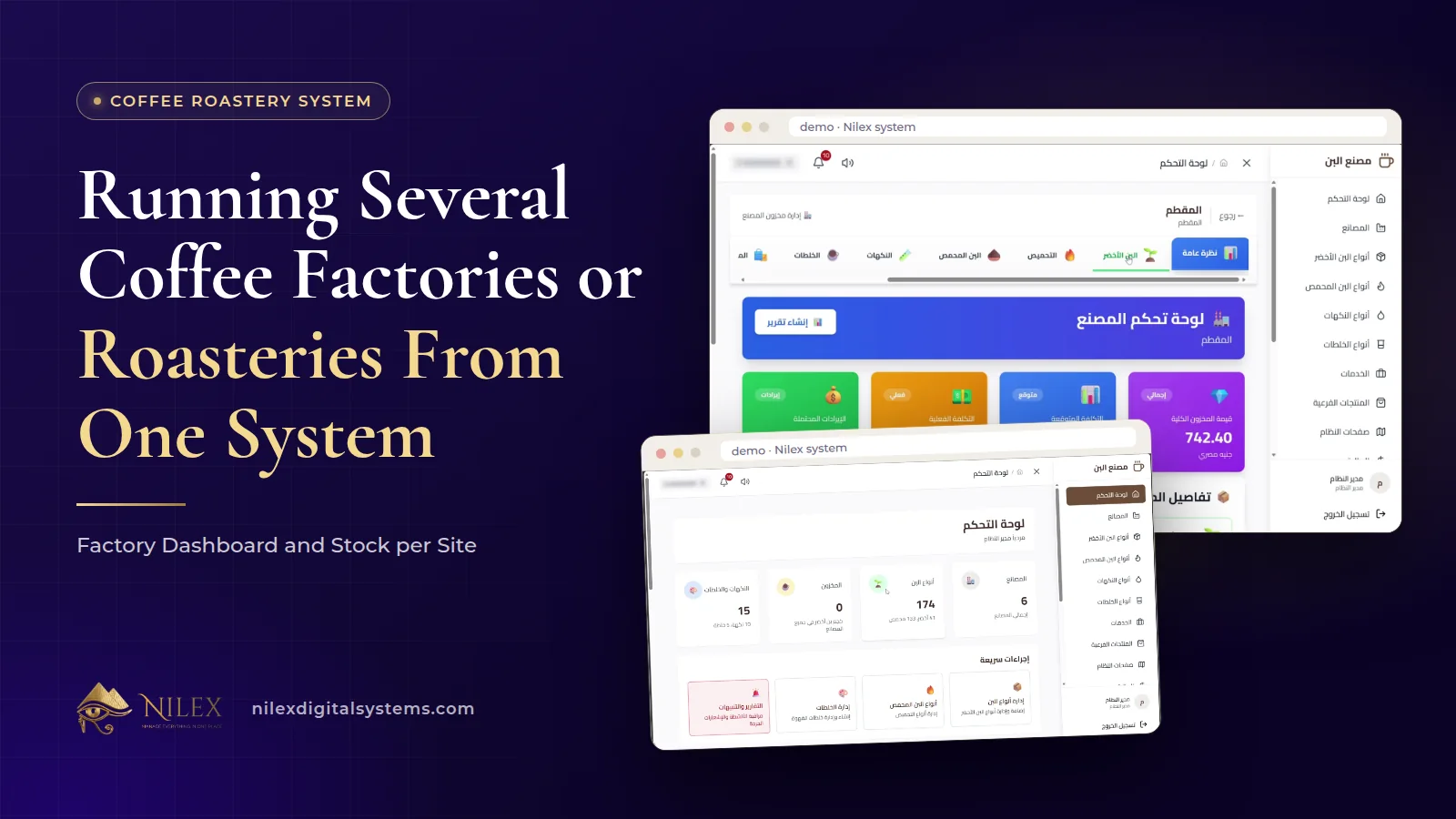 Running Several Coffee Factories or Roasteries From One System: Factory Dashboard and Stock per Site11 October 2026 · 8 min
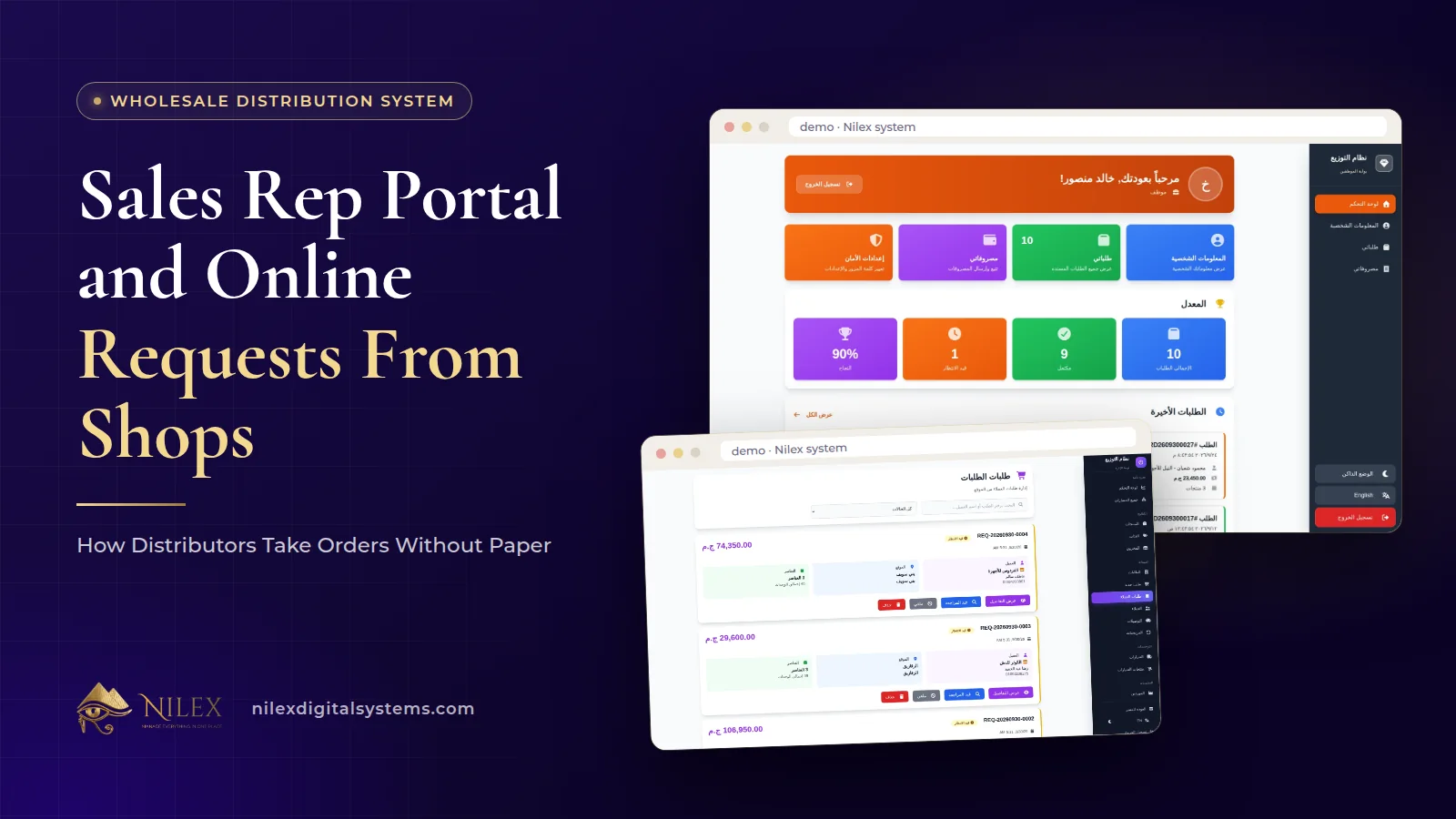 Sales Rep Portal and Online Requests From Shops: How Distributors Take Orders Without Paper11 October 2026 · 10 min