

Layer Protect Case Study: A Sales CRM and Bilingual Website for a PPF Studio in Cairo
How Nilex built Layer Protect, an authorized Layer+ PPF dealer with two Cairo studios, one sales CRM and an Arabic and English website: every enquiry from the website, WhatsApp or phone becomes a lead with an owner and a next step.
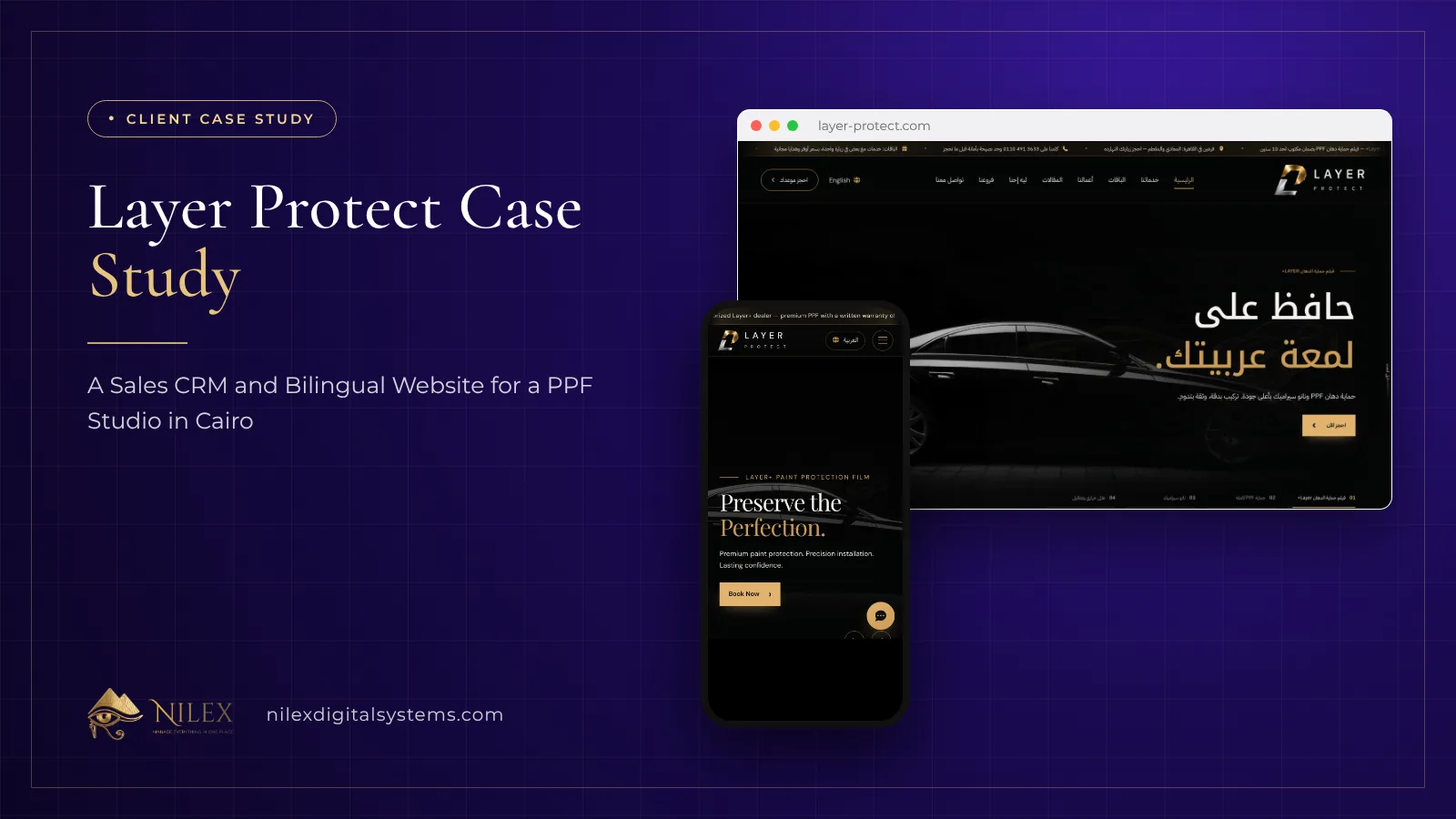
Layer Protect, an authorized Layer+ paint protection film dealer with two studios in Cairo, now runs its sales on one system built by Nilex: a sales CRM where every enquiry from the website, WhatsApp or the phone becomes a lead with an owner and a next step, and a bilingual website in Arabic and English that is managed from the same CRM. WhatsApp, calls and an AI assistant all work inside that system, so the sales conversation no longer lives on personal phones.
This case study is for owners and sales managers of PPF, nano ceramic, window tint and wrapping studios, in Egypt or the Gulf, who sell mostly through WhatsApp and phone calls and feel that enquiries slip through. It explains what was built, phase by phase, and what you can copy for your own studio. It does not include sales figures: the system has just launched, and we do not publish client results we cannot show you.
Key takeaways
- One enquiry, one lead: the website booking form, a WhatsApp message and a phone call all land on the same lead record in the CRM.
- Every lead has a status on a sales board, an owner, a timeline of notes, calls and messages, and a scheduled follow-up shown as overdue, today or upcoming.
- WhatsApp runs through the official WhatsApp Business Platform, with a shared inbox, approved templates, automatic replies and an AI sales assistant.
- The office phone system is connected: one-click calling from the CRM, incoming calls routed to the right employee, and every call logged with its outcome.
- The Arabic and English website is edited from the CRM: services, packages, branches and "Our work" are published without a developer.
- Management sees leads by status and source, team performance, calls and follow-ups on one dashboard.
Who is Layer Protect?
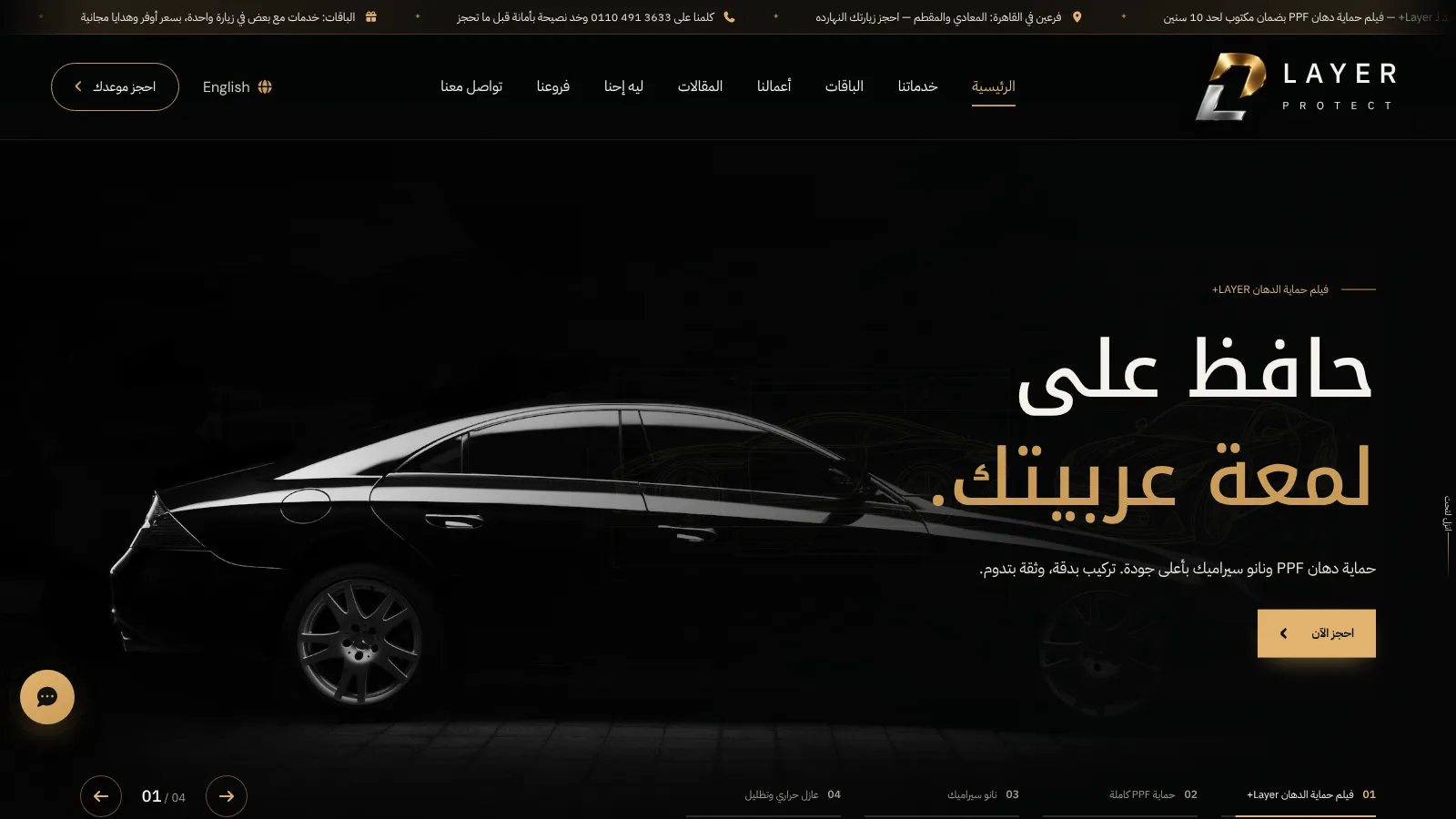
Layer Protect is an authorized dealer of Layer+ paint protection film in Cairo. It works from two studios, one in Maadi and one in Mokattam, and offers four services: paint protection film (PPF), nano ceramic coating, heat-insulating window tint and car wrapping. Its website advertises premium PPF with a written warranty of up to 10 years; that warranty is Layer Protect's own offer to its customers, not something Nilex provides or guarantees.
Layer Protect sells high-value, considered services. A customer rarely books full-body PPF after one message: he compares PPF with ceramic, asks which branch is closer, sends photos of his car and comes back days later. That long sale breaks when it lives in chat apps and memory.
What was going wrong before the system?
Layer Protect's customers ask about protection film, ceramic and tint on WhatsApp, by phone and through the website, often late in the evening. Before the project, those enquiries were answered from personal phones. Follow-ups depended on someone remembering to call back, and there was no way to know which enquiries became bookings or who on the team had handled them.
On top of that, calls left no record of what was agreed, and website content could only be changed by a developer. None of this is unusual; our article on bookings and CRM for car protection centers describes the same leaks across the sector.
Before and after at a glance
| Area | Before | After |
|---|---|---|
| Where enquiries arrive | Personal WhatsApp, phones, a website form | One CRM: website, WhatsApp and phone create leads in the same place |
| Who owns an enquiry | Whoever happened to answer | Every lead has an assigned owner and a status |
| Follow-ups | Remembered, or forgotten | Scheduled, and listed as overdue, today or upcoming |
| Late-evening messages | Answered the next day | The AI assistant answers on WhatsApp and the website chat at any hour |
| Calls | No record | Placed from the CRM with one click and logged with outcome, duration and notes |
| Website changes | Needed a developer | Services, packages, branches and "Our work" edited in the CRM and published |
| Management view | Asking each person | A dashboard of leads, sources, calls, follow-ups and team performance |
Phase 1: how does every enquiry become a lead?
The first phase built the core that everything else feeds: leads and the sales team. A lead is created when a customer submits the booking form on the website, messages the studio's WhatsApp number or calls. Each lead keeps its source, so the studio knows where customers come from.
The sales team works with leads in two views: a table with filters and bulk assignment, and a status board that shows the same leads as cards in columns by stage, so everyone sees what is new, what is waiting for a reply and what is booked. Deleted leads go to a bin first, so an accidental delete can be recovered.
Each lead's page shows one timeline of notes, calls, follow-ups and the WhatsApp conversation, so a salesperson covering for a colleague reads one page instead of asking around.
Follow-ups that someone owns
Every lead can carry a scheduled follow-up with a date and an owner. The follow-ups screen splits them into overdue, today and upcoming. This is the feature that most directly replaces "I'll call him back next week" with a task the system remembers. Managers see overdue follow-ups per employee, so follow-up discipline is visible, not a matter of trust (see what a CRM is).
Phase 2: WhatsApp inside the CRM
The second phase connected the studio's WhatsApp number through the official WhatsApp Business Platform (the Cloud API from Meta), not a phone app. That gives the team a shared inbox: several employees answer from one company number, and each chat sits on the lead it belongs to.
- Approved templates for messages sent outside WhatsApp's 24-hour customer service window. The system enforces the rule and shows each conversation's window state, so nobody tries to send a free-form message WhatsApp would not deliver.
- Automatic replies on events: a new lead receives a welcome template, and a customer's first message gets a welcome reply.
- A rule-based bot with answers to frequent questions.
- An AI sales assistant that answers questions about services, packages, prices and branches from the studio's own data in the CRM, and steers the customer toward booking a visit. The bot can be switched off for any conversation so a person takes over.
The 24-hour rule, templates and the AI settings are covered in WhatsApp inbox and AI sales assistant for a car protection studio. For sales teams in general, see a WhatsApp CRM for Egyptian sales teams.
Phase 3: calls from the CRM
In the third phase the office phone system (PBX) was connected to the CRM. Employees call a lead with one click from the browser, incoming calls ring the employee who should take them, and every call is logged on the lead with its outcome, duration and notes. Phone numbers and employee extensions are managed inside the CRM.
A manager reviewing a lead now sees that the customer was called twice and what was agreed. More in click-to-call from the CRM and a log of every call.
Phase 4: a bilingual website managed from the CRM
The website is the front door, and it was built to feed the CRM. It runs in Arabic at the root of the domain and in English under /en, and its sitemap lists 50 URLs. The page types are:
- A home page, titled in Arabic «Layer Protect | حماية دهان PPF ونانو سيراميك وعازل حراري في القاهرة».
- Services, with a separate page for each service.
- Packages, with a separate page for each package.
- "Our work": a gallery of real cars, each project on its own page.
- Locations, with one page per branch (Maadi and Mokattam).
- About, and a contact page with the booking form.
- A blog with Arabic and English articles that Layer Protect publishes.
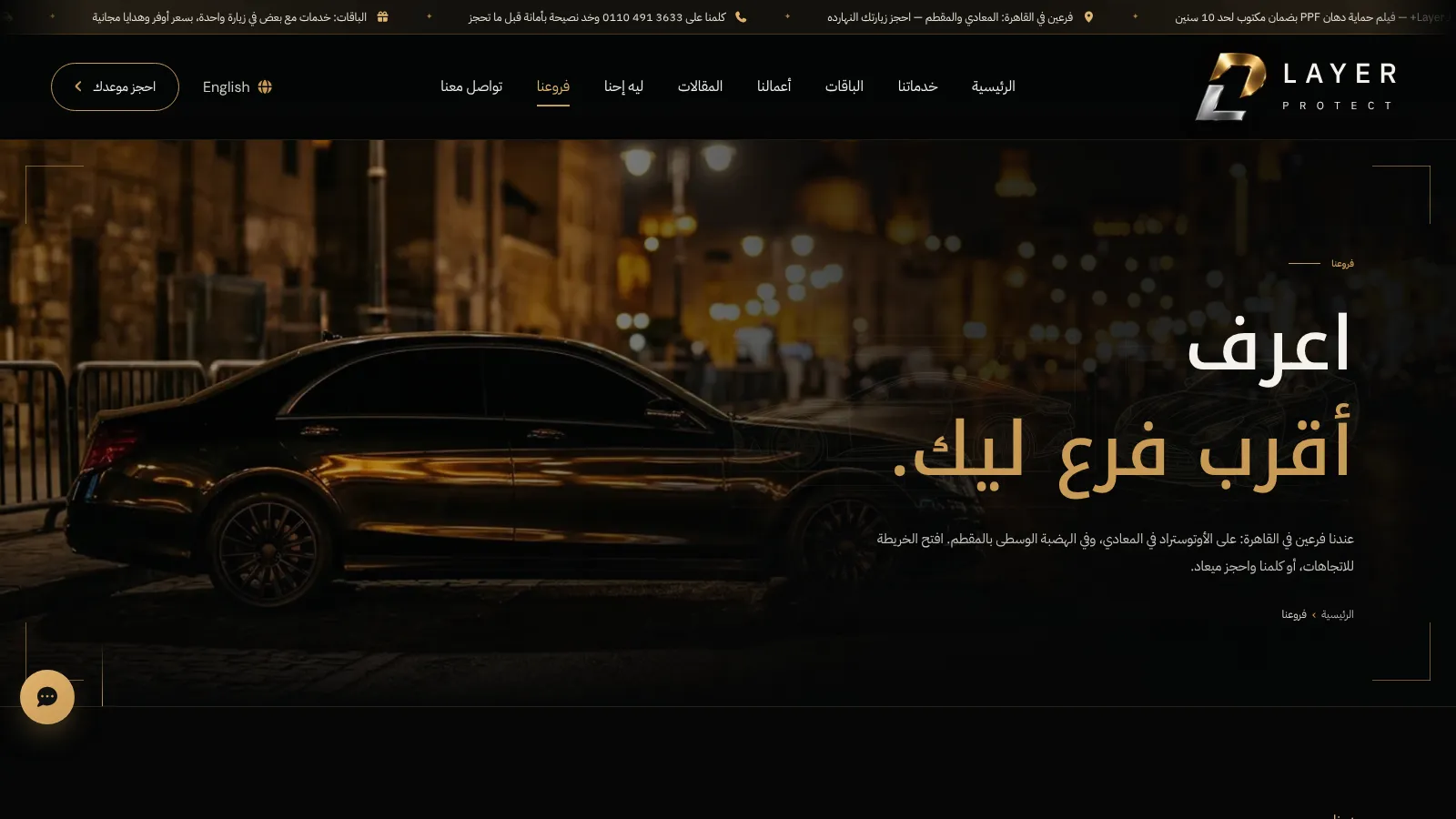
Three decisions matter. First, services, packages, branches and "Our work" projects are edited in the CRM and published to the site, so adding a new package or a newly finished car does not need a developer. Second, the booking form creates a lead in the CRM directly, with the same owner, status and follow-up as any other lead. Third, the website has an AI chat that answers visitors about services, packages, prices and branches and steers them to book; it is the same assistant that answers on WhatsApp, and its transcripts are kept in the CRM.
Every page is prepared for search on the technical side: its own title and description, separate Arabic and English versions, a page per service, package and branch, and a sitemap for search engines (see Google's overview of sitemaps). The blog articles are Layer Protect's own; Nilex built the site so they can be crawled and indexed. How each page type matches what people search for is the subject of a website that brings bookings for a car protection studio, and the general idea is in a website connected to your management system.
Who sees what: roles, the employee portal and the dashboard
The system is used by people with different jobs, so it does not show everyone the same thing. Roles and permissions decide what each employee can see and do. Each employee opens a "my portal" home screen with their own work. Management opens a dashboard with leads by status and by source, team performance, calls, follow-ups and conversions.
The dashboard answers the owner's weekly questions: how many enquiries came in, from which channel, and who has overdue follow-ups. The system also sends emails where they help: booking confirmations, password resets by code and security alerts. More on designing a view for each role in a portal for every role in your business system.
What changed at launch
The system went live in November 2026. Because it is new, we report what changed in how the studio works, not numbers. Every enquiry now lands with an owner and a next step, whichever channel it came from. Customers get an answer on WhatsApp and in the website chat at any hour, with a person able to take over. And management sees each lead, call and follow-up of the team from one screen instead of scattered phone chats.
What other car protection studios can take from this
- Start with the lead, not the channel. Decide what a lead must hold (customer, service asked about, source, owner, status, next follow-up) before you connect WhatsApp or phones.
- Put every channel on the same record. The value comes from seeing the website form, the chat and the call on one timeline.
- Make follow-ups a list, not a habit. Overdue follow-ups per person is the most useful management view a sales CRM has.
- Give the AI assistant your own data and a clear goal, and keep a person one click away.
- Add operations later. Jobs, film stock, warranties and technician pay belong to a full center system a studio can add as it grows; see CRM or a full center ERP for a PPF studio.
How Nilex helps
Nilex builds sales CRMs, websites and AI assistants as one connected system, as we did for Layer Protect; the published case study is on our Layer Protect client page, with our other work on our clients page. For a studio that wants the sales side, we build a custom business system with leads, follow-ups, WhatsApp and calls, an SEO-ready company website managed from it, and an AI business chatbot that answers from your services, packages and branches. If you also need jobs, film stock, warranties and payroll across branches, our ready-made car protection film centers management system covers operations.
Our SEO work is technical: speed, structure, indexing, structured data and sitemaps. You publish your own articles, and we make sure the site is built so they can be found; we do not write content, build links or promise rankings. We work online with clients in Egypt, Saudi Arabia and Kuwait, and quote in EGP in Egypt and in USD abroad once we understand your studio. Contact us to talk about yours.
Frequently asked questions
What did Nilex build for Layer Protect?
One system with two faces: a sales CRM (leads from the website, WhatsApp and phone, a status board, timelines, follow-ups, a shared WhatsApp inbox with templates, automatic replies and an AI assistant, one-click calling with a call log, roles and a management dashboard) and an Arabic and English website managed from that CRM.
Does Layer Protect use the full car protection centers system?
No. Layer Protect uses the sales side: the CRM and the website. Operations such as jobs, film stock, warranties and technician pay are part of Nilex's separate car protection centers system, which a studio can add later if it needs it.
Can the studio update its website without a developer?
Yes. Services, packages, branches and "Our work" projects are edited in the CRM and published to the Arabic and English site. Blog articles are written and published by Layer Protect.
Does the AI assistant quote prices?
It answers about services, packages, prices and branches from the data the studio keeps in the CRM, so the prices it gives are the studio's own. A person can switch the bot off in any conversation and take over.
Can a studio in Saudi Arabia or Kuwait get the same setup?
Yes. We work online with clients in Egypt, Saudi Arabia and Kuwait, and the same approach applies: one lead per enquiry, WhatsApp and calls inside the CRM, and a bilingual website managed from it.
 Clinic Management System for Every Specialty: One Professional Core, Built Around Your Clinic8 November 2026 · 8 min
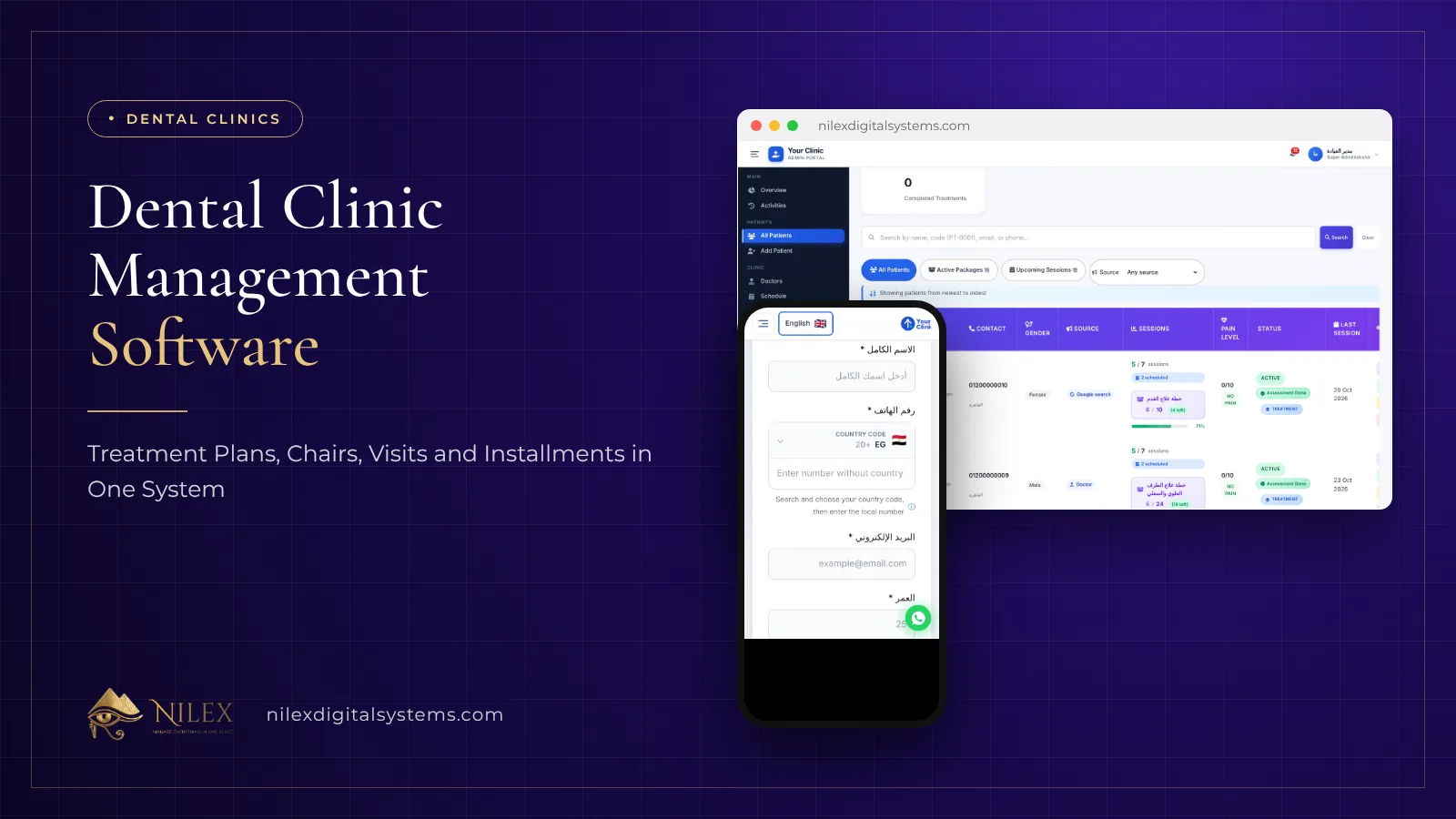 Dental Clinic Management Software: Treatment Plans, Chairs, Visits and Installments in One System8 November 2026 · 6 min
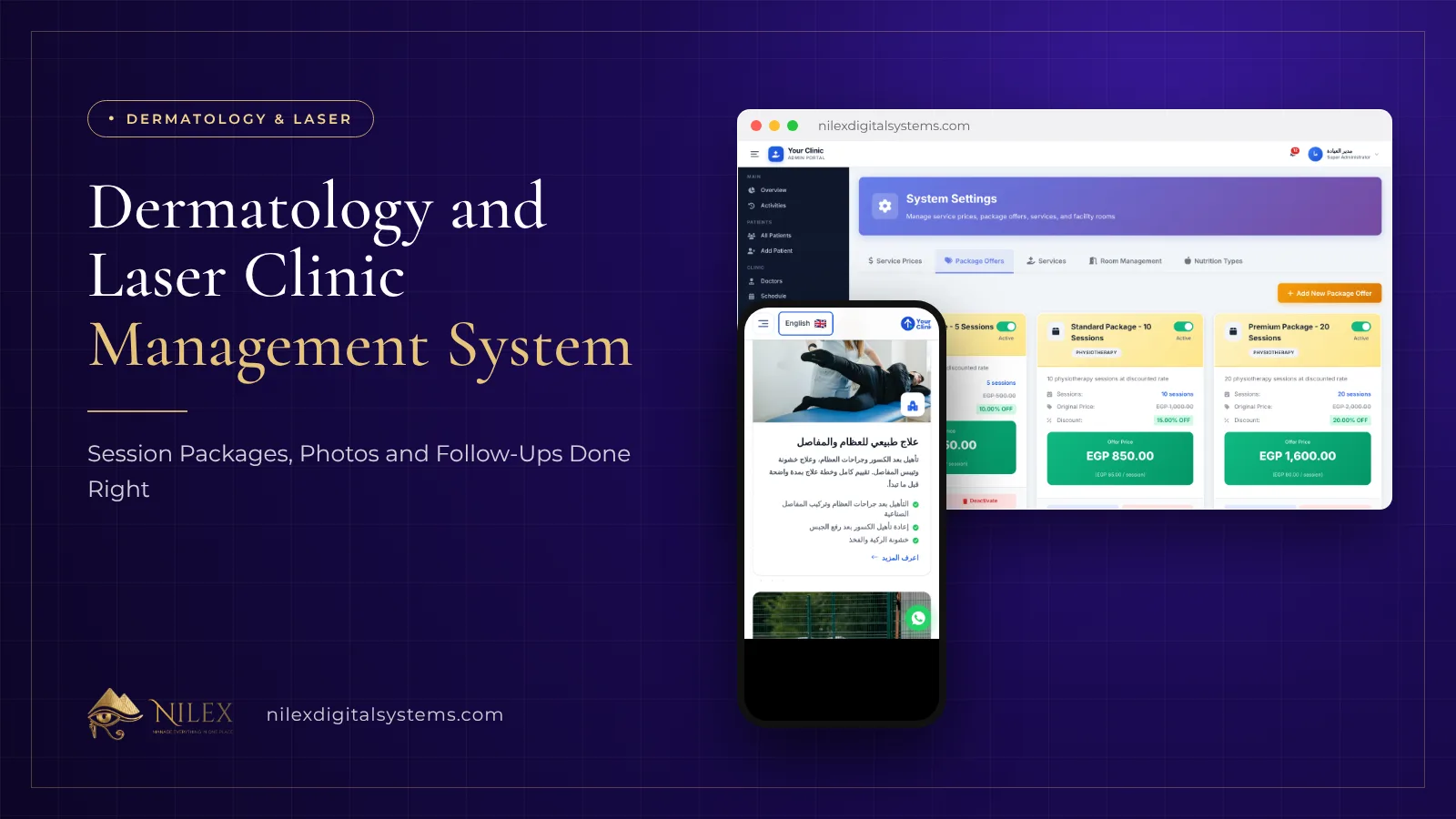 Dermatology and Laser Clinic Management System: Session Packages, Photos and Follow-Ups Done Right8 November 2026 · 5 min