
CRM or a Full Center System? What a PPF, Ceramic and Tint Business Needs at Each Stage
Sales CRM or full center ERP for a PPF, ceramic or tint studio? When a CRM with WhatsApp and a website is enough (Layer Protect), when you need jobs, film by the meter, warranties and payroll, a decision table, and how to grow from one to the other.
A PPF, ceramic or tint business needs a sales CRM first when its biggest losses happen before the car arrives: enquiries on WhatsApp and the phone that nobody follows up. It needs a full center system, an ERP built for protection centers, when the losses move into the bay: undocumented car condition, film used without being measured, warranties nobody can find and technician pay worked out by hand. Many studios start with a CRM and a website and add the operations system later, and that is a sound path as long as it is planned.
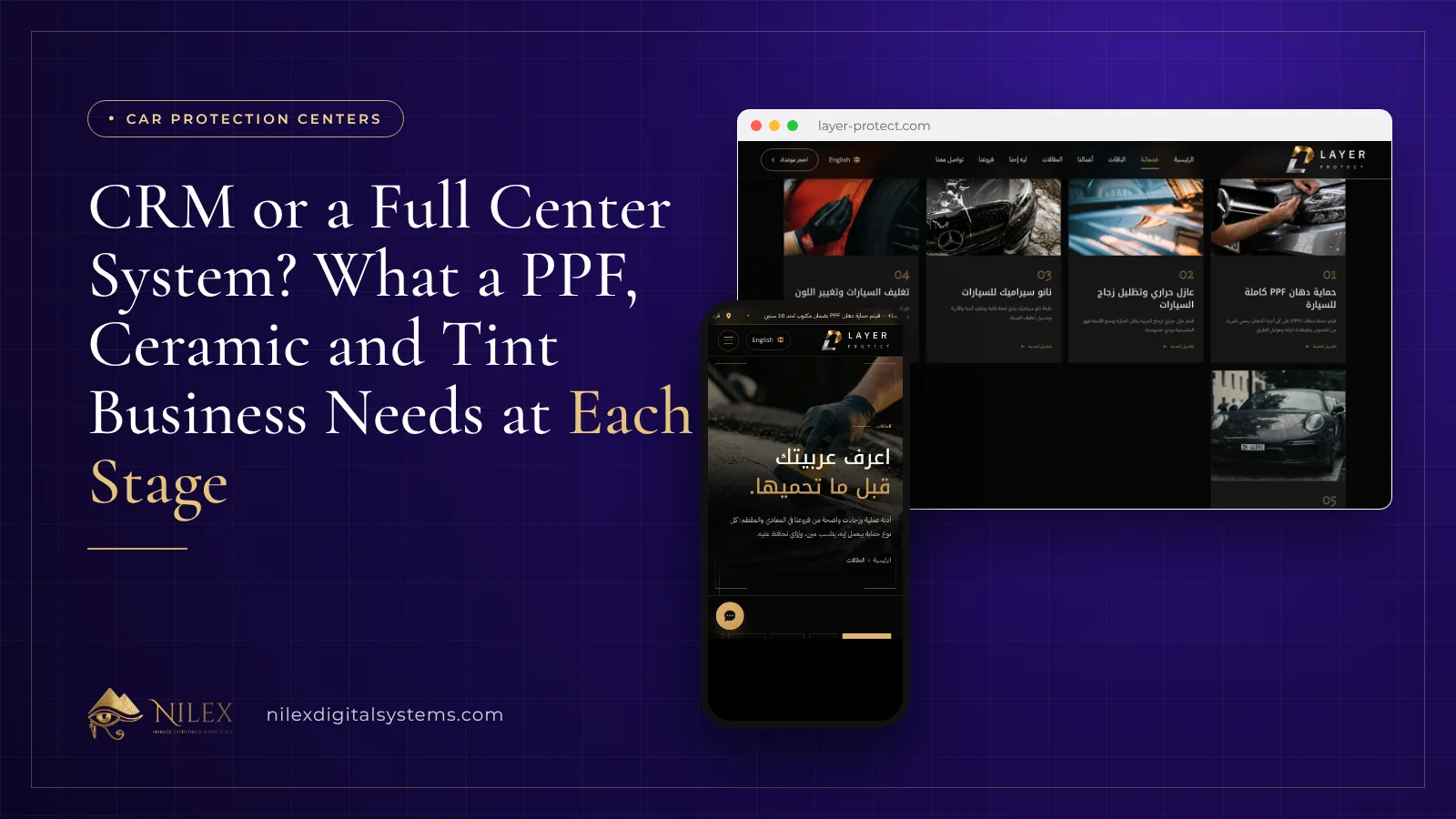
This article is for owners of protection and tint studios in Egypt and the Gulf asking "do I need a CRM or a whole system?". We compare the two using two real setups that Nilex built: the sales CRM and bilingual website of Layer Protect, a PPF dealer with two studios in Cairo, and the Nilex car protection centers management system that runs jobs, stock, warranties and payroll for one center or a chain.
Key takeaways
- A sales CRM manages people who have not paid yet: leads, conversations, calls, follow-ups and bookings. A center ERP manages cars and money: check-in, work orders, film stock, warranties, finance and payroll.
- If most of your problems are "we answered late" or "nobody called him back", start with a CRM connected to WhatsApp, the phone and your website.
- If most of your problems are disputes, film waste, lost warranties or unclear profit per car, you need the operations system, whatever your sales look like.
- Growing from one to the other works when you decide early which system owns each record, such as customers, services, prices and branches.
- A website managed from the CRM keeps services, packages and branches current without a developer, and gives sales a steady source of enquiries.
What is the difference between a sales CRM and a full center system?
Both show a customer's name and phone number, which is why they are confused. The difference is what happens around that name.
| Question | Sales CRM (Layer Protect type) | Full center system (ERP) |
|---|---|---|
| Who is it about? | People who asked and have not booked or paid yet | Cars in the shop and customers you already served |
| Main records | Leads, status board, timeline, notes, calls, follow-ups, WhatsApp conversations | Check-in reports, work orders, warranties, follow-up schedule, stock, invoices, payroll |
| Main users | Sales team, whoever answers WhatsApp and the phone, management | Reception, technicians, branch managers, finance, the owner |
| Money it protects | Jobs lost because nobody answered or followed up | Margin lost to film waste, disputes, unpaid balances and pay errors |
| Typical "done" moment | A visit is booked | The car is delivered, paid for and has its warranty |
| Website role | Feeds leads; services, packages and branches edited from the CRM | Bookings and articles on the public site, depending on the plan |
The full centers system also contains a sales CRM: leads, calls, follow-ups, a pipeline with the value of every deal and reports on lead sources, plus bookings and a calendar. What a dedicated CRM like Layer Protect's adds is depth on the channels: the official WhatsApp Business Platform inbox, an AI sales assistant and the office phone system. Our article on bookings and the sales CRM inside the centers system shows the operations-side version.
Stage one: when the problem is enquiries
Layer Protect is an authorized Layer+ dealer that applies paint protection film, nano ceramic coating, heat-insulating window tint and car wrapping at two studios in Cairo, in Maadi and Mokattam. Before its system, enquiries were spread across personal phones, late-evening messages waited until the next day, and follow-ups depended on memory.
So Nilex built the sales side first: a CRM the sales team works in every day, and the website that feeds it. In practice that means:
- Every enquiry is a lead. The website booking form, a WhatsApp message and a phone call all create leads with an owner, a status on the sales board and a full timeline of notes, calls and messages.
- Follow-ups are scheduled. They are listed as overdue, today and upcoming, so nobody waits for a call back.
- WhatsApp runs inside the CRM. Through the official WhatsApp Business Platform: a shared inbox, approved templates for messages outside the 24-hour window, automatic replies on events such as a new lead or a first message, and an AI sales assistant that answers questions on services, packages, prices and branches and steers customers to book. A person can take over any conversation. Details are in our article on the WhatsApp inbox and AI assistant for protection studios.
- Calls are logged. The office phone system is connected: one-click calling from the lead, incoming calls ringing the right employee, and every call logged with its outcome, duration and notes; see click-to-call and the call log.
- Management sees the team. A dashboard with leads by status and source, team performance, calls, follow-ups and conversions, with roles and permissions for who can see and do what.
None of this touches film rolls, check-in or payroll, and at this stage it does not need to. The full story is in the Layer Protect CRM and website case study.
Why the website belongs with the CRM
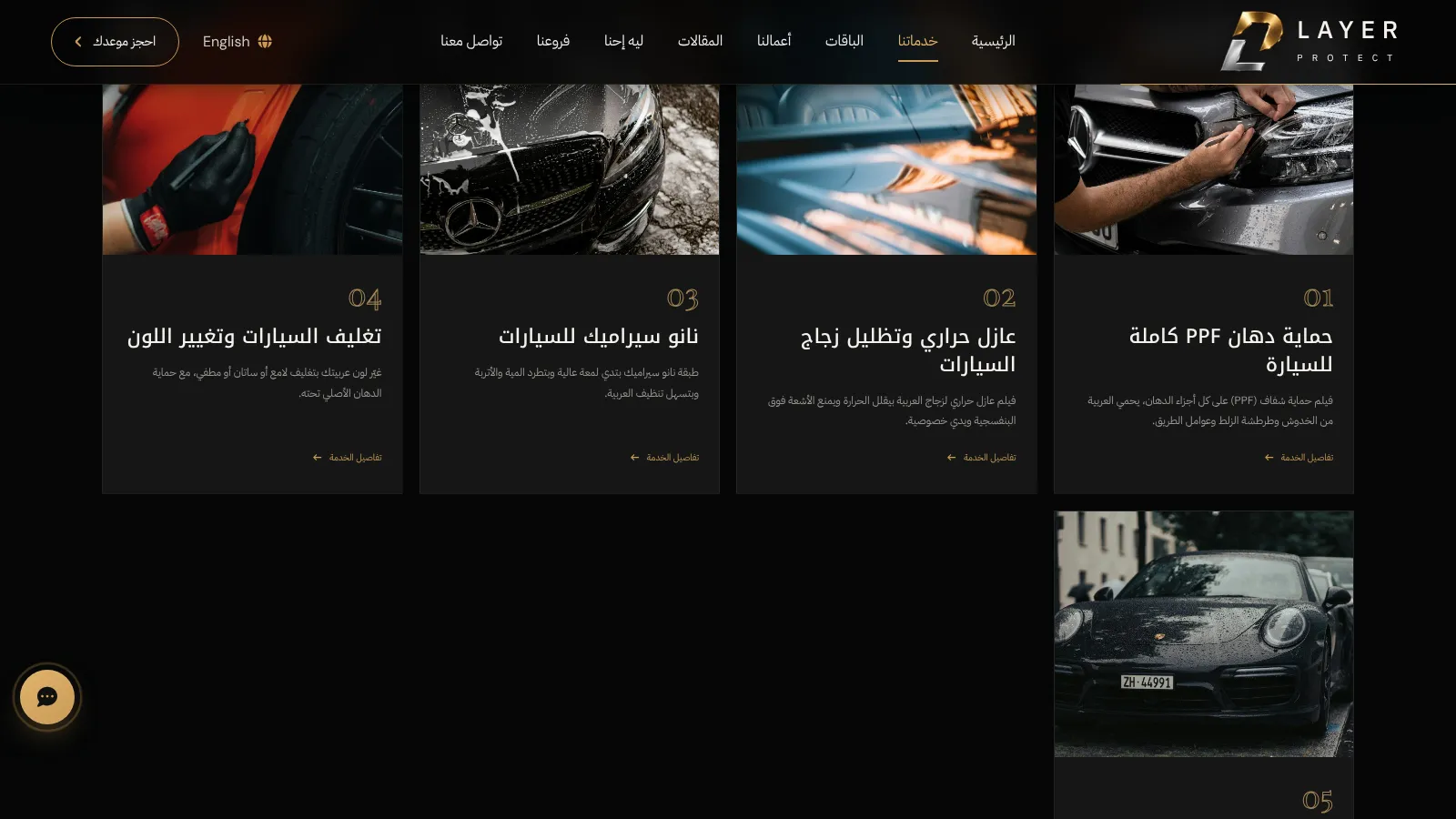
For a studio in the sales stage, the website is not a brochure; it is the main source of enquiries that do not depend on ad spend. Layer Protect's bilingual site has a page for each service, each package and each branch, an "Our work" gallery with a page for each real car, an about page, a contact and booking form, and a blog in Arabic and English. The booking form creates a lead in the CRM directly, and the site's AI chat answers visitors about services, packages, prices and branches and steers them to book.
Because services, packages, branches and "Our work" are edited in the CRM and published to the site, the team updates them without a developer. Our article on a website connected to your management system explains why we build client sites this way, and a website that brings bookings for a protection studio explains how each page type matches a search.
Stage two: when the problem is in the bay
A CRM ends when the visit is booked. Once the car enters the studio, new questions start that a CRM has no place for: what condition was the car in, which films and how many meters went on it, which technicians worked on it, what is still unpaid, and when is its warranty check due?
This is what the Nilex car protection centers system is for:
- Check-in and work orders: mileage, condition notes and photos with a printed form the customer signs, then a work order with services, technicians, payments, external costs and documents.
- Film by the meter: full and opened rolls by the square or linear meter, with cost and stock value, low-stock alerts, purchase orders and transfers between branches; see film stock by the meter.
- Warranties and follow-ups: a warranty per service with its end date and a PDF certificate, and re-inspection dates calculated from delivery.
- Finance and payroll: invoices, payments, expenses with approval, cash, bank and wallet accounts, and HR with attendance, overtime, advances, deductions, technician commissions and payroll; see HR and payroll inside the operations system.
- Several branches: one dashboard comparing revenue, expenses, profit, cars in the shop, bookings and low stock per branch, plus customer and technician portals.
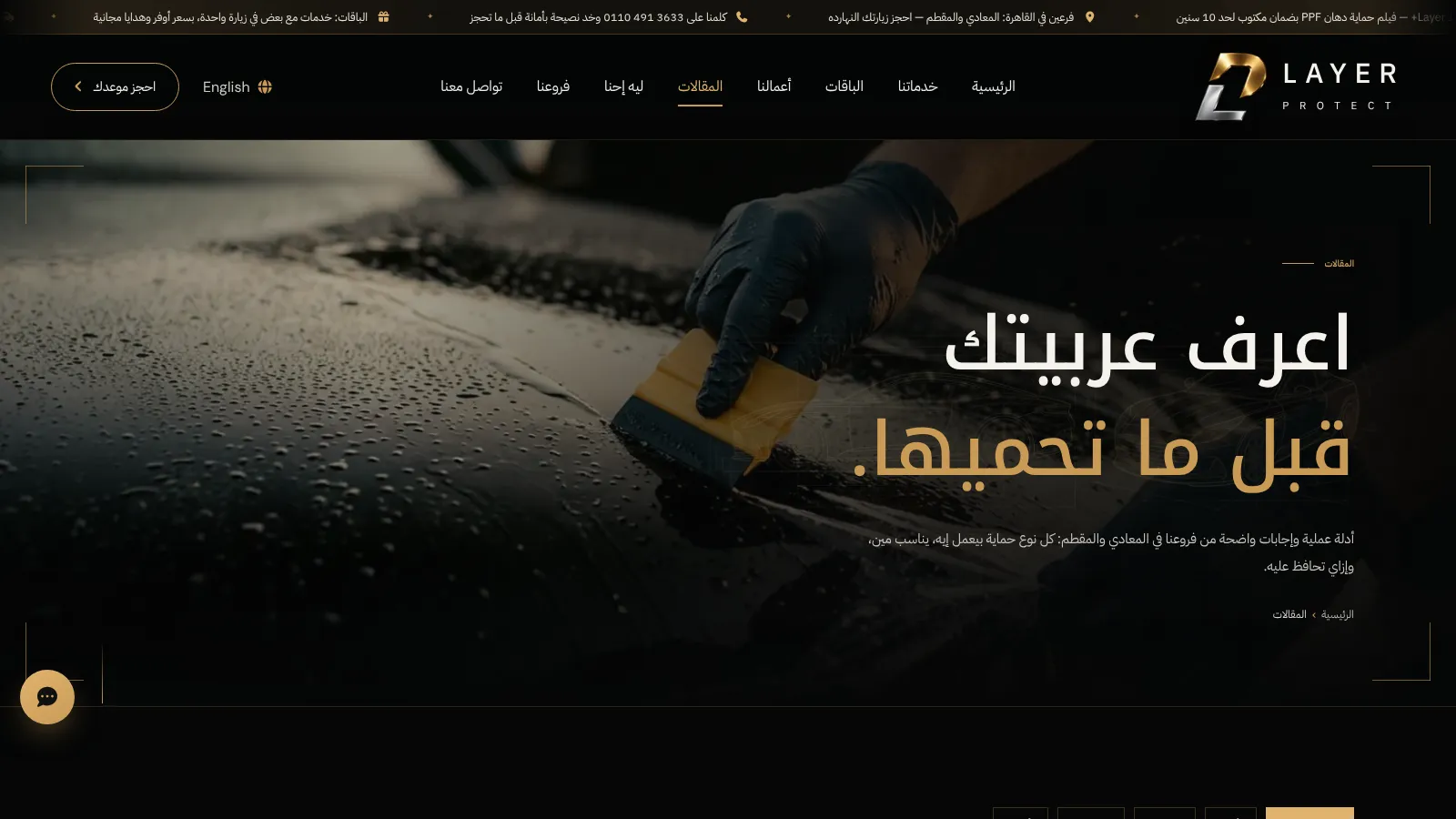
Warranties are a good example of why this stage matters. Layer Protect's own site advertises premium PPF with a written warranty of up to 10 years; that is the studio's claim, not Nilex's. Any studio that sells long warranties eventually needs a record of every job behind them that it can find years later, and that record lives in the operations system, not in a chat history. The ten features are explained in car protection center management software.
Signs you have outgrown a CRM on its own
- Reception still writes the car's condition on paper, and you have had at least one "that scratch was not there" argument.
- You buy film rolls without knowing how many meters the last month's jobs actually used.
- Warranty checks are booked because the customer remembered, not because the system reminded you.
- Technician commissions are calculated in a separate sheet at the end of the month.
- You cannot say what one full PPF job earned after film, outside costs and commission.
- You opened a second branch and compare the two by phone calls with the managers.
If two or three sound familiar, invest in operations next, not more sales tools.
Decision table: what to build at each stage
| Your situation | Start with | Add next |
|---|---|---|
| New studio, one location, most enquiries on WhatsApp and Instagram | Sales CRM with WhatsApp, plus a website | Operations system when car volume or staff grows |
| Busy studio, many enquiries, team answering from personal phones | Sales CRM with WhatsApp inbox, AI assistant and phone system | Check-in, work orders and warranties |
| Steady customers, disputes and film waste are the pain | Operations system with its built-in sales CRM | Deeper WhatsApp and phone connections if enquiries grow |
| Two or more branches, owner cannot see the numbers | Operations system with the network dashboard | Customer and technician portals, website booking |
| Chain or film distributor with installation centers | Full system for all centers | Custom reports and workflow changes |
The right first step is the one that fixes your most expensive problem this quarter.
How to grow from one to the other without starting over
Nilex offers both, and a business can start with the CRM and website and add the operations system later. Plan the move from day one:
- Keep one customer record. Agree that a phone number identifies one customer, so the person who enquired in the CRM is the same person whose car is checked in later.
- Name services and packages once. The names on your website and in the CRM should be the ones your work orders and warranties will use.
- Set branches the same way. If the CRM routes leads to Maadi or Mokattam, the operations system should use the same branches.
- Decide who owns each record. Leads and conversations in the sales side, cars, jobs, stock and money in the operations side, and write down how the hand-off from booked visit to check-in works.
- Keep your data exportable. Make sure customer and lead data can be exported.
How the two sides connect in your case, for example whether the WhatsApp inbox and phone system sit inside the operations system or next to it, is something we scope in the written quote rather than promise in advance. If you are still comparing CRM vendors in general, our comparison of CRM software in Egypt lists what each one publishes.
Common mistakes when choosing
- Buying the full system to fix a sales problem. If cars are not arriving, warranty modules will not bring them.
- Running the bay from a CRM. "Film meters" fields in a sales tool become a spreadsheet with a login.
- Keeping the website separate. A site that only a developer can update falls out of date with your packages and branches.
- Skipping roles. Decide who sees phone numbers, prices and payments before go-live.
How Nilex helps
For the sales stage, Nilex builds a CRM with leads, follow-ups, calls, the official WhatsApp Business Platform inbox and an AI sales assistant, plus a bilingual website managed from the CRM, as we did for Layer Protect (layer-protect.com); see SEO-ready business websites and AI business chatbots. Our SEO work is technical: speed, structure, indexing, sitemaps and Search Console; the studio publishes its own articles. For the operations stage, the ready car protection film centers management system covers check-in, work orders, film by the meter, warranties, follow-ups, finance, payroll, bookings, CRM, portals and branches, in Arabic and English, and custom ERP systems cover changes beyond it. For Egyptian owners, the Egypt-specific points are in a car protection center system in Egypt. Every project starts with a written quote; contact us to describe your studio.
Frequently asked questions
Should a new PPF studio start with a CRM or an ERP?
If your main problem is turning enquiries into booked visits, start with a sales CRM and a website. If you already have steady cars and lose money on disputes, film or warranties, start with the operations system, which includes its own sales CRM.
Does the full centers system include a CRM?
Yes. It includes leads, calls, follow-ups, a pipeline with the value of every deal and lead-source reports, plus bookings and a calendar. The deeper WhatsApp Business Platform inbox, AI assistant and phone system connection were built in Layer Protect's dedicated CRM.
Can I add the operations system later?
Yes. A business can start with the CRM and website and add jobs, stock, warranties and payroll later. Agree early on customer records, service names and branches so the move is smooth, and we scope the connection between the two in the quote.
Does Layer Protect use the full centers system?
No. Layer Protect uses a sales CRM and a bilingual website, which is the sales side. The full centers system with check-in, film stock, warranties and payroll is a separate Nilex system.
Can my team edit the website without a developer?
In the Layer Protect setup, yes: services, packages, branches and "Our work" are edited in the CRM and published to the site.
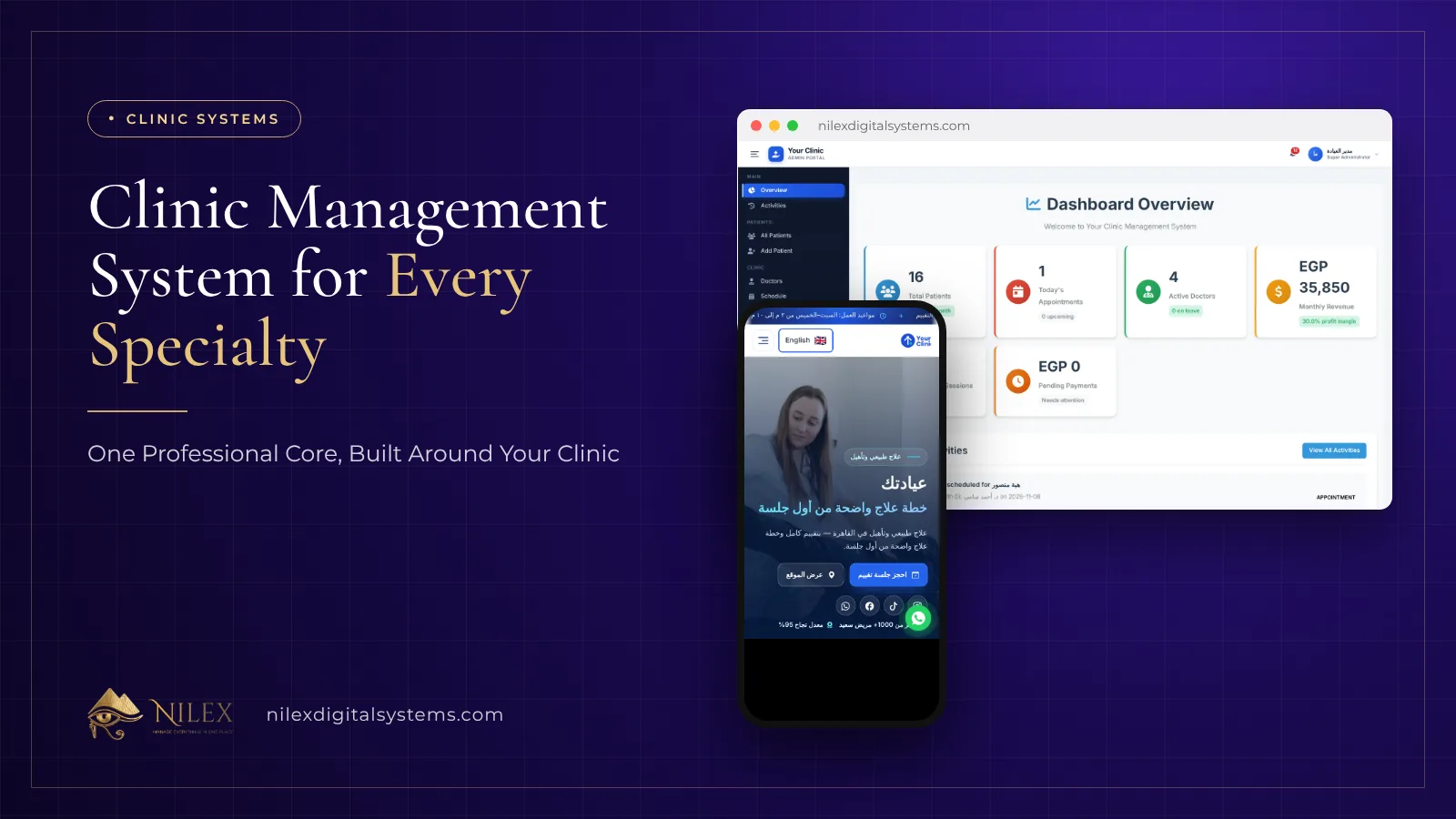 Clinic Management System for Every Specialty: One Professional Core, Built Around Your Clinic8 November 2026 · 8 min
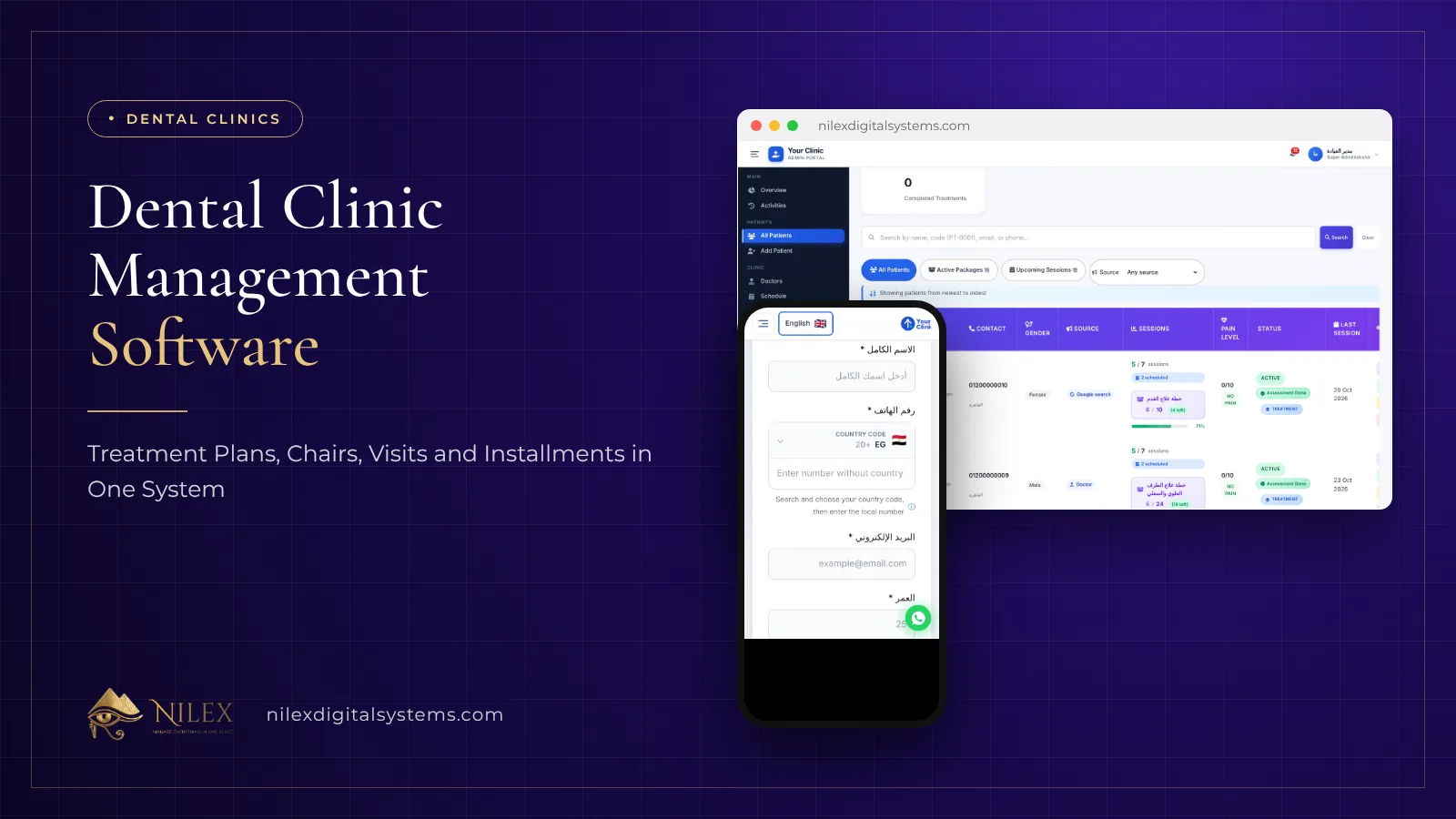 Dental Clinic Management Software: Treatment Plans, Chairs, Visits and Installments in One System8 November 2026 · 6 min
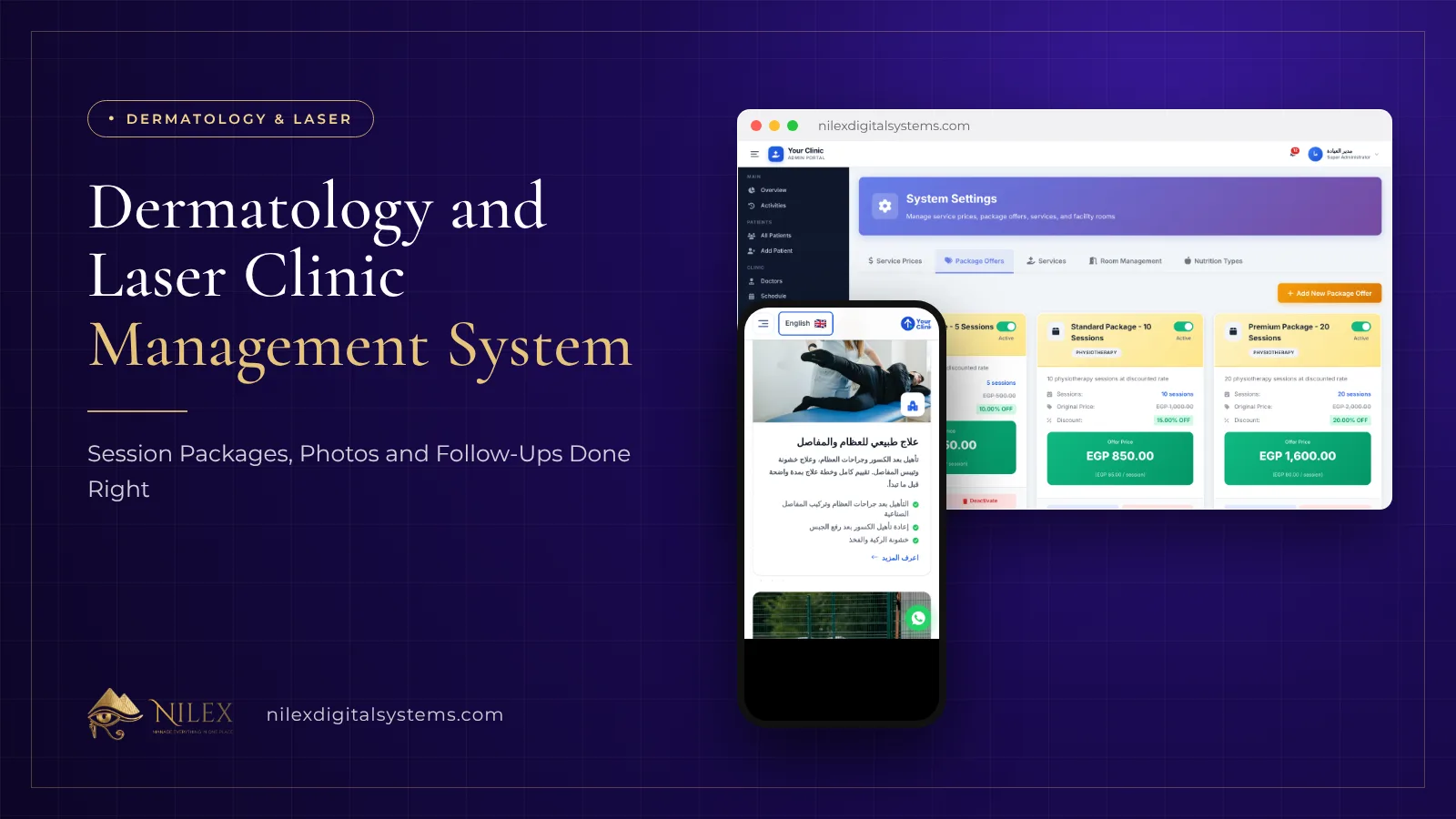 Dermatology and Laser Clinic Management System: Session Packages, Photos and Follow-Ups Done Right8 November 2026 · 5 min